Barry O’Reilly | How I Tested an Artificial Organization
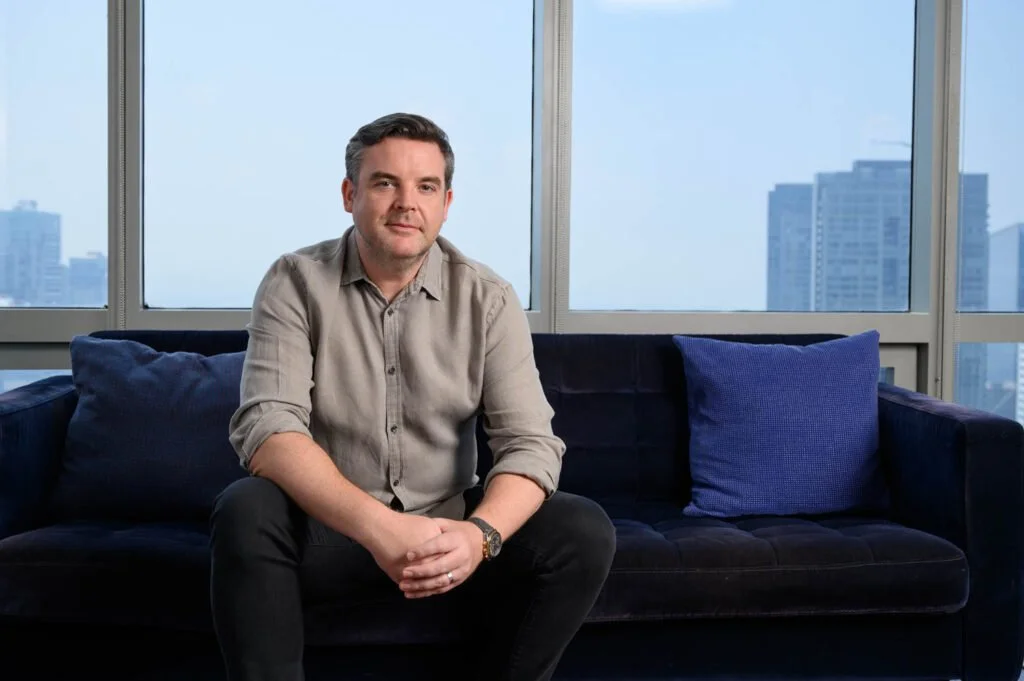
Barry O’Reilly - Entrepreneur, Advisor and Author
In this episode, Barry explains how to test your way through Artificial Organizations and why it is so important to focus on the work before the tools.
Have a Listen
Summary
In this episode, I’m joined by Barry O’Reilly, he’s an entrepreneur, advisor, author and a friend of mine who works with executives to redesign how their organizations perform. He’s also the co-founder of Nobody Studios, an AI venture studio building and launching over 100 companies.
Barry and I chat about what he’s learned from years of helping corporations experiment, redesign systems, and make better decisions under extreme uncertainty.
We talk about why so many AI transformations start in the wrong place, why leaders should focus on the work before the tools, and how capturing conversations can create a kind of organizational memory that gets smarter over time.
Barry also shares his lessons from building Nobody Studios and how that work influenced his new book Artificial Organizations.
If you want to learn more about testing with AI to redesign how work gets done while making better decisions, you’ll love this episode.
Takeaways
Start with the work, not the AI tools. The biggest gains come from redesigning how work and decisions happen, then choosing technology that supports that flow.
Human judgment becomes more important, not less. AI can capture, synthesize, and model information at scale, but leaders still need to decide what matters and what action to take.
Treat conversations and decisions as data assets. Capturing meetings, transcripts, decisions, and outcomes creates organizational memory that can be reused instead of constantly recreating context.
Better systems can outperform experience alone. Deep domain expertise still matters, but rigorous decision-making systems combined with machine intelligence can challenge gut instinct as the default.
AI transformations fail when they are treated as tool rollouts. Buying Copilot or another platform does not change how an organization works unless behaviors, processes, and operating systems change with it.
Leaders can accelerate adoption by role-modeling experimentation. Admitting “I don’t know,” trying tools in real work, and openly sharing what works and what does not creates permission for others to learn.
Start with one decision or workflow. Rather than attempting a company-wide AI transformation, pick a recurring decision or process, test a new way of working, and learn from the result.
Guest Links
Barry’s Website: https://barryoreilly.com/
Barry’s LinkedIn: https://www.linkedin.com/in/barryoreilly/
Artificial Organization: https://artificialorganizations.com/
Nobody Studios: https://nobodystudios.com/
Transcript
David J Bland (00:03.086)
Welcome to the podcast, Barry.
Barry O'Reilly (00:05.262)
Always good to spend time together, David. Yeah, thanks for having me.
David J Bland (00:08.462)
Dude, I'm so happy that you were able to come on here because I have known you for quite some time and I consider you a friend and just professionally somebody that I learned a lot from. And I was thinking back to when we first met, and I think it was twenty fourteen in London when we were at Neo doing an event, and then there were some after hours, and I'd already been following your work.
And people are like, yeah, you gotta meet this guy, Barry. And it was so cool to just meet you in person and hang out with you. And I had learned so much even before just reading your stuff and then being able to hang out and get to know you. And then since then, just watching you grow and and just push yourself and learn different things and try different things. It's gonna be really hard for us to cover everything in our conversation today that I want to talk about. But I'm just really excited to just hang out and and just geek out over stuff with you.
Barry O'Reilly (01:02.488)
Yeah, and like I I can only say, David, I feel the same. You know, like I've always been a fan of your Twitter accounts. What can I say? They're amazing. in the good old days of t of Twitter. but yeah, no, like I think this is one of the fun things about the world we're working in, is that you meet so many people actually probably virtually before you ever meet them in person. And
I sort sort of I guess have always measured people in terms of the quality of what they share and the insights they're willing to put out there, whether they're perfect or not, you know. And you know, that's really what probably drew me to the work you were doing. So yeah, it was amazing to meet in person in a pub in London.
over ten years ago and it's great again to continue, as you say, friendship and camaraderie, building this stuff out together. So it's it's it's great to be on the podcast. Thanks.
David J Bland (01:59.023)
There's so many topics around just uncertainty and testing I'm gonna cover, but maybe catching up our listeners on what you're all about, I think when we first met my gosh, was I don't know if Lean Enterprise was out. Maybe. I'm trying to think when when what year was that published again? Do you remember?
Barry O'Reilly (02:16.547)
Yeah, that's that's actually it's funny you say that. I'd say maybe we must have met in the summer and the book I think came out towards the end of that year. So maybe we were in sort of our, you know, pen penultimate drafts.
And yeah, like again, like most people like working in the lean startup world, that book, Lean Enterprise, was co-authored with Jez Humboldt and Joanne Milleschi. Many people will probably know Jez as the co-author of Continuous Delivery and I guess heavily involved in Dora, the which is this metrics for measuring performance in software engineering world. So that book paired up with the lean startup movement, really just it sort of exploded and
I was working at a company called ThoughtWorks at the time, which was sort of one of those pioneers in agile software development. Martin Fowler works still works there. There's Jim Highsmith who was there, just looked like loads of people. Which was a great great growth personal experience for me in my career to just be around folks like that.
you know, just being a sponge, really, learning from all the the things they had done. But yeah, like a year later I moved to San Francisco, which was even better because we were pretty much neighbors at that point. And
You know, started my own advisory business and working with different companies in the space, which was great. I wrote another book called Onlearn, which was inspired really from the insight of working with all these companies, where the thing I kept finding was learning new skills was not difficult for these very smart executives. The hardest part was letting go of their existing behavior, the things that had made them successful to that point, to sort of innovate, if you will, their behavior and thinking.
Barry O'Reilly (04:02.746)
And again that that book was sort of a nice build onto what Lean Enterprise was about, which was experimentation in large-scale companies. Yeah, and then after that I ended up starting an early stage incubator called Nobody Studios in 2021, where our mission was to try and build 100 companies over the next five years. And
Yeah, there's lots of fun, especially in the world of testing business ideas, that I can share both personal experiences and growing that business. So may maybe that'll be a fun point for us to noodle on and on the show.
David J Bland (04:45.417)
It will be. I have to say though, I don't know if I've ever shared this with you or even publicly, but I think what drew me to your work was you're one of the few people applying this stuff to big companies early on. And you were willing to take on that challenge. It w I know at least movement had started and everyone's like, yeah, it's great. And then and and we there was a small set of us and we're like, you know, big companies really, really need this. Maybe more so than startups.
And I remember shopping a book idea around and I was going to all these publishers like hey, I got this great idea. I'm gonna write this book and it's gonna be like lean startup in the enterprise or lean enterprise. And all my all the publishers like, no, that's already been being written. And I was like, crap, who's right? And then I realized it was you and some other people and I was like, Okay, okay, you're gonna do a good job. But like that was initially my first book pitch.
was like, yeah, how do you do this in the enterprise? I should write a book about that. Now granted, I I finally ended up writing a best selling book later, but I always feel like like you're always pushing things and you're kind of on this edge. I would say it's like a growing edge. Like you're kind of in this one where you're like, yeah, I kinda I think I'll be okay here and I'll figure it out. And then you just you just do. And and it's really I just I really appreciate that in you.
Barry O'Reilly (06:02.936)
Yeah, no, thank thank you for sharing that. it means a lot. but but you're you're right, like some some of these things, you know, your life sometimes doesn't make sense until you look at it in retrospect, you know, but at the time you just sort of follow
the I I guess the signal to a certain extent, right? Like for me, even the that that move from writing lean enterprise, which was, as you say, experimentation in large scale companies, to suddenly then writing a book about mindset and behavior.
Like that didn't make sense to me. I never would have said that at the end of finishing but but the work led me there, which was the interesting thing as you say that, you know, is the insights were from if you will, testing the content with these super smart people, like we were coaching executive team from Capital One, from from Slack, from Skyscanner, Spotify, all the Wells Fargo, all these amazing companies and really, really talented.
Talented, bright people. And they all wanted to learn how to move faster, make better decisions, build better products. You know, the the curiosity was always there.
But again, the from working in those environments, the I guess the the thing I learned from it was that it was it was never about could people do a an experiment. It was actually could they shift their mindset and therefore and also shift their behavior to create the systems in place to allow that experimentation flourish, if you will.
Barry O'Reilly (07:44.771)
And that that's actually again what inspired me to write about that because it was just what I was experiencing, you know, and all all my writing has always been like a a sort of retrospective, if you will, of what I've learned from the the last experience. And
Again, like I think people and and I know you you've been through this too as well, right? Like you're helping all these amazing companies from Toyota to who you know, all all these b brilliant companies test their ideas, right? And I guess maybe to you, like what what are some of those insights you've had at you know, about what helps companies succeed or maybe what helps leaders succeed.
David J Bland (08:30.529)
Yeah. It's you know, I've learned a lot and I've worked with so many different types of companies. We we just had Mark Graybin on and we were talking about psychological safety and what what prevents people from running experiments. We had this long conversation about people don't feel it's like they're safe. It's not safe to say I don't know or, you know, all that experiment failed. And it's very interesting because when you talk to leaders, it's not necessarily the culture they're trying to create, you know, not intentionally anyway.
But it still happens. And so it's this really interesting mindset plus culture plus systems kind of mix that I'm seeing inside companies. And the companies that end up doing it really well, I feel as if leaders are very intentional about okay, how do I address this beyond just me saying go do something? You know, the leaders go run experiments. And then they'll get really frustrated, like, why aren't you running experiments? And it's like, Well
the systems and the culture doesn't actually support me. Like you say that, but then I have to submit all these approvals to ever talk to a customer. or I'm not allowed. Like sales doesn't want to talk to a customer and do this kind of work because they don't want to confuse them and they want to close deals. And there's all this interesting almost like the the incentives for each type of function work against each other. And therefore
Even though we give lip service to it, it can be really challenging to pull it off unless you have support from the top down.
Barry O'Reilly (09:57.839)
Yeah, no, I I I couldn't agree more. You know, the and you said my favorite word there, which is systems as well. You know, I like for me, I think
That is actually where most of my curiosity now probably lies is building the internal systems to allow this type of work to flourish. Because that their design choices. you know, so what you know, one I'll give you a really sort of nice example of this. So many years ago I worked with a skyscanner when they were 30 people in Edinburgh, right? This is probably about 18 months before I met you. I was up in Edinburgh.
When they were probably 30 people, and one of the graduates, a guy called Andrew Phillips, had just joined as an engineer. He he years later, he's now the CTO of the company, which is awesome. But
You know, one of the things that he was great at role modeling, and this is something I think is really, really important, even lately, as all these new amazing tools have come into the market, and you can imagine like SkyScanner are dealing with like billions of transactions a day. They're a data-focused company, really. so using all these tools, and he's the CTO, like people sometimes might be looking for him to have all these answers, which is impossible because he can't be a data scientist.
And understand, you know, React frameworks for the web and sit in business meetings and right, like it's just impossible. So one of the great things I think Andrew did in that company was he was very open about saying, look, I don't know what these tools are good at, what they're not good at.
Barry O'Reilly (11:44.431)
But I'm gonna start using them on a day-to-day basis in the company, and I'm gonna share what I'm finding them useful for or not. And
I'm gonna start creating this sort of environment, as you say, where I'm I'm role modeling. Right? He didn't set like an an AI mandate that everyone has to use these tools. He's like, right, we probably need to embrace this. Here's how I'm going to try and tackle it. I'm gonna role model what works, what doesn't, what I'd use again, what I wouldn't, and I'm gonna share that back with the team.
And you know, like that kind of again it's a human factors approach, but then he's also creating this system underneath, which is actually quite intentional as you're describing, where they're creating a learning community where people then start suddenly well, if the CTO is saying, I just tried to use whatever clawed code and I think it sucks, and because here's the use case I was using it for.
Other people are like, wow, okay. Well, that's interesting because I tried perplexity to you solve that problem, and I got a s I feel I got a better result with it. Here's why I think that. Right? So you you suddenly have this experimentation being again, the conditions being put in place to allow it to flourish and for information to be shared and and ultimately leveraged. And I think that's kind of for me,
It's both a an intentional human choice, but there's also a operational model and mechanic put in place to allow that information to move around. You know, and that that's sort of what's kind of fascinating to me is when you have leaders starting to behave like that. They're the ones that I think are reaping a lot of the rewards.
David J Bland (13:41.205)
Maybe that maybe this is the time that that systems and systems thinking finally has its moment to shine. Because I've I've seen you know some of the big AI AI companies are like, hey, we need systems people in here now because we are trying to do this AI transformation work and there's we're pushing things in different ways that maybe finally break this model that we've been clinging to since the industrial era of how we set up and manage our work and organize our companies. And
Systems, I mean, you're gonna have to know how things relate and connect and what reinforces and what balances and I mean not to geek out of it too of too much, but I I've been saying for like decade that systems thinking is like gonna come back this year and it's never happened, but maybe this is finally the time where people start to value it because really they're starting to look at their organization as a as a system.
Barry O'Reilly (14:39.67)
Yeah, it's fascinating as well because again I think the people who were reaping the most reward from the moment that we're like in and and maybe moving to
Are very also intentional. Like they think of architecture, they think about how they architect their company. So I'll give you another example. Like when we started our venture studio, Nobody Studios, the idea was that we had to, if you will, create a platform where entrepreneurs would want to build on our platform, which means to get an acceleration from building their company.
and so our platform, if you can imagine, had to have different sort of APIs or services, right? It it needs it needs a sales support function, it needs a marketing function, it needs operations, hiring, financial management, right? Like these are all systems, talent acquisition, right? These are all, if you will, the promise of a why an entrepreneur would want to plug into your systems to get an acceleration. That that you have you have the
The sort of beginnings of the infrastructure they need to so they can just focus on solving the business problem.
And then they can they can get an you know a bump because I need to hire four engineers. Great, we've already got a talent pool. Here they are, just plug into that API and and off you go. You know, so one of the things I probably found most fun, which I didn't actually think when we started the studio, was designing all of these, if you will, internal systems to support the entrepreneurs. So the product.
Barry O'Reilly (16:25.25)
Went from the startup we were building to actually the internal systems that we were providing to our customer, aka the entrepreneurs that come into the studio. So for me, like I was suddenly in this new little happy space of like, hey, if I was an entrepreneur, what would be like the best talent acquisition experience?
That if I just rocked in and I was like, right, I need you know two engineers, a designer, and and a UX person, and I need to run a customer interview next week, like what what would that experience look like? You know, and that that again to your point of testing ideas, that was fun, you know, like
And we tried everything. Like we were we we were doing experiments like you know deeply investing in four or five people who were really good, say UX designers, that were really comfortable jumping from project to project, like we were trying to find these archetypes of people because again, a lot of the d the work demand.
from the entrepreneurs, it might only be like six or eight hours worth of work. Like can you re can you redesign this landing page for me? Cause you know, maybe they're a a medical doctor, they've got a great idea but they've never built a software product.
And they don't know how to build a landing page, right? So you want to use explaining to someone what the idea is, someone mocking it up, making a prototype and launching it for them, you know, say it's a day's work, whatever. So we we experimented with all sorts of things, like having a pool of trusted resources that were happy to do, you know, different jumping in different projects.
Barry O'Reilly (18:07.514)
again we were one of our constraints was we were always trying to be time and capital efficient. So we didn't want to like hire a bench of, you know, ten UX people just sitting there waiting for demand. So it was a re it was a really fun sort of experimentation, if you will.
About finding one, what's useful for the entrepreneur, and then also what's interesting for the the person on the UX design. So these things turned into marketplaces, which were like really fascinating concept, too, as well. Because again, with you were with a marketplace, it needs to work for both sides of the equation. And you also have a quality aspect to it of
You need a you know, what what style of person works well with a certain style of entrepreneur, you know? So yeah, it just became this algorithm, you know, and and that's just like the talent acquisition example. You know, there's like a suite of these from sales, marketing, operations, finance across the whole company. and that actually has been probably one of the most fun and rewarding parts of the whole job is actually
Testing business, you know, ideas in that space if if it makes sense.
David J Bland (19:22.408)
It it does. It it's interesting that that you were pulled into that sort of role. I'm wondering, is that sort of the foundation, like everything you learned there, did that help form inform artificial or organizations like your new book, you know, it was it that plus other things, like what was feeding in to that book idea?
Barry O'Reilly (19:47.011)
Yeah, yeah, like you said, it's the same, it's the same stuff, you know? It's Derek Zulander, it's the same look. It's it's like again, what I was learning about how I could make and and this is what w again the insight for me was, is that everything ultimately comes down to making decisions.
decisions about what you know what what designer to pair with that entrepreneur, you know, what financial system to use to support that business to grow faster, what operating model. so one of the things when we started the studio in in 2021
You know, and the the technology was had not become front and center at that point, right? It was still we were still highly reliant on human systems, I would describe as that. Like we we had technology tools in place, like we maybe had a Slack for you know managing all the communication for all the the different teams. we would have portfolio reviews, but we would still sort of manually get the startups to be creating their
decks of what did they learn in the last month and what were their objectives and what challenges they faced and how their metrics looked and but it was this very like sort of manual experience right like the the some of the startups would like be so panicked about doing their monthly portfolio review that they would be spending two maybe even three days preparing like three or four slides which when we found that out we I was literally like
Going, what are you doing? The point of this is not to be perfect presentation, it's meant to be a learning mechanism, right? But again, people just have anxiety when you've 14 other startups on this call and everybody's trying to be, you know, the golden child, or are are they gonna get into trouble? To your point about fear and anxiety and safety earlier.
Barry O'Reilly (21:58.019)
You know, so we were sudden like so we were getting a lot of these perverse behaviors, which was again the exact opposite of what we wanted from an experience like that. You know, and so row forward now, right? 22, 23, we suddenly have access then to the like the beginnings of these LLM starting to come into place. Where again, a lot of the teams were quite engineering forward people.
So suddenly we were able to shift quite you know from this manual recreation of context, if you want to call it that's how I think about it, to this idea that we could gather all the information that was shared, like we could plug into an integration into Slack and pull down all the messages, the discussions. We were
Absolutely rigorous of transcribing and recording every single meeting we ever had and turning those into data assets. So, like every every startup, every conversation, download the transcript of the call, put it in a data pool, and mine it. Like we we were rigorous about that from day one. So every everything is a data asset, and then mining the conversations from collaboration tools and then a synthesis, so capture synthesis.
size and then producing the outputs. And like that was one of the, I think, one of the biggest aha moments for so many people, both in the studio and the people we worked with, because we all all these sort of recreation of context or the which shows up as the three days writing three slides for a presentation type stuff, we were able to shrink that.
So these founders then were getting like, believe me, in the beginning, it was not very elegant, the output. But it was it it moved their their behavior. This is the thing that was so interesting to me, is the behavior started to shift, where instead of feeling they had to recreate the context and remember, they were actually in a more editing mode. So they sort of had like an MVP of what their
Barry O'Reilly (24:18.634)
report was whether their weekly report, their monthly report, their daily report. And all they had to do were tweak things. So the the energy moved from all this like preparation of work to do a tiny decision to like, here's all the prep, double check it. Okay, now I'm back to actually solving the hard problem.
so that those were some of the I guess insights that really just started to appear. Is that the the magic is actually human plus machine equals better judgment. That was the sort of the insight for me. And the machine's job was essentially to capture information, synthesize it, and then provide.
an output as the requested by the the human operator and then the human's job was to judge and decide what information mattered and then make decisions and keep moving and that those those were really like that was really the core of what has now become as you say artificial organizations it's all these systems and processes that you know we learned in the studio and
as you say they've they've they're helpful and I I've you know it's changed fund I've redesigned fundamentally how I work. and and my mindset about how work happens now is just it's totally different, you know, and that's super fun, right? And you're smiling because I know you're doing this stuff too as well, right? Like what a fun time to be to be playing around in in redesigning really how we work.
David J Bland (26:05.075)
Yeah, I I mentioned this a little bit earlier and and I'll have to come back to this, which is I've been so frustrated for so long. I think back when I was on Twitter, I had this meme that I would do every year. And it was it was something like, this is the year where we're not going to, you know, use
management practices from like the fifties or the thirties, you know, and and and we're not gonna organize our companies like we did in the industrial era and run everything as projects and functional silos and and and and measure hours and you know, I couldn't have predicted AI being the thing that finally breaks that model. And I'm kind of torn by that. But at the same time, like something had to break that model. It it made no sense for us to organize
Barry O'Reilly (26:26.178)
Yeah.
David J Bland (26:52.627)
around knowledge work the same way we organized in factories. And I love the manufacturing industry. Like I I fully appreciate what they do and I have a bunch of manufacturing clients and I appreciate the culture they tried they try to make and everything. But it it just I felt like we're taking a a model that we learned a long time ago and just kind of dragging it forward no matter what. And with how
I don't think we even b I don't think we're even beginning to know how disruptive AI is going to be to organizations and how we work. I think you're experiencing it probably a little more than others just because you live that in your studio and how you're building systems and everything and you're you're more of an early adopter. But it's just it's very interesting to me, you know, that we're all landing on decision making, or at least in our peer group, you know, I think it was like you, myself, Martin Erickson.
Jason Fraser, maybe. I we were at a table and we were all talking about what we're looking forward to. And it was all about decisions. We were talking about decisions. And Martin has his new book on on decisions. We're actually gonna have Martin on here in a in a few episodes too. And you're talking about how to make decisions and decision velocity. I remember you quoting quoting that term and and I had kind of independently arrived on decision velocity on my side just because of what I'm seeing. And what do you th
Why do you think it is? Why is why is it that so many people are are really starting to reevaluate decision making now that we're having this kind of disruptive change inside companies?
Barry O'Reilly (28:27.71)
yeah, so the the the log line of artificial organizations is and it's kind of it's kind of funny, AI isn't replacing leaders, it's exposing them. And and the reason that is the line is it's sort of a a summation of what you just were were sharing.
I think for many years we've almost like sleepwalked into how we run and operate companies. It's been, as you say, just a that's always the way things are done around here. We're replicating a model which was based on another industrial revolution time. And you know, that's that's just what people know, right? Like they go into these companies.
Managers and leaders are replicating for the most part what they've seen elsewhere, and it's it's a it's a similar type of thing. But probably where that is at its finest point is decision making. So often, if you ask people, how do you make decisions? It sort of falls into this, like there's the at one end of the spectrum, there's like the gut instinct character.
They've been in the industry for 20 years, they've seen all the patterns, they know the signals intuitively, and they they're running on instinct. So tenure, knowledge, experience carry weight in that world. And then at the other end of the spectrum, you have the people who are naive to the domain or newbies. and they're they could never get access to the information.
Maybe to the at the same level, you could only gather information through experience, right? But now these technologies have sort of changed this whole model. Like information is everywhere. And actually, what's what's stronger is if you have like really robust systems for making decisions.
Barry O'Reilly (30:41.548)
And you can find the information you want and run it through those decision-making systems. Suddenly, it doesn't matter if you've had 20 years in the automotive industry, you have really good rigor.
About how you look for information, assumptions, test them, look at different scenarios, look for variables, play with the variables, and you're getting a probabilistic answer about what is potentially the best path forward, given all the inputs you've provided. And that doesn't matter if you are a one-year grad out of
Wherever versus the 20-year veteran who's been in the business. And and that is a real interesting sort of dynamic now. And so again, the the for me, this is why judgment again becomes such a uniquely human thing. Where
We should never give up judgment, is my view. That that is a a human responsibility, it's a leadership responsibility, it's the choice that we need to own, in i i always, in my opinion. But what the machines are amazing at is gathering information, synthesizing it, modeling it, running scenarios at at volumes and and speeds that humans can just know one human can do.
So for me, like that's why again I talk a lot in the book, it's human plus machine intelligence. So if you are that gut instinct character, if you're like the Maverick type character, if you're just relying on that alone, you're in a in a world now where it's people who have are learning very good decision-making rigor systems and they're getting access to information and then they're using that to model and make a choice.
Barry O'Reilly (32:40.334)
So if if you just rely on gut, sure like you're gonna win sometimes. But in the long game, it the probabilities are not in your favor. So I think this is for me the argument about why people have to embrace this way of working.
is because that's the path that's the path, right? It's an exponential curve over time. Where if you have gut and you compare it hum if you've got great human instinct and you compare it with machine insight, like work together, that's a recipe for magic to happen. You know? And
So that's what gets me kind of excited about all of this, and probably really a lot of the insights. Because again, in our studio, because we treat every conversation as a data asset, it becomes a mine that like I can go back and say, right, when we were building, I don't know, one of our company, Ovations was a company we tried to build, which was an on-demand speaker platform. We had so many conversations about sourcing speakers, landing speakers, getting them into companies like
And I have we've all that information, all that insight is in a database that we can go back and mine at any point and go, how did we make that decision? What were the circumstances? What were the variables? What were the the unique moments that we made that choice that we thought it was the right one?
And I can look at that forever. And I can use that to to educate us on the next time we have to make a similar decision in the future, right? We have a decision log now. And so again, it's get it the system is getting smarter by people participating in it. And for for me, like again, that that just keeps raising the bar, right? Like that's that is a new you know what moats are left now? Well, I think the your internal
Barry O'Reilly (34:36.994)
if you will, like organizational intelligence or knowledge is is probably gonna be one of the biggest moats for most companies now, is their ability to capture, synthesize and reuse their own information and how they use it to inform decisions.
David J Bland (34:56.028)
Yeah, there's so much, so much there in what you said. I feel as if one of the things that I I I was at a keynote, I was doing a keynote at Emory University in Atlanta. And this other presenter who who I have a a a lot of respect for, his name's Dan Adams. He does a lot of voice of the customer work and he's kinda old school guy, but he he's really, really bright. And the way he described it to me was almost like he called it like a digital waterline. And
The idea here is that AI is really great at working with things that have been digitized. You know, there's some digital form of that thing, whether it's a way of working or knowledge or how whatever that is. But the things below that waterline that it it can't see or it's unknowable, it doesn't know of yet, that's where you are using people and people, I'm not using people, but people are shining, right? This is the stuff that people can do.
But my question to him was like, is that waterline dropping? Like the more we digitize, you know, maybe, maybe the less stuff that is is defensible. And and what I've seen, at least from the companies I coach, is this need for almost like a persisted memory inside the company of what they tried and what went wrong and what went sideways and what worked well and being able to reference that.
You know, and and continue to learn from it. Instead of having the same teams working on kind of the same idea, but they don't talk to each other. And one of them might succeed, one of them might fail, but they never really know why. You know, that while can work, it's not necessarily repeatable. And this idea of even like writing down your failures, you know, why things failed, don't hide it. Like, let's document it so that next time maybe we make it a
A different kind of failure. We make better mistakes. That's one of my favorite sayings, like make better mistakes. So it's it's just very interesting to me that I've had multiple conversations over the past few weeks with executives and they've been they've been talking a lot about this kind of institutional memory or having something that they can refer to. And I think it's partly because their data layers may be a kind of a mess, you know. They're they're not very you know, everything's f fractured and and
David J Bland (37:19.325)
When they throw AI at fractured stuff, it just makes it worse. and I just keep hearing this from leaders on you know, we we need to start having an opinion about how we gather and store this and be able to search it. And I I think I I think what a bunch of companies adopting AI are gonna realize is that before they can really get a lot out of it, they have to do a lot of data work. and I don't know if they're fully up for that yet.
Barry O'Reilly (37:49.231)
Yeah, no, and that and that's fair, you know. so I d what I try to help people with to what you're saying, right, is there's a couple of things they have to they have to get. One, they have to actually have the the mental breakthrough.
of of what is possible with this technology, right? At the moment, sadly, most people are floating around with Microsoft Copilot, which is a mess, right? Because all the points you said, their data's a mess, nothing's labeled, the the tool itself is pretty weak in terms of an it an an implementation of an LLM, right? So the experience is just three out of ten at best.
So w they don't see the the massive insight or or change, right? Like I was speaking to a CEO this week and he he was like, you know, I try I've done it, I've done the co-pilot thing, it's a mess. Like I have this vision of how I want my you know leadership operating system to be, and sadly nothing co-pilot offers you know, it it does that.
And he was talking about he downloaded a transcription tool. I'll I'll not name it, but it's you know a very popular one. And he used it for a week on his personal hobbies, right? he does a bit of sort of startup investing on the side and he, you know, whatever he does, right? And he literally was blown away by what the quality of capture, the insights that were shared back with him, the follow-up that it allowed him to do on these.
And he was suddenly in this mode where he was like, my gosh, if I could operate like I'm doing in this little small AI stack I've created for myself in my corporate job, I could be like fifty, sixty percent, you know, more effective.
Barry O'Reilly (39:47.639)
So that insight of an of an experiment in a in a sandbox environment, if you will, with gave him this whole other impetus to say, Okay, th this actually is gonna redesign how I work, right? There like the they had this that the magic aha moment.
because you see the the the benefit of what's possible, right? So for me, I'm I'm often trying to say changing the entire company is just impossible. It's just impossible to start at that level. So for for leaders or teams or people, I would just encourage you to start with yourself and start experimenting. First of all, if you're in a big corporate, like just try the tools that are available to you, they're not gonna
most companies are buying breadth, right? They're buying a Microsoft platform, a Google platform, right. So you you have this sort of those tools can never be as good as a niche tool that focuses on just transcription or just you know, video capture or whatever it is, right? They like they can never be as good as the individual tools. But there's pros and cons of each model, right? Like the good thing about a a consistent stack is that you can search the whole thing, you can plug things in.
You know, when if you have a a federated stack, you know, you've got to like make sure this notion talks to your Gmail, talks to your whatever, I use author, like all these tools, right? You you it's a it's actually an orchestration job as well to make all those things talk to each other and you can spend days messing around trying to make it work.
So I think you you you know you have to understand these things. But the first principle is this idea of capture, transcribe, synthesize, and act. You've got to capture start thinking about capturing everything as a data asset, to your point. So you can synthesize it, you can transcribe that information into a database and then start synthesizing it. And that's playing around with it in learning models, in
Barry O'Reilly (41:55.887)
Because ultimately the action, all that, all the machine is great at the capture and the transcription and the synthesize, but the action has to be human. It has to be that human judgment. Like, what are you gonna do with this decision log, that this organizational intelligence you now have, this personal awareness of I wish I wrote down every decision I ever made and went back and looked at it.
Well guess what? You can now. You really can. so it's sort of you know, I think the onus is on people now to sort of go, right, like these things are here. So, you know, the bus is you know, it's heading in that direction. Just a couple of seats there, you can still grab a ticket.
David J Bland (42:44.392)
I I know I'm dating myself with this and I may have mentioned other episodes, but it kind of reminds me of the dot com era a bit. You know, like we were playing everything online. Let's do everything online. And I was in my startup phase then. And it kind of r reminds me a little bit of that, you know, which what what is going on. And I think for us, you know, we we kind of view things as well, let's break it down and and test a small piece and see how the organization responds. I remember I probably shouldn't have said this, but I I was in my first
large transformation in San Francisco. And I I walked into the C suite, which we had like C suite, we had a bunch of VP, we had a cross-functional leadership that kind of owned the change, which I I thought I needed because I'm like I'm like, without you owning the change and modeling the behavior and creating the culture, like the change is not going to happen. And they were all really worried because we were trying all this stuff, you know. And I remember the CEO looking at me and he's like, man, I'm I'm not sure how this is gonna go. And I was like, it's just like one big experiment.
And I was like, man, I should have thought before I said that. And he looked at me and he kind of laughed. And he said, Yeah, it kind of is. Like, we're this is a big test. We don't know how the the org is gonna respond when we change different parts of things. And it was one of those few times where I was like, okay, actually.
Maybe I should said that, but it wasn't intentional. It was just the way I approached the work. I can't approach a giant transformation and say, here's your five-year plan and we're gonna follow this and it's gonna be okay. It's more of a well, here are the capabilities you need to support your goal and let's kind of break those down and prioritize and then run some tests to see how the org responds does doing this stuff. And I feel I it feels very deja vu-ish to to walk into orgs now and say,
Hey, you what? I think that's how we should approach some of this work when we're taking in AI. And I and I really loved it, I highlighted this in the book and posted it the other day on LinkedIn on how you're like, start with the work. Yeah, the tools are out there. There's so many tools, but start with how you work. And I find that such a refreshing perspective on all this craziness right now. It's like don't lose sight of how you work. I I I mean, that is your day-to-day. And
David J Bland (44:52.39)
then start thinking through, okay, well, how do I start applying this? I don't know if you could expand on that a bit. I wanna be honoring your time, but that's something that really stuck out with me.
Barry O'Reilly (44:57.784)
Yeah, because because the
Yeah, no, thanks for sharing it because that's why most of these transformations are failing, right? They see it as a tools transformation. So whatever your your favorite stat is this week, like ninety percent of these transform AI transformations are failing or not showing any return on investment. Yes, probably higher than that by the way.
And the answer is because they're all starting with a a tools transformation, but it's not. It's a it's a behavior transformation to a certain extent. It's redesigning work as we're describing, right? Like an the problem with a tool is a tool is someone's opinion about how a a process or a task should be done.
Now you you mightn't be aware of that, but somebody inside Anthropic or OpenAI has a viewpoint that they've coded into a machine about what a good meeting report looks like. Whether you agree with it or not, you you're you that it they have coded that in. So again, when you start with a tool and try to apply it to an arbitrary task, one, you've no idea if the tool is made for that task, two, you're locked into the opinion of the builder of that tool.
And then the last thing anyone considers is their personal behavior or traits about how they actually do their best work. So you're sort of going at it backwards. You know, it's a bit like I remember you always when Eric r launched a lean startup and said bid bill, measure, learn, and you were like, no, no, no, no, guys.
Barry O'Reilly (46:30.22)
It's lear it's measure a build learn or whatever, you know, and everyone's like, what the heck? You know, like it's it's this is sort of the thing. It's the same, it's again, it's the Derek Zeelander thing. It's the same thing people are making the mistake again. They're starting with tools, then looking at tasks, and then thinking about themselves. The answer is you've got to be aware of how you do your best work.
Like for me, talking is a huge part of what I do. It's how I do innovation, it's cr it's Socratic ideation, it's working out through ideas. Talking's a huge trait for how I innovate, actually. And tasks like meetings or innovation work or whatever. So the tools sort of pick themselves when I go, look, I talk a lot to do ideation. The task is innovation. So too, I should probably have a a scrap a transcription service somewhere. It just makes sense, you know, and suddenly
so when you work, you're swimming with the sort of flow of the water or or flow of your natural work versus trying to go the opposite way, you know, and
I think that's one of the biggest aha's. Again, people have these breakthroughs when they start thinking about how do I do my best work? What tasks do I create inordinate amounts of value with? And then the tools then sort of become obvious to them, right? Because it's supporting this flow and it and it compounds over time.
And for me, like I think again, it it sort of reminds me of the the measure, build, learn thing, right? where every I was like it's just always made me smile when people were like build, measure, learn and you were like, No, no, it's actually this way.
David J Bland (48:09.295)
okay. To Eric's credit, he did say start with learn. I just don't think anyone really listened. And it was called Build Measure Learn. So people just started with Build because who wants he wants to learn? Let's just start building. but to his credit, I I did find the source one day. and and he mentioned it several times. I just don't think people latched onto that part. They latched onto the build part. And I think that's it's not all bad, right? You you can build to learn, but I think it's so easy to get caught in your you're you know, your trap, your build trap.
Barry O'Reilly (48:19.49)
Yeah, totally.
David J Bland (48:38.425)
As Melissa would would say. you know, with this work, where do you see this going? Like, what are some big assumptions you have right now? And it doesn't even have to be specific to your current, you know, employer or anything like that. Like just overall where this is headed. Like you have your new book out, which I love, by the way. Everyone should get that book. And
I wanna I wanna hear from you like what what is like a big assumption or two that you're like, Hmm, I it I think I need to go test that, but I'm not sure where to start or maybe I I need to start prioritizing where to test that.
Barry O'Reilly (49:19.585)
So I I do I do think the point we just mentioned about people starting with tools is sort of one of the the misnomers, right? so I think starting with yourself huge. I think the other the other thing I I've sort of observed maybe is that there's a huge anxiety in leaders that they feel like they should know this stuff.
Or a feeling of like everybody knows this, I'm the only one who doesn't. It actually is another anxiety. Now, being being an executive is pretty lonely, right? Like there's very few people you can turn to and go, Hey, I've no idea what I'm doing here. You know, like that's why they have coaches and support groups and their peers.
Because again, nobody knows the answer. Like nobody knows how this is going to end. What tool's the best? Where where do you like nobody knows this stuff? Right? So what's worse as an exec is one, it's lonely. Two, feeling lonely and incompetent in front of a whole company is actually like, that's horrible, right? It's a horrible place to be.
So and then the reason a a lot of people of especially leaders struggle is they have they've no time. They have no time to just sort of like sit down for an hour and play around with this stuff and use it and learn it and because they're in back to back to back to back to back meetings all day. So they're just they're fighting fires and then they get to whatever time they have off in the evening, spend with their family, the weekends they're doing others. So they don't have time.
Barry O'Reilly (51:03.818)
You know, so and so that's probably the biggest thing I've learned is what's most powerful is just finding time, like putting an hour aside a week, or just picking one decision that you've got to make this week, or one routine, and just say, Right, I'm gonna try and use this the this a new way of working to try and make this decision. I'm gonna I'm gonna dust off Microsoft Copilot and make it happen. And
Yeah again, it's not like you have to change everything that you're doing. You just have to start with one one decision you gotta make or one process. Just like the example we shared at the start of the show with Andrew Phillips, the CTO skyscanner, right? He didn't know how any of this was gonna work out.
But that act of sort of vulnerability is actually one of the most powerful things you can do as a leader because everyone else in the company doesn't know how this is going to end. And may sure, maybe some people are sitting at home on the weekend and building agents and all this type of stuff and posting that they've made a thousand agents on the weekend and are making ten thousand dollars a month from affiliate marketing fees, whatever, like just rubbish. Like you know it's rubbish, you're laughing. Right?
So just start where you are. It's okay to be vulnerable and say we're learning this, and then just show what you're learning, you know, and that will reduce both the leadership anxiety, but it creates, to your point again, to start the show, this safety, right? Because your role modeling, I don't know the answer, but I'm gonna try and find out. I'm gonna try. Let's do it together. That's that's leadership for me.
David J Bland (52:48.933)
I think that's a perfect point to wrap up our conversation on. We could have easily gone in another couple hours, but I know you need to go. if people have listened to this and they want to reach out to you, what's the best way for them to find you?
Barry O'Reilly (53:01.272)
Yeah, thanks very much. And like again, David, I'm just always grateful. you you ask such great questions, obviously because you know the topic so well, but it just makes for fun conversation. So thank you for for doing that today. but yeah, you know, Barry O'Reilly dot com, nobody studios.com, or if you're interested in reading the latest book, Artificial Organizations dot com.
We bought a lot of dot coms the last little while. So yeah, please. And then I'm on LinkedIn more so on on other platforms, so you can follow me there and and thank you again for having me for a fun, very enjoyable conversation.
David J Bland (53:40.123)
always, always, always a good time to chat. we'll put all those links in the description. Thanks again, Barry, for hanging out and just being so open and honest and sharing what's working and what's not. I'm sure our our listeners have learned a lot from you. So so thank you. Appreciate it.