Bill Fienup | How I Tested a HardTech Innovation Center
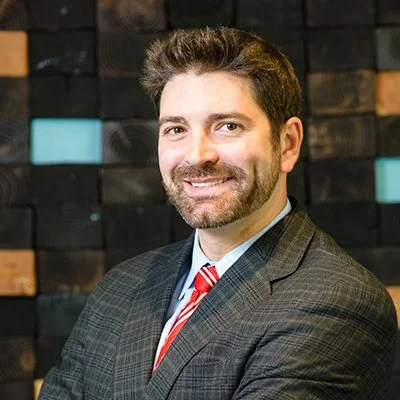
Bill Fienup - Co-Founder of mHub
In this episode, Bill and I explore how he went from building Nerf gun prototypes at MIT to creating a space where thousands of hardware founders can prototype, test, and scale physical products.
Have a Listen
Summary
In this episode I’m joined by Bill Fienup. He’s the co-founder of mHUB, one of the world’s leading hardtech innovation centers, located in Chicago, IL.
We explore how he went from building Nerf gun prototypes at MIT to creating a space where thousands of hardware founders can prototype, test, and scale physical products. What started out as a meetup group and a spreadsheet, grew into a full ecosystem with millions of dollars in equipment and billions of dollars in economic impact.
Bill shares how to test hardware ideas without burning capital, why most teams over-focus on feasibility instead of desirability, and how to validate what people will actually pay for before you build.
If you’re working on physical products, or funding them, this episode is a masterclass in how to test before you invest.
Enjoy my conversation with Bill Fienup.
Takeaways
Start with the problem, not the solution. The biggest risk isn’t building something, it’s solving a problem that customers don’t care enough about to act on.
Desirability and willingness to pay matter more than feasibility early. Teams often over-focus on building, but the real uncertainty is whether customers value the solution enough to pay.
Test demand before investing in development. Simple experiments like landing pages or fake purchase flows can validate real interest before committing resources.
Iterate in spirals, not stages. Move across desirability, feasibility, and viability repeatedly, increasing investment only as uncertainty is reduced.
Avoid building the wrong thing the right way. Strong execution can’t fix a fundamentally misaligned product, validation must come before scale.
Use competition as validation. Existing solutions signal real demand and confirm the problem is worth solving.
Focus on the majority, not edge cases. Designing for the loud minority can increase cost and complexity without improving overall product-market fit.
Community can be a powerful starting point. MHub began as a meetup and shared spreadsheet, showing how real user pain can evolve into a scalable ecosystem.
Guest Links
mHub’s Website: https://www.mhubchicago.com/
LinkedIn Profile: https://www.linkedin.com/in/fienup/
Transcript
David J Bland (00:01.698)
Welcome to the podcast, Bill.
Bill Fienup (00:03.466)
Yeah, thanks for having me.
David J Bland (00:04.952)
I'm excited to have you here. I've learned about Mhub in the past and coincidentally, I came across your profile like, I can actually maybe get Bill on here to talk about Mhub. So I'm really happy about that. My trips to Chicago have been amazing. Every time I've been there, I've been in these really cool maker spaces or hubs and I was just fascinated. I think the first time I visited Chicago for that type of stuff was maybe like 2011 or.
10 or so and there was all this lean startup movement going on and there's lean startup circles going on and everything. I actually went to a lean startup circle in Chicago early on. And I was just fascinated by the creativity and the resilience of everybody there. And I'm just so happy to have you on here to share some insights of that community and what you've been building.
Bill Fienup (00:32.842)
Mm-hmm.
Bill Fienup (00:36.811)
Yep.
Bill Fienup (00:50.763)
Yeah, I'm happy to share all the insights. It's been an exciting journey.
David J Bland (00:54.318)
So maybe you started a little bit with your background. think what fascinated me the most was you had this interesting mix of engineering and you also have your background at IDEO, which I'm a huge fan of. And maybe just give us a little bit of your background and how it kind of led into what is the beginning of what the beginning of MHub was.
Bill Fienup (01:16.832)
Yeah, I I'll try to keep that part brief, but I guess it really started, you know, when when I was in high school. And I really, you know, I kept reading about MIT and some of these research labs. And I didn't really know what MIT was, you know, early on in like fourth or fifth or sixth grade. And I finally discovered it was like a, you know, a college that you could go to after high school.
But I really set my eyes on that career because I was like an inventor when I was a kid. would modify Nerf guns and super soakers, try to get them to shoot farther, figure out how they worked. I would have like Rube Goldberg contraptions in my bedroom to turn the light switch on and off. So I was just like an engineer at heart. And so I sat on getting into MIT and I studied mechanical engineering there.
And I spent my, I did a bachelor's degree there as well as a master's. And in the master's program, I really got into product development and design. And so I, I was actually sponsored by Hasbro and I, I worked on, my dream job came true. I got to actually design, you know, and build Nerf guns and super soakers. So we had a bunch of prototypes and there's a lot of like testing and iteration and refinement.
And that's probably where I really learned how to do this process of like generating a bunch of ideas. You we had hundreds of ideas and then we would kind of present the best 30 concepts that were just sketched out. And then we ended up prototyping 10 of those because some of them didn't really meet their product lines or they couldn't see them being commercialized under their brand. But then we built 10 prototypes and some of them totally failed and others like
you know, seemed like they could work if we just tweak them a little bit more. And so we'd be iterating on these concepts and they were like slow flying darts. You know, this is like back when the, matrix came out and they had the slow flying, it was like the bullet time. Um, and so we had these concepts where these darts, you know, were powered by, um, uh, compressed air and they would like slowly fly, sort of like letting a balloon out. Um, and then we had like Nerf grenades and,
Bill Fienup (03:41.791)
you know, laminar flow water guns and all these concepts. And finally we got to the point where we were prototyping two things. were like tracer darts. So they had LEDs in the darts and they would charge in the blaster. And then as soon as they fired, they would light up. And then we had this device that was inspired by like video games where you shoot kind of an energy ball from your hand.
And we prototyped and iterate that and that actually got commercialized. So kind of a tangent there, but I think it's important to the story of like how I started to think about building and iterating and 3D printing and then testing and then refining and then like design for manufacturing. So after MIT, I wanted to continue that product design and development.
And my first job out of college was at IDEO in Chicago. And actually at the time they were up in Evanston, Illinois. So I moved to Chicago to work for IDEO and did a lot of product development and consulting. And I focused in like Med Device. And there's another project where we were working on a car for the Chinese and the European market.
And I think what like the real lesson that I learned there is like, you really have to understand your customer. And that's key throughout like all my experiences. like the, like the biggest message I tell startups at MUB is like, you have to be identifying, well, first you have to identify who your customer is, what their needs are. And then you have to be solving a problem they care about. And, you know,
for the business to work, have to be willing to part with their money to pay for your solution. for that to all work out, you have to produce that solution at a lower cost so that there's enough margin to make the business run. But at IDEO, we would do primary and secondary research. We would go to the Chinese and European markets and interview people. And I remember this was actually when the Chicago Bears were in the Super Bowl. I was in Beijing.
Bill Fienup (06:08.34)
at the time and I was looking to support it. Finally, we get to the Super Bowl and I can't watch the game. But that's like, that's kind of what you have to do. You have to be on the ground, understanding the needs of your customer and doing research and figuring out how they are using, you know, your product or similar products so that you are designing the right features that people care about.
So that, you know, I think that really kicked off my career in product development. From there, I went to Insight product development, which is now owned by Numera. And I worked on medical devices and, from drug delivery to surgical hand pieces to, you know, periphery devices, you know, that I kind of use the similar, we use similar frameworks there of really identifying
and defining the requirements first. And those are based off of, know, input from, you know, user research and then, you know, developing and testing and iterating. But that was like kind of the foundation of my career. And then I got the itch to become an entrepreneur after about seven years of consulting. And that's where like, you know, there was this time where I felt
like alone in my apartment trying to build a startup company without the resources that I had at MIT or at IDEO. And I didn't have people to bounce ideas off of. I didn't have the right tools. I had to go to my friends that had access to 3D printers and laser cutters, you know, at their universities to prototype some hardware that I needed. And there were so many challenges.
and barriers that I experienced from manufacturers not wanting to work with me because I wanted 10 units of a product to raising capital and not even having, not even knowing what I should know to build a startup company. And I think that's when I got the idea to like, let's solve that problem. Like let's build a hyper resource environment where you have a group of like-minded people
Bill Fienup (08:31.837)
that are entrepreneurs, engineers that are sharing tools, surrounded in a community of mentorship and manufacturers and access to capital. And those are some of the ingredients you need to be successful. And that's what I set out to build with MHub.
David J Bland (08:52.385)
Wow, that's such an amazing journey. mean, from playing with Nerf guns in your bedroom to actually working on Nerf guns, it must have been surreal to actually experience that. And then to apply this thinking in so many different areas, to do it on Toys R' One, to do it on medical devices is quite another with the constraints and everything that you have there. So that's pretty impressive. I'm wondering...
You mentioned a couple of things there, and I want to unpack a little bit before we move on. One is, well, you have to know your customer really well. And I know coming from kind of like IDEO background, the way we frame it anyway, and also in testing business ideas is desirable, viable, feasible. And so a lot of what we say is, well, there's a lot of desirability risk with your customer. Like, do you understand their needs, their jobs to be done, their pains or gains, all that. But then you mentioned something really quickly about, well, will they...
Bill Fienup (09:33.778)
Thank you.
David J Bland (09:44.302)
hand over their wallet or will they pay, which I categorize usually as viability. It's like they could want it, but now they're not gonna pay enough. And it's interesting coming from your hardware background because I've found when I go to makerspaces here in California, people are mostly focused on the feasibility side, which is can we build it? And I'm realizing that is not where your risk is most of the time. Obviously you have to be able to build something that's gonna hold up.
Bill Fienup (09:47.001)
Yeah. Yep.
David J Bland (10:12.727)
But it seems like today, especially today, a lot of the risk has moved to understanding your customers and then will they pay enough for a thing? And it doesn't seem like feasibility is the riskiest thing anymore. What is your take on that?
Bill Fienup (10:24.528)
Yeah, I totally agree. like, you know, I was laughing a little bit when you said that because, you know, at Mhub, like, I would agree, you know, feasibility is sort of the focus here because there are a lot of engineers here and like, want to see it work. And that to me, like the best, the most interesting part of that journey is the development and the feasibility. It's the exciting thing. It's what, you know, gets the engineers going.
And I think that's why people focus on it, but I totally agree. It's like, that's not like, I would rather have a problem that's worth solving than, you know, like rather than a solution to a problem people don't care about. Cause I think that the solution part is the easy part, but it's, it's not the most valuable part. The valuable part is what problem do people care about?
you know, problem is worth spending years of your life solving? To me, that's such a harder question than what is the solution? Because like, and maybe it's just because my, you know, my expertise are like, focused on solutioning, where like that is the easy part. It's just the bigger part. I think the part that pays
more is like, what problem should I focus on? That is a more valuable piece of the equation. And then towards the viability, have to, and maybe this is where both kind of come in, but you have to do it in a way that there's margin or there's a sustainable business. And we use this framework at Mhub as well. And I think because of our community is so tech forward and tech focused, we have to
we have to supplement our mentorship and our educational curriculum around the viability in customer demand piece. And so a lot of the courses that we teach here, we teach about 45 or 50 courses at MHub. They're focused on the business viability and customer discovery. Because the community is so tech oriented and solution driven.
David J Bland (12:48.086)
Yeah, I agree. part of your story about being in your apartment, trying to understand how to build a company and not having the resources available, it feels as if you mentioned that led into Mhub. Maybe talk a little bit about that and how did that start? What was that first test or what did you learn along the way? I mean, I can imagine how hard it would be to create something like you have. So I'm really curious how you navigated that.
Bill Fienup (13:17.494)
Yeah, I so I think it was helpful because like in Chicago, Chicago's got a big community and you know, one of you know, I was like, I guess, you know, after college and when I got in, you know, started working at IDEO and Insight Product Development, I did spend a lot of my time in these like maker groups.
And I would go to meetup groups. And I think that's kind of like where the community started and where there was support, you know, at least at the time, there was this group called MakerBiz in Chicago and there were like about 300 members. It was a very large kind of, you know, it was a Google group and then a meetup group. And we would meet once a month in different locations in Chicago. And this was sort of like the genesis of
the community that started Mhub. like any other product, you wanna build a prototype to a product before you launch it, And I built a prototype to Mhub called Catalyze Chicago. we launched in, we incorporated on August 2nd, 2013.
and then opened up in February of 2014. And we had this prototype for about three years before we, you know, before we launched as Mhub officially. like, you know, what we found in the MakerBiz community is that, you know, we would share kind of the pain points that everybody had trying to build a physical product business.
And one of the pain points was just having access to space and equipment and manufacturing connections and like the education kind of all the pain points that I experienced, you know, alone in my apartment. And it was validating, you know, to, know, you have a hypothesis of like, hey, these are the pain points that I'm experiencing, but do other, other people care about it, right? Like do other customers want a solution to these problems? And so, you know, I,
Bill Fienup (15:39.559)
I would meet in the group and like hear what everyone was struggling with. You know, I built out a, like a portal. It was actually just a Google spreadsheet for like manufacturers, you know, so we could connect the group and get feedback and, and, know, you can sort by like material or, know, by manufacturing process. And we just build a list, collective list of like, I use this manufacturer to
to CNC this part or to water jet this part or to 3D print or laser cut, or injection mold. So we had all these processes baked in this spreadsheet. But I think what people really need was like, not just a community that met once a month, but really was a bit more engaged. And so I asked the community if it would be helpful to have a physical location.
where we could all work next to each other and build out our businesses and share equipment and share resources and skills and talent and knowledge that we had to lower the cost and accelerate faster. And so that's where the idea of MHub came about is let's group together.
pool our resources together and buy certain pieces of equipment or share. A lot of people had their own, you know, own shop equipment, like their own laser cutters and 3D printers and, you know, bandsaws. And I found a place in Chicago that was willing to do month to month rent, which was like, I think that was one of the key pieces. You know, I got lucky and most
places here want like three year commitment. And that was gonna work like when you're building a business. And we didn't know if it was gonna go going to fail, but we ran it 2000 square feet. And in the first three months, we doubled to 4000 square feet. And then we doubled again to 8000 square feet. So after six months,
Bill Fienup (18:03.895)
you know, we were up at 8,000 square feet and we had a lot of traction. And that was actually when I met Haven Allen from World Business Chicago. I mean, he had a manufacturing initiative there to create growth in the economy through the manufacturing industry, job growth, you know, as well. So that's when like we realized our missions were aligned. I was coming from more of the entrepreneurial side.
trying to get access to resources for startups. And Haven was trying to build out and bolster the manufacturing economy. And so, from after six months of starting Catalyze Chicago, Haven and I partnered to build Mhub. And there's like so much I learned just from like understanding, building a team and founders, finding someone who
you know, could really pull in the proper connections to build out the ecosystem that we needed, as well as like doing the, you more focusing on the business side and being a leader. So there's like, I learned so much about like building the right team throughout kind of all the startups that I've launched. And Hayden was like the perfect partner to come in and
really create the vision and drive things forward.
David J Bland (19:37.325)
That's amazing. I feel as if you started with an existing community, you put together a spreadsheet, started working through literally just have a Google sheet and then work your way into a space and then the doubling of the size of the space. I'm interested in along that journey.
Bill Fienup (19:46.604)
Yeah.
David J Bland (19:59.821)
And maybe even beyond that, where are some things you thought, this is a sure win, but it went sideways or something you tried and it didn't turn out the way you expected, but you still learned from it and used it to shape what you did afterwards.
Bill Fienup (20:05.942)
Mm-hmm. Yeah.
Bill Fienup (20:13.632)
Yeah. I mean, this is every day. Like when you launch something, you're literally doing all the jobs. You're wearing all the hats. You know, I was taking out the trash. was cleaning the dishes. I was fixing the air conditioning, you know. But like there were other lessons. Like, you know, we the building we had didn't have they had like hard keys and we couldn't get every member a key to the building and then to our room.
David J Bland (20:18.7)
You
Bill Fienup (20:44.156)
So we had to do these crazy workarounds and we built our own like Arduino based RFID like card reader because we couldn't afford like buying like one of these controlled, you know, systems. And my God, you know, it usually worked. I would say about 99.9 % of the time it worked flawlessly. But like the 0.1 % of the time it didn't work was a huge headache.
And they were, you we were open 24 hours. And there was a time that some of our companies, they have overseas suppliers and like they would work, you know, the night shifts. And I remember one of our members would call me at, you know, I had like my number there that they could call the good access or it was like a Google number. you know, at 2 a.m. I had to like go open the door to let people in because, you know, the Arduino, I think
After, what is it, after 56 days, the clock kind of rolls over and a lot of this stuff would break every so often. And then we just, we found a workaround to that issue. But I think that was one of our struggles, but we were scrappy. We built our own furniture. One of the major projects that...
sort of like the, know, when a new member came in, they would build their own desk. And it was like, it was a great way to learn how to use all the tools in the shop and like a way to meet the community and almost like, you know, a pledge brother, you know, where you have an initiation, like you've got to, you you got to, you got to do something to join. So, you know, we actually had, we would go to the hardware store and get plywood and
build our own furniture and desks for people to work on. So very bootstrapped and very scrappy. And we've grown quite a bit since then.
David J Bland (22:51.282)
It reminds me a little bit, very different type of coworking facility, but there some folks I met before who actually didn't charge for their community, but people had to contribute to the community to be a part of it. And it really weeded out pretty quickly the folks that weren't a good fit because as soon as money changes hands, it's, the Wi-Fi doesn't work. I pay for this. Why is the Wi-Fi bad? But if you're not paying for it or you're paying a really low fee,
Bill Fienup (23:14.944)
Yep.
David J Bland (23:21.176)
is like, how do we fix the wifi together? That's a very different conversation. So I love that you built your own furniture and just were really scrappy about it. something you said, I'm really wondering, is this still an issue? You mentioned that one of the reasons behind this space was that it's really hard to work with manufacturing companies and get 10 units.
Bill Fienup (23:23.86)
Yeah.
David J Bland (23:50.444)
or it is small batch because you don't know what the finished product is exactly going to be until you can test in small batch, but these large manufacturers, of course they want big batches because they wanna do a run. How much of that is still an issue or still holding back entrepreneurs who want to do something with hardware? how was it today versus back in 2013 or 2014?
Bill Fienup (23:50.97)
Duh.
Bill Fienup (24:04.287)
Yep.
Bill Fienup (24:08.01)
Thank you.
Bill Fienup (24:14.621)
Yeah. Yeah, I mean, I think that is like the one of the main problems that I'm up to solving is that, you know, we, we have a facility where you can prototype and iterate and we've got $6 million worth of equipment, you know, in our machine shop. and so I would say like, you know, if you're in Chicago, it's, definitely not an issue or if you have access to, you know, a similar facility.
inner city, but I would say things have gotten a lot easier than they were 10 years ago. You know, this I would say that like the 3D printers really democratized sort of the making movement and allowed people to have access to tools for relatively cheap. You in my consulting days, like 3D printers were really expensive and I actually worked at
Z Corp when I was an undergrad at MIT, but there was another 3D printing company that got bought out. But that's when 3D printers were really expensive and now they're very cheap, they're easy to procure and print your own parts, or there's so many ways to outsource fabrication. So I'd say with Xometry or 3D hubs,
Protolabs, there's a lot of tools where they are the Ubers for manufacturers where you can upload a file and get a part. And that like now you can get a part in maybe a week, but if you're an Mhub, you can get that part in hours and then do another design and iterate. And so I think the speed of iterations,
If you have your own tools on site where you can test quickly and then modify and then reprint or remachine, you can develop much faster. So I think a lot of people still have access to those tools a lot more than they did say 10 years ago, but you can really accelerate the development if you have access to them yourself.
David J Bland (26:41.085)
Yeah, I do think it's changing. do think 3D printers, I'm in agreement there that especially with the price coming down and just the technology and having digital models you can pull from. I'm wondering on your side,
So for example, I had the pleasure of meeting like Tom Chi back in the day of Google Glass and he was post Google Glass doing these like rapid iterations of things where they'd have customers come in and they would test with customers almost like a Shenzhen kind of thing. And then they would have to make iterations within like the hour and then another wave of customers would come in. And I thought it was really cool. was also way, it was just breaking this model of what this could look like in hardware. And I'm wondering on your side, you teach a lot
Bill Fienup (27:14.091)
Yeah.
David J Bland (27:25.069)
of classes at MHub and you're really, you've been doing this a while and you're an expert in this area. Like how are you teaching these principles of iteration, know, figuring out if the customer has the problem or not, or if you could just share some examples of how you're trying to approach that.
Bill Fienup (27:40.262)
Yeah. So yeah, I think it, you we really try to start with the customer first identifying who your customer is, what their needs are. And you can do that through primary or secondary research, but like you want to and secondary research is a lot easier now with some of the, you know, LLM models. But like really talking to a customer is so important and seeing if they share that same pain point.
you maybe that you had or that you've observed and then understanding how much they're willing to pay for, you know, for that feature. I teach a class with a product called the Can Chill that I've been developing just so I can stay on top of, you know, of mentoring the community here. And it's a device that chills a canned beverage. And throughout that process, like I've learned, you know, so much and
This was more of a pain point that I had, like that I've always, I really enjoy drinking cold Red Bull. But there's been, you know, at the office, there's been a couple of problems where I would forget that I put one in a freezer and it would explode. And, and this was back when I was at Inside Product Development. I built my own Red Bull chiller that it was just like a machined block of aluminum.
with a cooling coil around it and it had a plexiglass tube that was about three or four feet tall and I hooked up compressed air to it so it was more like a cannon. And so you would drop a cannon there and it would chill and then it would shoot up and you could catch it. And what was interesting and a little unexpected is that it only took about like three minutes to cool the Red Bull from room temperature down to like
34 degrees because it worked off of conduction. And so, you know, I love being my own customer when developing a product, but then like the question is like, you know, do other people value this solution? And I can talk a little bit about like in this class that I teach, like, you know, I go through kind of the framework you've been talking about, like the customer discovery, the feasibility, the viability.
Bill Fienup (30:08.808)
And at first you take these broad circles around it. So the first step in the Cancel was like, are people searching, how do you chill a beer in under five minutes? So you can look at just the amount of Google pages. think when I started there was 64 million Google pages just on that problem. And so that can quantify. And then you look at the competitive landscape. You look at the IP.
you see, you know, like a lot of people get so discouraged when they see a competitor's product and like, you know, that just, that just validates that other people experience this problem, you know, so you shouldn't get discouraged. You should be like, you should either be like really happy that you don't have to spend two years building out your, own custom solution and you could just buy it, you know, because it's way less expensive to buy, you know, say a $50 product than it is to, to invent it.
So you should either be happy that you could just purchase a solution or you should be happy if you're still passionate and perfecting it, you should be happy that other people experience this pain point because it validates your market. And so then there are tools that you can use to scrape Amazon data like Unicorn Smasher or VyloLaunch. I'm not sure if all these tools still exist, but like Jungle Scouts, but you can.
you basically can see the size and volume that these products sell on a daily basis and look at price history. But that gives you a size of how many people are actually buying competitive solutions. And after that, it's important, are you able to protect this business is more of the viability piece, but is there freedom to operate?
in terms of the IP, the intellectual property. So then you can do some patent searches. And then it comes down to like, is this a feasible product? So in the class I teach, I go through a spreadsheet of calculating what size would this be if the goal was to chill a 12 or 16 ounce can from room temperature down to 34 degrees.
Bill Fienup (32:35.206)
and just calculating the basic rates of spreadsheet of actual engineering calculations where you have the thermal mass of your cooling device and how much energy is it gonna do you have to transfer into a can, a 12 ounce can or a 16 ounce can. And so how big is this device gonna be? I'm just trying to figure out is it gonna be the size of a
ice cream container or is it going to be the size of a refrigerator? And so those are kind of the big swaths that you do first. And then after you kind of march around that circle of customer discovery, feasibility, viability, then you de-risk all of those and then you zoom in a little bit deeper. spend more time, more money de-risking each of those categories with, I did
finite element analysis and some of my designs and fluid flow and understanding the thermal dynamics with the heat transfer and figuring out how quickly it was going to cool. Then I did some 3D printing and had to machine some parts to get the materials, the proper materials with the heat transfer properties.
And so you continually do this testing on the feasibility front. And then on the customer side, you know, I actually built out a website with renderings of the product before I even started to manufacture it. And I wanted to test like, do people click on the buy now button? And when they click the buy now, it said, sorry, you know, this product is out of stock. You know, put your email address in and I'll let you know when it's available.
But then I got a sense of like what my customer acquisition cost was gonna be to acquire, you know, that customer. And so I had some ads running on a website with a product that didn't exist just to figure out if people would buy it. And I think that's kind of the diligence that you need to do when you're exploring, you know, what features should be in a product. You know, you can do some quick A-B testing of...
Bill Fienup (34:58.83)
pricing and features and colors and, you know, I think I learned a lot from that type of testing.
David J Bland (35:08.712)
Yeah, there's a lot to unpack there. think.
this idea of testing with people versus testing on people, testing with your customers to see if they would actually want this. I think that's always a tricky balance in trying to figure out where that line is individually. I know I've gone to websites where I often wondered if the product existed because it's out of stock, but sometimes they're just always out of stock, and you're like, hmm, what's going on? But I think this idea of testing the demand and seeing are people willing to
pre-order this or I Kickstarter and different crowdfunding campaigns are also, it's how I've bought hardware in the past where I was like a product, I was like, it's a specific need I have, like I have some hearing needs. And I was like, I'm willing to pay upfront for this because this solves a very specific personal need for me. And for me, was headphones. But I feel like,
Bill Fienup (35:52.904)
Yeah.
Bill Fienup (36:02.5)
.
David J Bland (36:09.213)
I feel as if you could spend a lot of money still, even with the 3D practices of building in feasibility land. And I'm wondering from a funding point of view, and this is something I'm always trying to wrangle with my teams, is can we maybe give just like enough funding to start de-risking some of this, these big circles, as you put it. And then as you find more evidence and you give yourself permission to invest more, you get a little more funding.
Bill Fienup (36:22.273)
Yeah.
David J Bland (36:38.813)
maybe like in tranches or something. I feel here in Silicon Valley, I still see people get way too much funding for something to build. they build and it's all the money's gone. I mean, they've built it and it looks amazing, but they got the viability wrong, or they got the market wrong. And it's tough to pivot once you've built this thing and now you're trying to figure out how to get it into the right hands. So I'm wondering at Mhub, how do you think about these things or how is it evolving there? Or what do you see from your perspective on this?
Bill Fienup (36:55.618)
Yeah.
Bill Fienup (37:07.907)
Yeah, I I definitely recommend a spiral of like, just testing the waters in each of those categories. You know, and then as you de-risk, you invest more time and more money in, you add more people to the project. You know, like, like I think it's so important to test all those categories because if you just go down the feasibility route,
Like you could be building the wrong product and that's like the most expensive mistake. And I see it like in the consulting that we do here as well as like, the customer wants a solution to the wrong thing and you burn a lot of money, a lot of time and you're building the wrong product. And so it really makes sense to de-risk and really figure out what
features your customers are willing to pay for. And maybe you have the idea right of there is a need for some solution that addresses this market. But really getting those feature sets right is where you have to talk to your customer and show them prototypes, see how they use them, see what features they gravitate towards. You may decide to remove features because it adds too much cost to the product.
or they don't add enough value, you know, or you can't get that product market fit because it's just too darn expensive for that feature that nobody cared about, you know, or the other trap that people fall into is like, you know, there's a loud voice from 1 % of the market that is driving all your decisions. And, you know, you should be designing the product for the 80 % of the market. Cause that's where your volume is going to be. And, you know, you might need to ignore
kind of the loud voices that are really demanding these expensive things just because of their unique situations. And I think that's kind of an important lesson too is like, at M-Hub, we poll our community multiple times and we have a survey that we send out every year to get feedback on.
Bill Fienup (39:32.059)
how we can improve the organization, what tools should be in the shop. You gotta take all that information in to make all the decisions.
David J Bland (39:47.764)
Yeah, I imagine it's a challenge sorting through all that and then it's up to you and your co-founders and your team to make what you think is the best. How are you envisioning MHub over the next year or so? What gets you excited about it?
Bill Fienup (40:36.784)
Yeah, I mean, I think, you we've we've got so many entrepreneurs in this community and they're the problems that they're solving or, you know, are impacting the world and humanity. And I love just diving deep with each of them. So we've got a water cohort right now.
And there's, you know, typically we have an accelerator program and there's a med tech category. There's an energy, smart, sustainable manufacturing category. And we've got a WARA cohort right now that are solving very interesting problems. And I think like helping them navigate, you know, not just the solution, but how to build the business I think is really, is really interesting.
And I think it's like the the magnitude of the problems that these entrepreneurs are pursuing is what really gets me out of bed and excited to to jump in and give them advice and and see if we can help them navigate the startup journey. You know, there's so many ups and downs in the startup world that, you know, it's really like a roller coaster and
You know, the people here are taking huge risks and they're devoting a lot of their life to building something that they're so passionate about. And so you see the excitement here in the community. You know, over the past eight years, know, our community's raised about 2.3 billion in capital. They've generated about 2.2 billion in revenue.
They've launched 1800 products, they've patented about 600 patents, and they really have an impact on the economy, hiring about 7,000 people to join their company, and they're manufacturing locally. So I think it's just really exciting to see the energy and the passion in the community here at
David J Bland (42:56.339)
That's such an amazing story. I mean, it starts off with a meetup and a Google spreadsheet and month to month lease with you hacking the doors so people can get in to having that kind of impact is, that's incredible. I'm wondering for those of you that are listening and you want to reach out, where's the best way to get in contact with you if they're more interested in learning more about MHub?
Bill Fienup (43:19.072)
Yeah, so they can go to our website, mhub.org, or they can email me at bill at mhub.org as well. And I'm happy to help, know, if you have an idea for a startup company or you're a passionate founder in hard tech, you know, I'm here to help, help you navigate through the product development journey.
David J Bland (43:47.914)
wanna thank you so much for sharing all that. And so we'll put those links in the description and on the podcast detail page. I learned so much just listening to hear you, how you think through all this process. And it's very complimentary to how I think. So it just gets me excited about there's so much more to do in hardware startups. And I love the theme cohorts. There's so much there. I just wanna thank you so much for sharing your story with us and all you're doing at Mhub.
Bill Fienup (44:12.628)
Yeah, well thank you very much for having me.