Moses Adedoyin | How I Test Before Real Patients
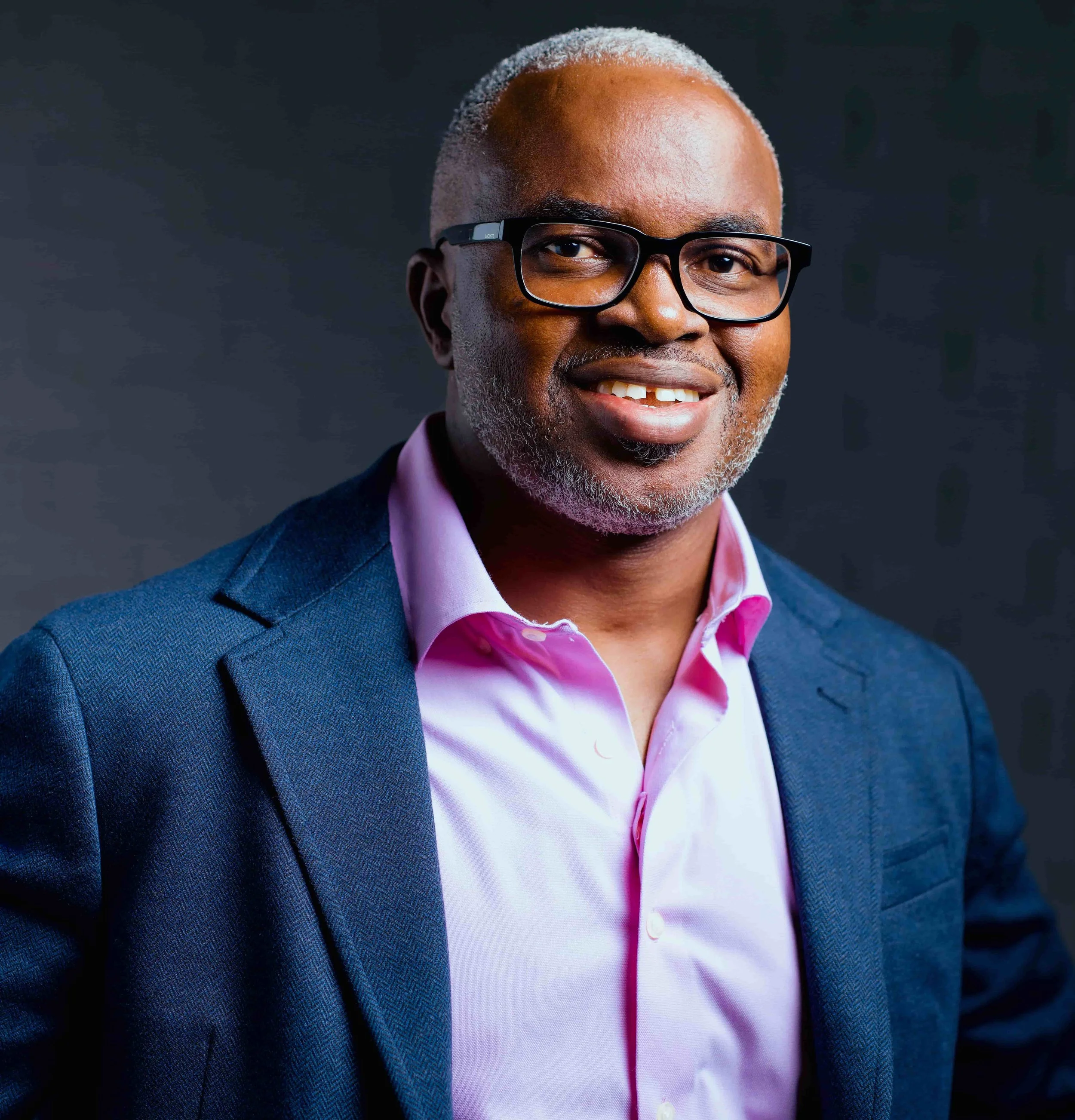
Moses Adedoyin - Head of Venture Design & Innovation at GuideWell
In this episode, Moses and I discuss what testing looks like when you work in one of the most heavily regulated environments imaginable, from digital twins to synthetic data.
Have a Listen
Summary
In this episode, I’m joined by Moses Adedoyin. Moses is leading Venture Design & Innovation over at GuideWell, where he’s testing new healthcare solutions to help patients.
We discuss what testing looks like when you work in one of the most heavily regulated environments imaginable. Moses shares how his background in engineering and simulation helped shape the way he approaches testing and how his team built a lab where they could test new ideas safely before introducing them into a live healthcare environment.
We deep dive into the real world practicality of using synthetic data to increase the fidelity of experiments and how that can dramatically reduce the time and cost required to evaluate new solutions. Moses and I explore digital twins, AI-assisted simulation, and how technology enables healthcare teams to spend less time on administrative work and more time actually helping patients in need.
If you want to learn more about testing in highly regulated healthcare, using AI and synthetic data, then you’ll love this episode.
Takeaways
Testing in regulated environments requires a different path. In healthcare, teams can’t always “just talk to customers” or run a quick experiment because PHI, consent, security, procurement, and regulation all shape what is possible.
Synthetic data can help teams build evidence earlier. Moses’ team uses synthetic data to test concepts, technology, and early value before involving real patient data, which helps reduce both cost and cycle time.
Increase data fidelity as the evidence gets stronger. Their progression moves from little or no data, to synthetic data, to de-identified data, and eventually to real PHI only when the experiment justifies it.
The goal is faster, higher-quality decisions, not just faster experiments. Synthetic data can help eliminate weak technologies or partners before teams spend months navigating legal, security, and procurement requirements.
Synthetic data does not replace real patients. It can work well for feasibility, proof of technology, and early proof of value, but real people are still essential when testing behavior, trust, experience, or clinical outcomes.
A safe sandbox makes experimentation possible. Creating an environment outside the core production system allowed Moses’ team to fail faster, learn safely, and generate evidence before asking the organization to make larger investments.
AI should free people to do more of the work only humans can do. In healthcare, Moses sees the opportunity in automating administrative work so clinicians and care managers can spend more time directly helping patients.
Guest Links
LinkedIn: https://www.linkedin.com/in/mosesadedoyin/
Transcript
David J Bland (00:01.122)
Welcome to the podcast, Moses.
Moses Adedoyin (00:03.195)
Hey, thanks for having me, David.
David J Bland (00:05.464)
I'm excited to get you on, you know, it's sometimes I feel like, you know, I work with all these cool people and I want to get their stories out there. And I was like, Moses, Moses is one of those people, you know, because we've been working together for a bit, and I love how you think about things. And I love that you're not afraid to push boundaries in heavily regulated industry. And I thought our listeners could probably learn a lot from just hanging out with you. So I just want to appreciate so much of you taking out.
Time of your busy day and and hanging out with us.
Moses Adedoyin (00:36.604)
Yeah. No, absolutely. Thanks for having me. been a fan of you and from day one and when I heard about those podcasts, I'm like, I gotta be on. I'm I wanna come on there. So I started listening to it. you know what, if David doesn't invite me, I'm gonna invite myself. And I think we were talking one day about something else, I'm like, Hey, by the way, you
this podcast and then you were like, Would you like to come and I'm like, yeah I wanna sound like I was kinda like I have such a busy schedule, David, so I'm not gonna have time but now really excited to be talking to you two th today.
David J Bland (01:20.206)
Yeah, maybe it was you planting the seed and I didn't even realize it. but that was great. Hey, either way, you're here. And I think for those that know know a lot about you, and and and I do share a bit in the intro, you know, what what what draws you to this type of work? Like what draws you to, you know, the stuff that's really uncertain and you know, you kinda have to find your way through it and it's very ambiguous, especially in regulated industries. Like what what what draws you to that kind of work?
Moses Adedoyin (01:23.164)
Ha ha ha.
Moses Adedoyin (01:47.349)
Yeah, no, I yeah, that's that's a question that I'm actually I'm I'm glad I can answer that question 'cause I can tell you maybe a few years ago I d really didn't know I couldn't l actually articulate what drove my desire to test, wouldn't my desire to explore things that others found challenging. well I really th you know, I think it goes back to me being an engineer, like
You know, I growing up and this is an interesting story, but growing up,
You know, we always talk about like if you grew up in a Nigerian family, you only give you three options, right? You're either gonna be you're you're gonna you're gonna your your parents are gonna have that conversation with you, like you have three options, all right? One is to be an engineer, a doctor, or a lawyer, right? And anyone if you don't choose any of those options, you're a complete failure, right? And so I had one of my dad had one of those conversations with me and unfortunately
The option it presented to me, right?
was to be a doctor. And I said, no, I don't want to be a doctor. I want to be an engineer. but that that he even found that he was that was unacceptable to him. But we finally agreed that, you know, I would be a doctor and I'm glad I made that decision. So I started off as an engineer, got trained as an engineer. I actually used to write code, right? that would go on I used to write embed this is back when you you know embedded code came and you write you know you you you I worked for this company
Moses Adedoyin (03:23.13)
still it's still around called MatWorks. It was the creator of MATLAB, right? Anyone that yeah, I worked for MATLAB. That was my first job. I was a MATLAB wheeze. I love MATLAB. And then I got out of school and they were like, hey, do you want to come work for us? I'm like, absolutely. And so I went out there, worked, worked in you know, outside of Boston, and you know, I used to do work with this, they had a product called Similink, and it was a rapid product.
David J Bland (03:28.91)
Moses Adedoyin (03:52.763)
prototyping software and I loved it because what it allowed you to do was you explore different things in a simulation in a simulated environment like you could change different parameters even if you were building something there potentially if you like missed it by a small margin it could it could be fatal but you could do that in a simulated environment and so I did that and then you could generate code we're talking
Over 20 years ago, like this technology existed. And I I was fascinated by the idea of like testing things before you actually like put it in a live environment where you could potentially hurt or kill people. So I was like, man, I I'd love to do this. but fast forward to where I am now, right? Of course I've gone through different industries and I've I've pulled in some of those that mindset, but I really didn't have
the opportunity to pull a lot of that until I came into healthcare. specifically when I came into this role, right? so I I I got hired. I was part of this venture studio, right? call it Enterprise Innovation. And you know, we were given the mandate to go find the white space and, you know, build companies, build products out of it out of that. but the challenge is, right, you're in a regulated industry. And so
where we're told, well, that's a great idea, but, you know, it wouldn't work. Or that's a great idea, but there's all this reasons why we couldn't do it because, you know, CMS, which is, you know, the center of Medicaid and Medicare, right, that's the regulated body for Medicare and and government programs, right? And then you have all the other things, other regulations and policies that that kinda
Deter you from doing certain things. And so you have to get very creative in how you build in a regulated industry. And so three years ago, I was faced with like, okay, you know, how do we break through this barrier of regulation, right? Where decision making is involves a committee, and the committee always tells you no.
Moses Adedoyin (06:09.446)
And it so happened that that was when I was exposed to this idea of, you know, testing business ideas. And I was like, yes. And it took me back to my rapid prototyping days. And I was like, I get to like build prototypes, I get to build all those things and then, you know, test it out and then get the evidence and then go show the evidence, you know, to the decision makers. and I totally fell in love with it. Right. And that's when I embraced, I remember my boss at that time.
She she was like, man, you were so excited about this thing. I remember that was you remember Kirsty, right? This is when Kirsty you know, we started talking to you about, you know, bring you on as a consultant to help all help us, you know, put put it into practice. And we so we were in the very early formative stages of of sort of our venture studio. And and so I started working on on that. And so what we ended up doing was
Building a lab that allowed us to explore the heart of the possible. And really what drove that was we wanted to, we had to make things real for our internal decision makers, right? So it wasn't so much about, hey, you have an idea, right? It was about, well, how do you, how do I know this idea works? In other words,
This is a risky idea, Moses. Right? Like tell me, give me some evidence that tells me that this is gonna work in the real world. Now because you're talking patience, you're talking, you know, this is going to impact real people, right? And it could, you know,
impact their health in a positive way, it could impact their health in a negative way, right? And so, so we built the lab. And but before we built the lab, we we used to work with consultants, right? You know, we used to we had some external consultants that will pay. And it was relatively ch you know, more affordable than going through IT, right? So we if we wanted to build a small prototype, maybe even like a small a website to just, you know, do some early validation, right? If we got IT to do it for us, it would be more expensive than getting a small
Moses Adedoyin (08:22.274)
IT shop to do it for us. And so that's what we initially started off with, right? Then we found that that even that was still expensive. And so we needed a more economical way to do that. And so we had this vision of building a sandbox environment. And that sandbox environment was a game changer for us. One, it allowed us to be able to fail and fail fast, right, in a safe environment, right? So talk about regulation.
So, how can we do this so that people can say, okay, all right, we're doing this testing, but it's still, it's not within the core business or the production environment, but it's still safe. And so IT security teams still blessed it, right? They still have to go through all their, you know, their checks and and and whatnot. So, but it was outside of the core, right? Outside of our firewall. So that that allowed us to be able to explore things and test things and and and then we built this gated decision making.
So we had different phases in our work. So in the early part of just the defining of the problem, and we spent a good amount of time, right, in even articulating what is a problem to be solved here.
And there's a lot of things that we could go after, right? But what is that one thing that could, you know, change our business in a positive way? And so we will come up with all those different problems and then once we align on it, we get all the decision makers again. It was all this gated decision. And then when we get to like, hey, we have a number of ideas, what are the ideas that we actually want to take forward? We then go through another gate and then w we'll get to where we have a concept it and then we do a proof of concept and things like so we having all this is sort of like a venture a
VC, you're going to a VC. We had a an internal sort of investor committee that would weigh in on those ideas and then be able to invest it first in, hey, do we even approve of this before you even put in any sort of capital towards it? So yeah, the game the the the lab was definitely a game changer for us and it is one that started off as a sandbox and allowed us to explore. So my gravitation to
Moses Adedoyin (10:33.152)
to to testing really started off as me being an engineer and just the problem solving. I approach every problem as a problem and I approach it sort of the same way as as an engineering problem. Find a solution and get it out to the market and start getting early read on whether it's resonating with customers or not.
David J Bland (10:55.661)
I love there's so much to unpack there. I was thinking your story about the three choices. A lot of my listeners don't know this, but I had a scholarship to a pharmacy school coming coming out of high school. And I remember going to my mother and saying, you know, I think I want to be a designer instead. And it was like, What? Like how how are you making this choice? And it was just more I you know, I had this feeling of
Moses Adedoyin (11:15.678)
Yeah.
David J Bland (11:22.423)
You know, I think I'll have more fun in design school than going to pharmacy school. And and then you know, my my design it's it's interesting because my design skills have kind of permeated my my career. Maybe I'm not viewed as a designer, but like just yesterday, you know, I'm live drawing through all my slides. You've seen me present 'cause 'cause we work together. And I was like, this is how I'm using my design skills, right? but it's so interesting, you know, giving the choices.
Moses Adedoyin (11:37.81)
Yeah.
Moses Adedoyin (11:44.934)
Yeah.
David J Bland (11:52.38)
Like a governor or pharmacist, or like and I'm like, maybe design, maybe art schools for me. And also, I think, and I've mentioned this on other episodes, you know, I I have a really hard time with uncertainty. And it sounds crazy from somebody that wrote a book on it on how to deal with it. But I mean, that's how you know, when I'm making a big decision, I'm like running it through a process. Like, okay, what assumptions am I making here? You know, what evidence do I have? And
Moses Adedoyin (11:55.121)
Okay.
Moses Adedoyin (12:08.228)
Right.
David J Bland (12:18.633)
It just happens to work for organizations and teams as well. And with your kind of going from engineering and uncertainty, and I love your simulation story. I was just talking to somebody in a master class yesterday who was who kind of came from like quality assurance and testing. And he's like, I loved your book. He's like, I came out of the testing and I'm in new ventures now and I have
Moses Adedoyin (12:42.041)
Mm. Mm-hmm.
David J Bland (12:42.487)
to a I mean a process, right? And and it's a testing process. And so it I'm always fascinated by who's drawn to this space. And that's why I asked that question, because I think it's everyone has their own journey and their own story of you know why they're drawn to this kind of work.
Moses Adedoyin (12:50.12)
Yeah. Yeah.
Moses Adedoyin (12:57.118)
Yeah, yeah. Absolutely. Absolutely. But that yeah, no, I I I can definitely relate with that. And well the good news is my dad is pretty happy that I ended up where I ended up. yeah.
David J Bland (13:11.531)
Yeah, and I think with our work together, you know, just sharing at a high level with our listeners, you know, when when you go into regulated environments, it's always like, just go talk to customers. And you're like, Well, are we allowed to talk to customers? And then little things such as you know, I remember the specific situation where we were talking about surveys, you know, and and I think normal companies like, just run a survey. And you're like, Well, can like
Moses Adedoyin (13:31.017)
Yeah.
yeah.
David J Bland (13:36.736)
Is there PII in that survey or is it HIPAA compliant stuff we need to worry about? And how do we get our survey approved or certified? And it's actually kind of not straightforward on how you do that with some of the existing tools. And I remember with my other clients, you know, we have to talk to cardiologists. And it's like, well, you're not going to find a cardiologist at the coffee shop, you know, you're probably going to have to recruit them. And and that can be up to, you know, a thousand US dollars per
Moses Adedoyin (13:38.258)
Yeah.
Moses Adedoyin (13:50.706)
Yeah.
Moses Adedoyin (14:00.947)
Yeah.
Moses Adedoyin (14:05.768)
Yeah. Right.
David J Bland (14:06.229)
Interview. And I think it's just I feel as if a lot of these forces are are at play and we're trying to do discovery and we're trying to do it in a very authentic way. And and you're h and you just hit a lot of these walls like you you do day to day. And and it's more of a like how do you navigate that? How do you keep pushing forward when you feel like the the forces are coming at you of no, no, no, you can't do that because you gotta do this and and I think it's just really easy to say, it's not possible here.
Moses Adedoyin (14:12.766)
Right.
Moses Adedoyin (14:17.502)
Yeah, yeah.
Moses Adedoyin (14:28.115)
Yeah.
Yeah, yeah.
Moses Adedoyin (14:35.922)
I know, I know. It so so that's that question is so loaded and and you know, I I when I think about it it's it's one that I
You know, there's a little bit of resilience and I'll be honest with you. When I came into healthcare, I was sort of naive when I came into healthcare 'cause I I was you know, I d I'd been in other industries and prior to this I was in e commerce online marketing, right? Where you're I mean it was so easy for us to like we come up with a new idea about something and we just go and test it, right? There's no like, hey, we you know, we have a new feature there,
You know, I I work for a company that mostly was a website, right? We build website building products. and I had a PNL responsibility for a domain registration business, right? and sometimes, you know, we would we would sell those domains with just like off you know, like ready to go go page, right? A one pager just to kinda get you started. and and I had other products as well. So just
One little feature you want to add, right? And so that was frustrating initially. I was like, are you kidding me? We can't just go and just put out a survey and and and use people's medical information, you know, like, yeah, this is how this guy is going to like run this company.
So I learned very quickly that PHI was a thing, right? And and you have to be very cognizant of the fact that you're using, you know, patient information, right? even when you're dealing with the patient themselves, you have to have consent to be able to use their PHI. And so I remember one of the experience experiments that we designed, it was for Medicare, right? You know, of course, little did I know that, okay, talk about, you know, the industry as a whole is regulated, Medicare is even more regulated.
Moses Adedoyin (16:40.102)
And I remember we w we were t we wanted to go test this really cool concept about medication adherence, right? We had this whole gamification hypothesis, right? You know, that hey, if we gamify it, right, it wasn't a new concept necessarily, but it was one that we wanted to explore even further around, you know, behavioral modification, right? You know, I I don't have a degree in in in human psychology, but there is proven, you know, methodological
Around that. And so we actually saw very early results. But before we we did this, we we had a specific group of Medicare enrollees we wanted to test it with. Well, first of all, we were told we couldn't do that, right? Because we couldn't just pick a certain group. If we did it for one group, we had to do it for all, right? And I can't I can't remember the the name of it. It was
I can't remember the name of it, but there's a policy around it, right? So I had to learn some of these Medicare policies very quickly. But it was this I you know policy that didn't allow us to just go test it with it. And of course we couldn't go test it with the entire population. You don't want to do that, right? And so we had to come up with this kind of novel way of of doing it. and ultimately I felt like we didn't get get the
The true results of the experiment, because we had to like reduce the experiment to the point we had to remove certain parts of the experiment because if we did that, then we had to do it to all. And so it really changed even the way we designed the experiment. So even the experiment itself was not effective, right? and so we've had to deal with things like that. So what are what so so one of the things that I've that we've been thinking about is, you know, in in the regulating industry like us, where PHI is is
is so important. So what happens is pilots. That's why in healthcare, pilot is a big thing. I think even the the term that that someone came up with, I think it may have originated from the healthcare space, pilotises. And it is the idea that you know things die in pilot, in pilot purgatory.
Moses Adedoyin (18:57.5)
Right, eighty-five percent, I forget what the number is, is some somewhere in the neighborhood of about eighty five percent of pilots don't make it past that, right? In especially in healthcare. And I think a lot of it is because of the the the the way the ex the pilots are designed and and the the way the experiments are designed, you have to use PHI. First of all, it's very it's a long process to even get there, right? You gotta sign all this agreements, BAA
You know, for those that don't know, BAA is a business associate agreement that protects, you know, the that that that puts the responsibility on the on the parties that are use that have access to PHI, that they're gonna be responsible or they're gonna be they're gonna handle it responsibly. And then there are other pro protections that you have to put. You have to make sure that you, you know, your SOC 2 type 2 compliant, for example, right, where you're gonna house it. So there's a lot of
requirements which makes it even more challenging with the partners that you bring into the space to to partner with you to solve a problem. So oftentimes when we bring some of the early stage companies that we work with, some of them can make it past that initial phase initial stage of of the requirement, right? Because you know being sock to type two, right, it's expensive and you, you know, and then of course there are also insurance requirements that you have to have in place, right? So all
All these requirements mix is very exclusive and man is restrictive, I should say, in like innovating or testing without actually working with real customers. And so by the time you get to testing with real customers, right, you've lost a lot of time. And and because you can't do it in
with everybody, right? You have to change the way the experiments are designed. And so s the ways that we've we've we've actually g gotten creative in I think up until recently where where the technology has advanced to where you can cr generate synthetic data, right?
Moses Adedoyin (21:11.472)
that is looks just like the member, right? The ability to even create a digital twin of a patient, that's a game changer. And so when we designed the lab and created the lab, one of the things that we did was the ability to be able to create fake data, synthetic data. And so about 80% of the experiments that that we that we do to just get through the early proof of concept or proof of technology or proof of value.
We can do that with synthetic data that looks a lot like the member without actually touching the member. And so we've been able to get through that, that early stage of evidence that you know, as you talk about in test and business ideas, right? Is this incremental evidence you're trying to build, right? How do we go from no evidence to some evidence? And so that's one of the ways that we've been able to advance, right, past this notion of you've gotta have patient.
information which might take months and by the time you even do that you have to change the way you do you you design the experiment. So that's one piece of it. And then the other thing I would add to it is some of the things that we've done to advance how we even do experiments is this idea of the identified data, right? You know, you go from synthetic data that gives you a level of evidence and that's how we have actually we have this data progression that allows us to be able to do advance the c the the fidelity of the experiment. So
synthetic data allows us to be able to do proof of concept, proof of technology, and even do early desirability testing, right? Do customers like it, love it, right? So we can go from maybe a conceptual
Prototype, for example, where you have wireframes and then you're trying to get feedback from real patients. Now we can design a fully functional prototype early, still early, and put it in front of users and actually have them use it and use it as if it was it was it was their data, right? But it's all fake data that cannot be connected to that person. So you're John Smith, you're pretending to be John Smith because we have John Smith's data there, right? And so that has allowed us to be able to increase.
Moses Adedoyin (23:25.16)
the fidelity of our experiment without compromising on on on patient security, patient information.
David J Bland (23:34.945)
Yeah, it's fascinating. I think with synthetic users and synthetic data, it's a f it's a kind of a hot button topic right now, especially in the research community and in, you know, the peer conversations I have, there's somebody or they're completely against it, you know, that you shouldn't use it at all. But I think in a in a way, you you you are making the case for it being valuable in a situation where otherwise it's going to slow you down and it doesn't necessarily replace
And we can talk about this a bit. I don't think it necessarily replaces the testing with actual people, but when you're in such a heavily regulated environment, you know, you have all this data but you can't use it or you can't use it in specific ways. But you're you're generally trying to use it to improve the patient experience, to improve their lives. And I could see where it would be frustrating to just
Moses Adedoyin (24:06.857)
Yeah.
Moses Adedoyin (24:19.059)
Right.
Moses Adedoyin (24:23.529)
Right.
David J Bland (24:29.798)
It takes so long to make any progress. And then by the time you get to the point where you want to test with people, everything's changed and priorities have shifted and the world has moved along. And yeah. So it's it's a it's an interesting way. I think, you know, this conversation with you and and I'm not trying to con I'm not trying to convince our listeners either way whether they should use synthetic data or not, but I think you make a a pretty solid case for
Moses Adedoyin (24:38.809)
yeah, absolutely. One of us is moved.
David J Bland (24:59.356)
why it helps speed things up. And it feels as if, not to put words in your mouth here, but it feels as if you actually have more fine-tuned, rewarding experimentation with people because you've almost like wargamed it internally against on how you you you c you you I think you described it as de-identified or something like that, but it's still them. It's just it's not bringing all the
Moses Adedoyin (25:16.254)
Yeah.
Moses Adedoyin (25:25.395)
Yeah.
David J Bland (25:25.642)
regulation and policies with them to to to prepare for the actual test with them.
Moses Adedoyin (25:31.925)
Absolutely. And I think I mean for the listeners and you know, those that are maybe, you know, I'm not a data, you know, guy, but we use a lot of data in our experiments. the progression of data, the fidelity of data goes from zero data to fake data, right, which is synthetic data, made up data, but very close to the real data, but you couldn't tie it back to an actual person or patient.
Then you have the identified data. The identified data is basically taken
the data on David Bland, for example, and you have removed any personal person PII or any PHI that could be used to connect it back to you. So if somebody looked at your data, they wouldn't be able to say this is David Bland because it has been masked in such a way. Now, there are people that would make the argument that there are some de-identified data that still could be connected. It really depends. I mean the technology has gotten better now where you're able to create
The identified data that someone couldn't unlock on a mask and be able to tie back to you, right? And then you have PHI, right? The real PHI PII data. And so for us, we think about it in how can we go use that the data progression to build the evidence, right? As we as we increase the fidelity of our experiments. Yeah, you right. So we can go from zero data to say, okay, you know, we can put some, you know.
We can do surveys and we know that self-reported, right? We could do surveys and we can have people, we don't tie it back to them, is aggregated. That gives us some level of evidence, right? But as you're getting closer to having something real that can give you a higher level of evidence, you are going to need data, right? And so we think about it in terms of how can we get, you know, make the decision faster and make it w with quality. So I think about it in terms of speed to market.
Moses Adedoyin (27:37.829)
speed to decision making which really is speed to market, right? You know how can you get to n nowadays is you know technology is not
It's not a competitive mode, right? Like, you know, people are you're able to build something relatively quickly, but are you building something of quality? Are you building something that is actually informing good decisions, right, around product market fit? But if you're actually able, right, to use the technology to s truly speed up the the way you make the quality decisions.
That's incredibly powerful and can give you, you know, a a competitive mode, right? And so we look at, you know, speed to to decision making as something that if if synthetic data allows you to be able to make that decision, then do that. And a real example, and this is in our world, we work with a lot of partners, right? We work with a lot of emergent technology, right? And some of them do not have, you know,
traction or p or proof points to say, hey
You know, we know this has worked somewhere else when you've used this or you have existing client deployments right now that and you can show us real data that this works. And so we need proof that this works. And so, you know, we I mean this is real story. Procurement is coming to us and saying, hey, we want to have start we want to start routing people through you guys, to your team, running them through the lab because we're getting a lot of those requests where people want to do proof of technology.
Moses Adedoyin (29:18.55)
Proof of value, but they're asking for PHI. And there's a lot, there's the administrative overhead that comes from, you know, there's third-party risk management, IT security is involved, legal is involved because it's PHI, right? And at the end of the day, you may even decide not to go forward with this partner or this, right? Through the pilot. And but that's two months after two years.
that it took you to make that to get to that decision and perhaps maybe two million dollars to to get to that decis decision versus maybe two weeks, right, to do a POT with synthetic data.
Right, that that allows you to be make make that decision. So we think about it in terms of how can we reduce that administrative overhead that is involved in the decision making? How can we reduce the capital investment to get to a quality decision that you feel comfortable about, right? Before you scale your investment in it. So I think about it in terms of numbers. I always think about it in terms of numbers. You start off with a hundred possible partners you could work with. Synthetic data might be able to get you from a hundred.
To maybe 10, because it allows you to, you know, to to to filter through the noise, right? And able to to say, okay, you know, 90% of this are not they do not align with your strategic goals or do not they do not actually do what they said they would do, right? So you eliminate that 90%. Okay? Then you take the 10, right? Now the 10, you can then at you know advance.
the dev the data fidelity to maybe de identify data, right? And b and build something even more. And so at the end of the day, maybe you might end up with Mike, maybe two that you do a technology backup with.
Moses Adedoyin (31:09.042)
That actually involves PHI data. But think about like the quality of the decision making that has increased, right? And we're talking weeks, not months, to get through through through all of this. so yes, so so you know, we're working with sustainable, I'm a big proponent of that. We're using it in in practice. In fact, had a conversation with my team earlier today.
We wanna actually simulate w how w customers are going to behave without actually touching the customer. So that you know that's how it's gonna work? Well, we're gonna create a digital twin of David Bland, right?
your patient information, your your your habits, even how your claims, like all of that, everything we know about you, right, we're gonna turn you into an agent.
And we're gonna create agent of you in the lab. And so when we run a campaign or we run a a a a a management, a care management program, for example, right, we'll run it through the agents, right? And we have them respond. So the agents will tell you how they might will respond without actually you interacting with real customers. That's a that's a game changer for us.
David J Bland (32:46.037)
So I wanna play the role of the listener who is anti-synthetic user for a moment, because they're they're out there. I think and my peer group to an extent too, I I think the the the fear is that
Let's face it, a lot a lot of the companies I coach, they they don't want to talk to customers. I mean, well, okay, they want to talk to customers, but they more just want to hang out with customers and hear good stuff. Like they don't really want to interview customers and they don't really want to test with customers. And there's valid reasons for doing it. It's kind of awkward if you've not practiced it. It's it's it's deceptively hard to do well, you know, to have a script that either you read from or you're informed by and you are trying to learn a specific thing, but also active listen.
And then ask the next question and not bias them and all this. Like it it can be exhausting. It can be mentally exhausting. And then you're probably gonna hear stuff you don't want to hear, you know. I think the fear around synthetic for from today, we're talking as of this episode, is well, people don't want to talk to customers, so we're just gonna use synthetic.
Moses Adedoyin (33:33.277)
Yeah.
David J Bland (33:57.16)
users and we're going to never talk to customers and we'll just launch stuff based on what the agents tell us they think they like. I I do think that's valid. I do think there are customers not in heavily regulated industries who are using synthetic and they're kind of doing it maybe in a lazy ish way where it's like, yeah, I could just ask this or I could go talk to a customer. Like, how do you how do you
Moses Adedoyin (34:03.112)
Yeah. Yeah.
Moses Adedoyin (34:15.24)
Yeah.
David J Bland (34:20.917)
How do you view that in your work? Because you're definitely pushing the envelope and you're doing it for a valid reason because you're in a heavily regulated industry. But what's your take on that as far as, you know, are we going to stop talking to customers altogether? You know, what what how are you balancing that inside those like competing thoughts inside your head?
Moses Adedoyin (34:35.262)
Yeah. No, this is a great question. I th yeah and I I think for for what we're the way we're thinking about this is is not to replace you know, talking to customers, right? Not to replace testing with actual customers, right? It is you know what I mentioned before and that is there is a bit of
How do we cut through the noise, right, first to get to where we it's easier to make a decision, right? and so couple of things on that. One is it really depends on what you're trying to test, right? So we've worked on you know initiatives where we needed to
understand the pain points of the customers better in a true primary research, right? Where we actually, you know, go and talk to customers, right? You're not gonna an agent is not gonna tell you that, right? I worked on I worked on a maternal mental health project, right, you know, a couple of years ago, you know, and
you know, y could you use synthetic data to get to where you could validate that the technologies was working. It wasn't so much about the technology, it was actually about the impact, right? The patient impact. Right? I think when you're trying to validate you know, whether a s
technology solution is working, especially in the digital space, right? If it's working, I I think yeah, synthetic data works very well, right? I'm doing a proof of concept, you're trying to validate f feasibility. I'm doing a proof of technology, you're trying to validate that the technology actually does what it's supposed to do.
Moses Adedoyin (36:48.508)
I'm doing a proof of value to say, okay, you know, does do we have early indicators that show that this product, this solution, can do some things, right? That it's that that it can't that we say that we're expecting it to do. When you start getting into more of a clinical outcomes, right, like I don't synthetic data is not gonna get you down, right? So and a lot of what we do, right, is
Right while it has economic metrics tied to them, it is not to replace and it is not at the expense right of clinical, right? We wouldn't prioritize financial or economic impact over clinical impact. In other words, if we save money in d doing this then.
And it makes patients seeker or makes it doesn't improve their health, then we haven't achieved that. So it has to be impact driven, right? And so I use the example of a maternal health project that we worked on, right? There was the digital component of it that we were also trying to validate. There was a triage, right, mechanism or capability that we were trying to validate that it could do that.
But David, what we did not know was how the customers were going to respond. We went in with the hypothesis, and in fact, it was designed in such a way, it was a put it was it was it was around postpartum anxiety and depression. And that disproportion disproportionately affects black women, right? And so when we designed the experiment initially, right, we didn't
Because of our data, that data lean more towards white women. I'm just gonna say that, right? And and and and so because because of the data that we had. But then when we then we started looking at the way actual patients
Moses Adedoyin (39:14.59)
When we recruited them, were behaving, we found out that black women responded more positively, right, to the solution because of the way the system was designed. It was designed in such a way where it was not intrusive, right? And so there was a little bit of trust that was built where they felt comfortable in sharing information about the symptoms that they were feeling.
You're not gonna learn that from a from a
synthetic you know data. You're not gonna learn that from an agent, right? You're not gonna, you know, and there were women that we interviewed, we talked about, you know, contemplating suicide and things like that. And then when we what we also learned was that they reacted in i in such a positive way to the interventions that were designed, right? All of these things happened because
humans were interacting with the platform and we were learning as we were going along, right? Data might not tell you that. So you still need human beings to test and so I say this to say that when you're testing technology or you're testing a platform that doesn't actually require an end user to use it, right? Whether that is, you know,
You know, the technology itself that you're validating that it works, whether that is validating that the solution actually does what it said that that it is supposed to do on paper, right? Like I I think you can do that. And and there is a good amount of, even when we run pre-care programs and we're testing things for clinical outcomes, there are some digital components to it, right? If you know, so separate the digital aspect, separate part of the experiment that you're designing that you can that can be done with synthetic data, and then the part that
Moses Adedoyin (41:12.67)
cannot be done and I will make the argument that things that require clinical validation, right, do cannot be done. And that's my argument. You know, maybe somebody who has a better idea on how we do this can come and challenge me on it. But I don't think that you can ever replace, you know, validating getting real customer member patient responses to your experiments without actually putting it. I would never put something out there that that customers or real patients use
if I haven't actually done some sort of, you know r trial, right, whether it's in testing how people are gonna respond in a very sm with a very small population before I launch it to the larger population.
David J Bland (41:56.437)
Thank you. Thank you for that nuanced answer. And it's a powerful story. I know I know you and I have worked on some really interesting projects over the years. And I feel as if you know, where this is kind of leading me and and and this is something that I would say over the last maybe three to five years with the technological advances we've seen.
You know, the old advice we would give, you know, and you've been doing this a while, is we would say, you're you're trying to find what we call your like your next best test, you know, and you're trying to generate evidence that this problem exists. And there was always this tension with teams that I coached, we're like, Well, we do we have to generate all that ourselves? Can we look at the you know, the market and see if other companies are doing something similar? You know, what's w does the evidence, you know, have to be primary or could be a secondary and all this other stuff? And I and I think hearing you speak.
Moses Adedoyin (42:39.474)
Mm-hmm.
David J Bland (42:46.92)
i it's almost like clicking for me in a way where I you can find your next best test and especially early stage discovery, if you have really solid data, you don't necessarily need to start from scratch and regenerate everything yourself by hand. You the the t the tech has advanced as such that if you have synthetic data to help you get evidence and find your tests
without necessarily going to customers right away, then why wouldn't you use that to speed up your decision making? Yeah.
Moses Adedoyin (43:15.514)
Mm-hmm. Why wouldn't you do that? Right. Right. Right. Right. No, absolutely. And I think that's what we're we're we're I'm not gonna share all the things that we're trying to do, but we're we're building, as part of what we have in the lab is sort of this intelligence layer, right? That that we're able to pull in, you know,
insights from maybe primary research and secondary, bringing all of that together and synthesizing that in such a way that is able to inform the decisions that we we make. But I I think it's it's it's very important that when people are thinking about you know when to do 'cause oftentimes you find, you know, like innovators or
Venture d studios that they always when they this idea of like trying to find a white space, right? They're always thinking about it in terms of okay, for us to find the white space, we have to find something that no one no one has done. I mean it but you know, the the
Come on. Like you know, like, hey, we we used to ride horses, now, you know, we're gonna fly off flying planes. Okay. That is that is absolutely but even that set it you could even argue that that is somewhat evolutionary, right? Like, you know, it was revolutionary as you know, as we think about it, because we went from horses, they can only take you this far now, you can get on planes, they can take you, you know,
two hundred and fifty miles in l you know less than an hour, right? But but when you think about a lot of the innovation that we we find these days, it's sort of as a a natural progression, right? The customer job is still the customer job to be done, right? The destination is still the destination. How we get there, right, is looking different.
Moses Adedoyin (45:18.482)
Right. Technology is changing how we solve those problems. You know, how you get from point A to point B, we went f from, you know, walking to riding horses to, you know, you know, flying planes, right? You know, the way we do we deliver health healthcare, right? You know, i it's gonna change, right? And is changing and technology is being leveraged in very interesting ways.
to make it easier. You know, my wife is a is she's a phys is a ph physician and we we have this very healthy, robust debate about AI and, you know, she's she's she's not a proponent of AI. And I understand that understandably so. and I always tell her like, look, I am a responsible I use AI responsibly. I am not trying to offload my cognitive, you know, thinking and
You know, to AI. Like I use AI responsibly, right? But the argument that I make to her is like there are AI, I don't believe AI would ever replace doctors. Would it change the way doctors deliver care? Absolutely, right? You know, and and we've done that. I worked on a project where we worked with care managers. And when I analyzed their can't their care managers, there were nurses that were working as care managers, helping. It was again this this postpartum and
We have a program that is designed for pregnant women or soon-to-be pregnant women. And this program was designed with care managers who would help this woman, you know, especially high-risk women with high-risk pregnancy to help manage, you know, their their pregnancy, right? Whether it's, you know, they're pre-diabetic or whatnot, right? And but they spent 50% of
Their time doing administrative work, right? So they only had about maybe 40-50% of their time that they were actually delivering the care management they were supposed to do. So they were spending their time doing follow-ups, they'd spent their time doing paperwork, they spent their time, you know, like all of those things. And when I started looking at it, the value add
Moses Adedoyin (47:39.123)
You know, the the the the task that they were doing that was actually value add, where they were operating at the top of their license, was only about twenty, thirty percent. So you think about that. If we take that seven percent that is not tied to you actually helping the member, the patient be, you know, manage their their health better, right? How can we take that seven percent and have AI do that?
And so, and then and people already immediately think that, well, if you reduce what I do to only 30%, well, that means they're gonna fire me or they're not gonna need me anymore. No, no, no, no. It means that you have the capacity now, right, to do more of that, right? So if you if you're the doctor who is like because you only had 30% to spend with a patient, now you have 50% of your time, I think you spend more time, right, with that patient, right? You know, in an in in a more personal
Way in a in a more very probably more focused way. You're not trying to rush through it because you have to see 10 patients in one hour and making that up. But think about it, right? The freeing up capacity doesn't mean that we're going to replace it with more. It could mean that you do actually do more quality work. And as we say with with you know doctors or physicians, is you operate at the top public top of your license.
you're doing you're spending more time with your patients and things like that. So the care management one is an example of that. Where now we're if we're able to use AI to do the triage and they're not doing that for themselves, which by the way, you can't do it if as effectively as as you can't do it at scale. You can't do it the way AI would do it. AI can do it better. AI can do it faster. Let AI do that so you can spend more time, you know, helping helping the the patients of the members that you're supposed to be helping them to begin with.
David J Bland (49:30.684)
I appreciate that. I appreciate that answer. And I love you being just open and honest about the work you're doing and the challenges. And I I didn't know about your MATLAB. I I I for some reason, you know, we had worked together for a while and either that escaped me, but it makes so much sense now in this conversation of your love of simulation and how that translates. I love hearing stories about how people were working in one space and they go to a different space, but like
There there's a connection. It might not seem like a connection on the surface level, but deeper there's a underlying connection. So I really appreciate you sharing that with us. A lot of people, you know, are probably listening to this and going, my gosh, I'm in a heavily regulated industry in healthcare. I I want to learn more about this lab or anything publicly you could share. if if people have questions and they want to reach out to you, what's the best way for them to get in touch?
Moses Adedoyin (50:22.152)
Yeah, I think LinkedIn is the best way to to reach out to me. I have a pretty strong in presence on LinkedIn. I am trying to at least this day is I'm posting more content. you know, so yeah, LinkedIn is the best way to reach me. We we do have a website as well, but
probably best to use LinkedIn. Moses I'd doing, look for me on LinkedIn. I talk a lot about what I do, especially with, you know, experimentation and enterprise adoption, this sort of last mile innovation, where I really feel like
you know, build a lot of muscle, right? You know, over the last five years, especially in healthcare. a lot of scars to to show. So yeah, if anyone just wanna hit me up and and talk about some real stories. I there's a lot of other stories I could share that couldn't share them on the podcast today 'cause I'm just gonna bore you, David, or even scare you.
David J Bland (51:29.621)
Ha ha ha.
Well, I I think, you know, we have a lot of folks in heavily regulated spaces that are that are struggling with applying these ideas. And it's one of the reasons I wanted to talk to you because I thought, you know, you're you're one of the people at the leading edge of this pushing things forward and I think people will learn a lot just from listening to you. So we'll put the link to your LinkedIn in the podcast description and the detail page. And I just wanna thank you for hanging out and sharing what you're up to and I'm looking forward to to to what's next and the new
innovation you're gonna bring to healthcare. So I just wanna thank you so much, Moses, for joining.
Moses Adedoyin (52:02.409)
Yeah. Well, thank you. Always enjoy talking to you, David. Thank you for taking the time today.