Crowdfunding and Corporate Innovation
Corporations have been quietly embracing crowdfunding over the past 5-10 years. If you haven’t noticed, it is probably because they are using lightly branded entities or “lab brands” to do so.
However, I have been following this trend with a great deal of curiosity and wanted to share what I’ve learned from the outside through a few examples.
GE Appliances and FirstBuild
I originally stumbled upon FirstBuild sometime in 2015. I noticed they had an Indiegogo campaign for a nugget ice maker called Opal.
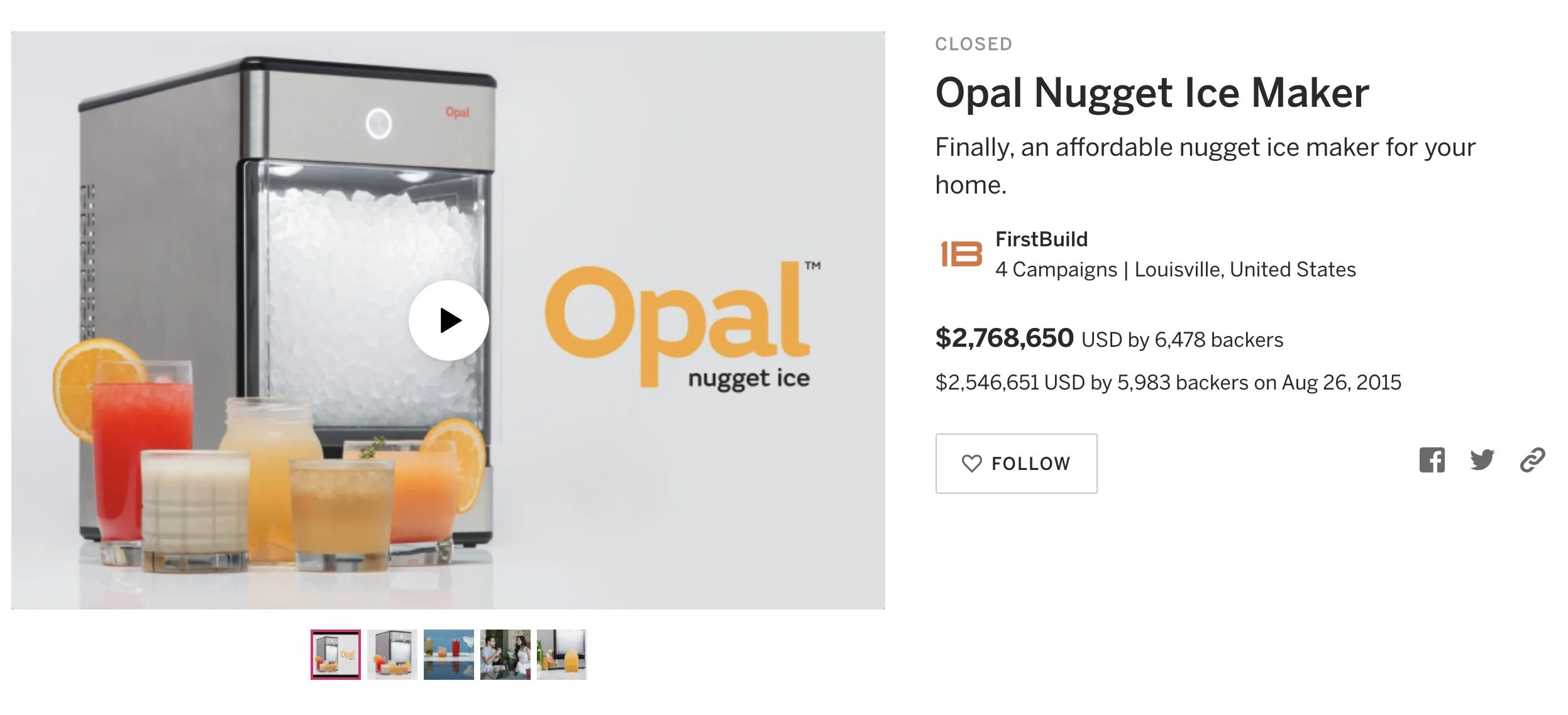
Who doesn’t love nugget ice?
From what I can determine, FirstBuild is a solely owned subsidiary of GE Appliances. Most of the appliances I can think of from GE Appliances are generally large, so I can imagine it must’ve been a tough sell to pitch an ice maker that sits on your countertop to leadership.
In most companies, these conversations play out like this:
Employee: I think this is a great idea.
Manager: I think this is a bad idea.
The person with the higher rank wins.
But GE Appliances approached this differently. They spun up a microfactory called FirstBuild to help test some of these ideas, instead of killing them outright from the beginning. And here is where it gets really interesting, the team behind FirstBuild received permission to launch an external crowdfunding campaign. It’s not as if GE Appliances needed the money to fund this new product, but they raised over $2.7 million doing so.
That’s a pretty strong viability signal!
If you start to dig into the product detail page of Opal on the FirstBuild website, you’ll find hints that maybe they ran other types of experiments as well.
“The co-create community at FirstBuild has carefully designed the Opal with the enthusiast in mind: people who drop by their favorite restaurant on the weekend to pick up a bag of that special soft ice or have googled “nugget ice maker for home” only to find that home nugget ice makers start at $2000 - $3000. Opal is smart enough to know when to start and stop making ice so you’re never left without it. Just like in any cooler, ice will slowly melt within the air-insulated bucket, then turn on when it is time to refill.”
I can think of at least a few experiments based on that description alone. These could’ve easily been customer interviews and search trend analysis. Perhaps even a few boomerang experiments.
After this was quite successful, it wasn’t hard to bring the Opal ice maker on brand for GE Appliances.
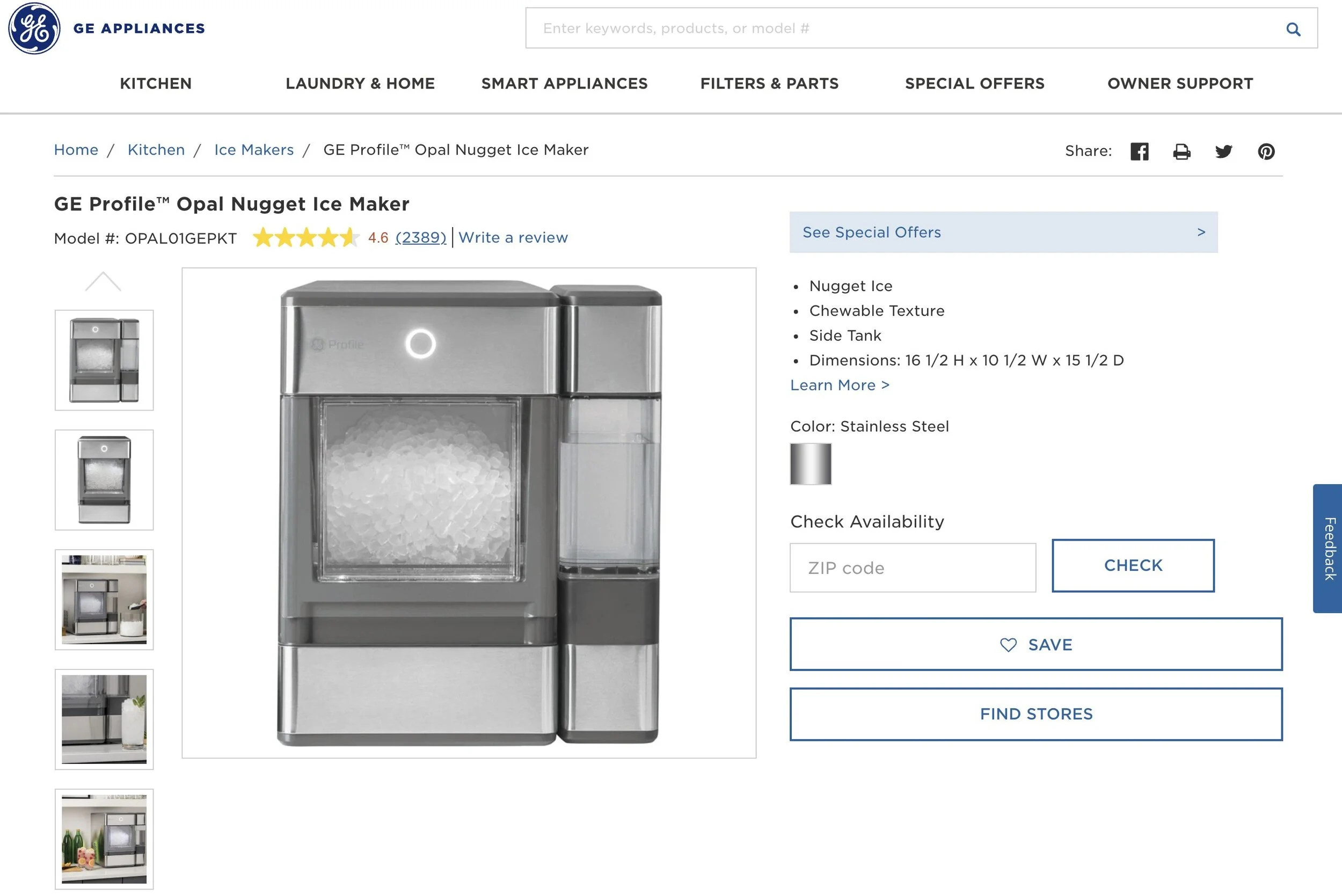
Introducing the GE Profile Opal Nugget Ice Maker
This is a trend I’ve seen in other companies as well.
If the product idea is a hit, then bring it on brand. If nobody cares about the product, then quietly kill it without damaging your brand.
Delta and First Wave
It seems Delta has also caught on to this trend. I don’t know if First Wave is an owned subsidiary of Delta, but it is branded on their crowdfunding page as “The Innovation Lab at Delta Faucet Company”.
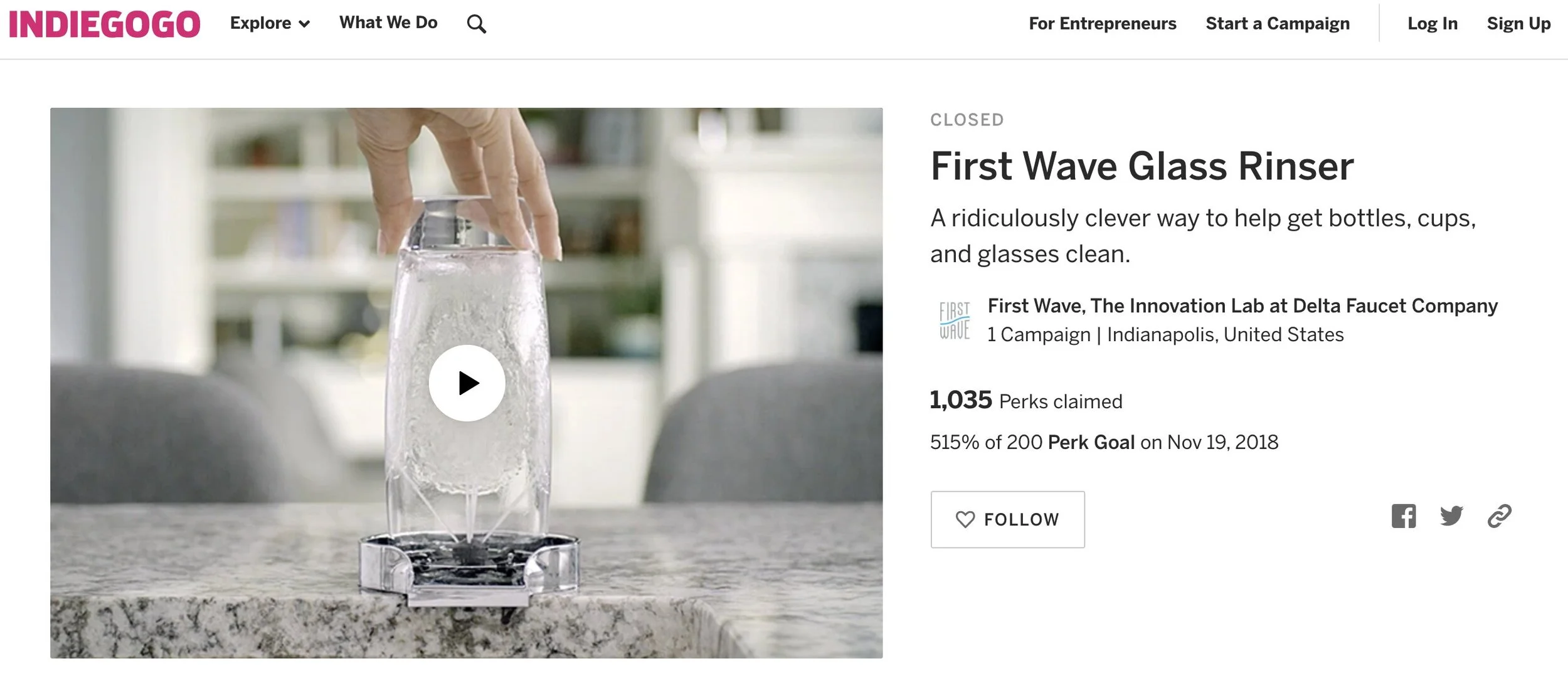
First Wave’s Glass Rinser
I recently saw this product on a Delta commercial and thought, wow I’ve seen that before! Sure enough, it was from another crowdfunding campaign.
Similar to the Opal ice maker from GE Appliances, the glass rinser was a different type of product than you’d typically see from Delta. This one also exceeded the funding goal. Once it was successful, then Delta simply brought it on brand.
You’ll notice the “NOW AVAILABLE FROM DELTA” language below.
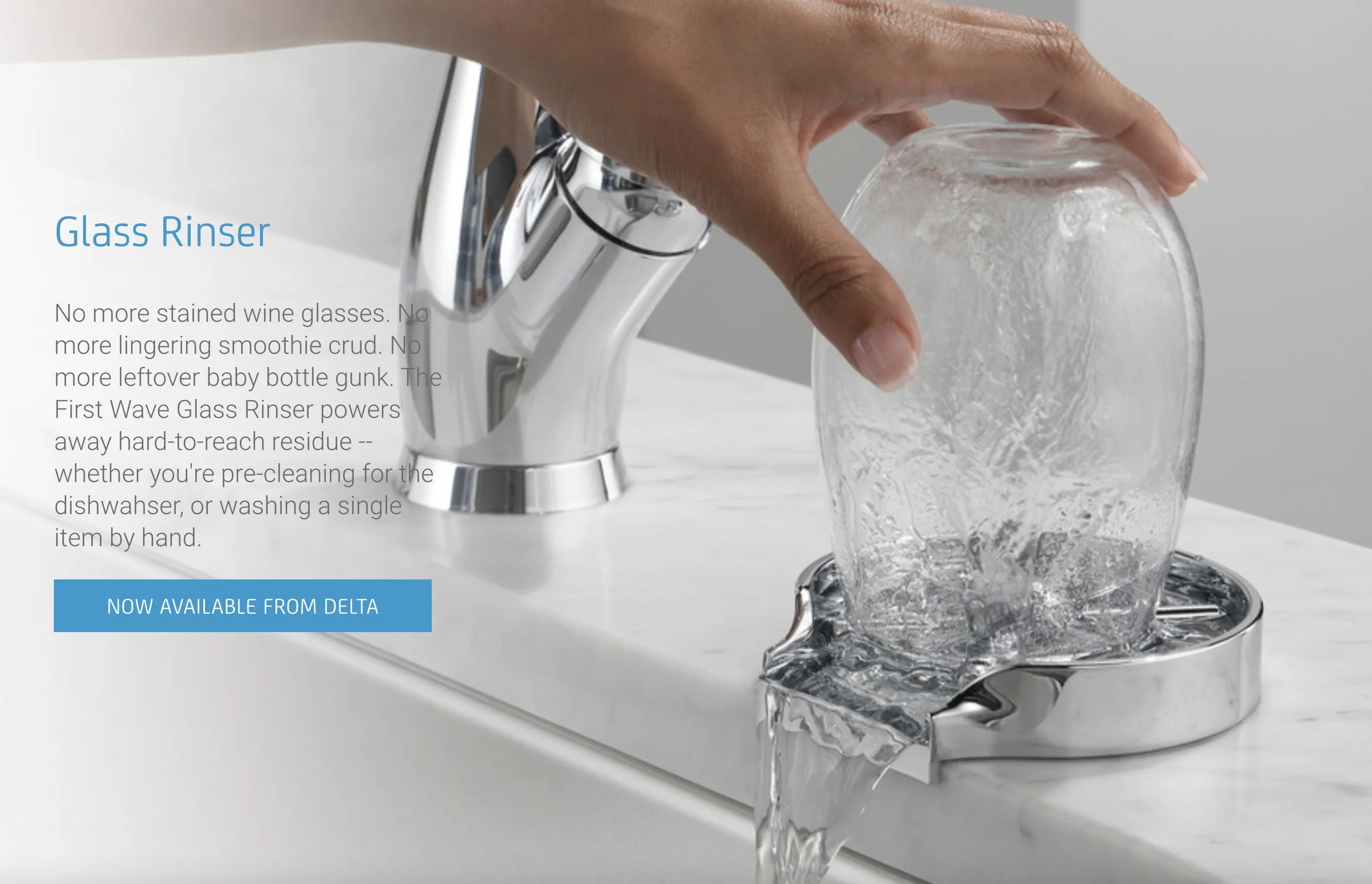
When you click the button, it conveniently brings you over to the Delta website.
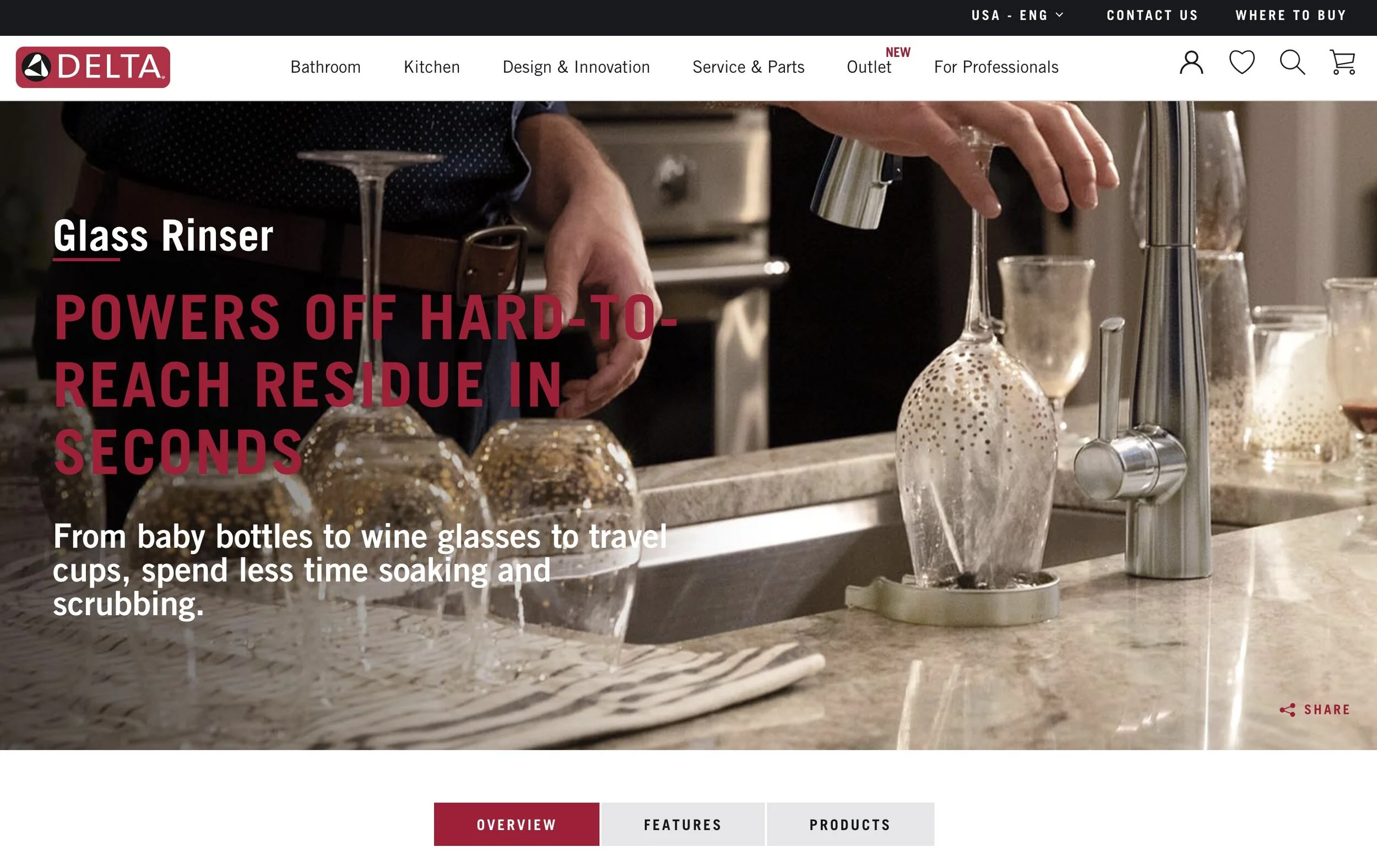
Introducing the Delta Glass Rinser
Not All Crowdfunding Campaigns Are Successful
While the campaigns I referenced above exceeded expectations, not all campaigns are a huge success. In reviewing over 20 different corporate crowdfunding pages, I’ve found many that did not appear to succeed.
One example of this is the Tyson Foods test of the Yappah product line. This was one of the first brands to be launched out of the Tyson Innovation Lab.

It seems as though they had some desirability and viability assumptions that were disproven, resulting in Tyson Foods sunsetting the endeavor.

Even though this overall endeavor didn’t work out, I applaud them for trying.
I often recommend that if over the course of 12 weeks you cannot find evidence to move forward, then celebrate the learning and move on to something else.
The Benefits of Crowdfunding at Corporations
It is refreshing to see more corporations take a crowdfunding approach, rather than internally refining their new ideas because they are afraid of damaging their brand.
This results in a customer free zone, which is perilous when launching something new.
An additional benefit to crowdfunding is the back and forth with the community. You can provide updates as you get closer to launch, review comments, post fun images and answer questions.
You are interacting with your early adopters in a manner that might be difficult or even impossible through other corporate channels.
To recap, corporations are:
Spinning up a labs brand or separate entity to test new ideas
Creating crowdfunding pages with explainer videos and their value proposition
Setting a crowdfunding goal for financial viability
Determining desirability with early adopters through updates, comments and perks
When it succeeds, bring it on brand
When it fails, simply kill it and move on
If this trend continues, maybe that next crowdfunding campaign you join won’t be from a startup, but from a well known corporation.
It appears that crowdfunding isn’t just for startups anymore.