What Can You Learn From A Single Feature MVP?
The Amazon Dash Button was a physical button that you’d place in your home, to order and receive a product quickly. When Amazon launched the Dash Button in late March of 2015, people initially thought it was an April Fool’s Joke.
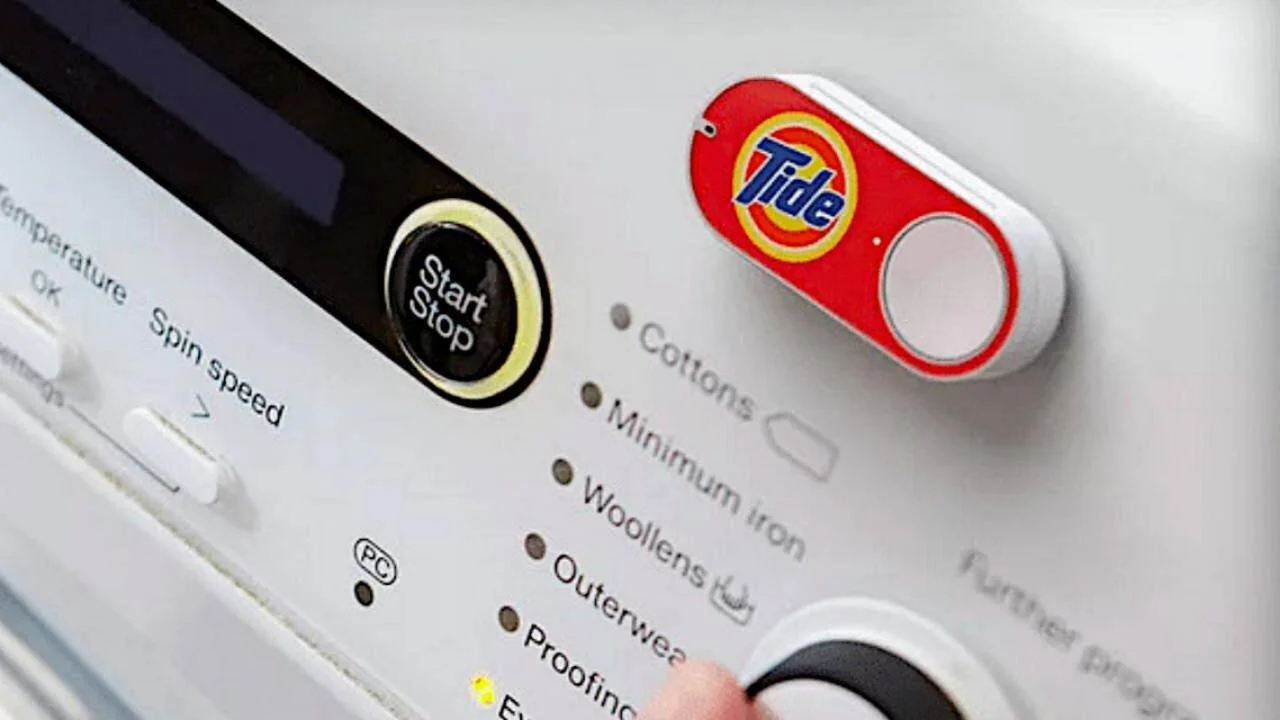
Amazon Dash Button
Little did they know that Amazon was testing an assumption.
The assumption was that Amazon customers would order a product, offline, on a recurring basis from them.
The Dash Button experiment is a Single Feature Minimum Viable Product.

Single Feature MVP - Testing Business Ideas 2019 (Wiley)
A Single Feature MVP is an experiment to test a leap of faith assumption, after you’ve already gathered evidence using many other discovery and research methods.
A Single Feature MVP tests:
Desirability - Do they want it?
Viability - Should we do it?
Feasibility - Can we do it?
The experiment produces strong evidence because it is launched in the real world with customers taking a specific action. This goes beyond a lab setting where people only share a verbal opinion and are often biased, with little to no investment on their behalf.
Amazon targeted their early adopters (Prime members) by inviting them to request the Dash device.
Even though the initial Amazon Dash Buttons were basically free (technically they cost $4.99 but you’d receive $4.99 off your first purchase) the investment on the Dash Button was somewhat high, in that people were spending real money to order a single product when pressing the physical Dash button.
More importantly it broke from the typical digital experience of ordering from Amazon, and yet informed their future purchase strategy.
Collecting real world evidence on the Dash Button usage allowed Amazon to eventually move into a more automated service, based on real data.

Meet Amazon Dash Replenishment. Sound familiar?
Could Amazon have iterated in other ways to this recurring product subscription service?
Possibly.
They also had another experiment already running at the time called the Dash Wand.

Amazon Dash Wand
The wand device would let you scan barcodes of items in your home to purchase. You could also speak into it (Alexa, anyone?). While the convenience of Dash Buttons were to be placed near where you have the product in your home, this is how Amazon described the wand:
Every member of the family can use Dash to easily add items to your Cart on Amazon.com. Hang it on the fridge or place it next to the coffee pot. Did your kids just finish the cereal? Conveniently refill and restock your home's everyday essentials, and have fun doing it.
Even though these wands had some feasibility issues with speech recognition and scanning, they were yet another experiment to learn if customers would change real world behaviors away from a purely digital, on screen ordering experience. They never caught on like the Dash Buttons did, but Amazon didn’t really put much marketing effort behind them either.
Both the Dash Wand and Dash Button experiments have since been discontinued.
You can still hack the Dash Button to do other things if you wish, but that is more of a novelty than anything else.
I think it would be easy for us to point and laugh and to frame Dash as yet another doomed Amazon product, but I challenge you to see a bigger picture.
Amazon used Dash as an experiment, to learn and inform their future purchase strategy.
I don’t think it’s a coincidence that Dash devices were discontinued as subscription services were being ramped up. Also with so many smart appliances on the market today, it doesn’t make much sense to have a physical button stuck on the outside of your appliance when Alexa is built inside.
I think we tend to overlook and possibly even laugh at Single Feature MVP’s when we first encounter them, but innovation is often viewed as a joke or a toy at first.
A Single Feature MVP can help you generate the evidence you need to inform your strategy. Especially if that strategy is predicated on changing human behavior.