Eric Lowe | How I Tested Mental Hardening
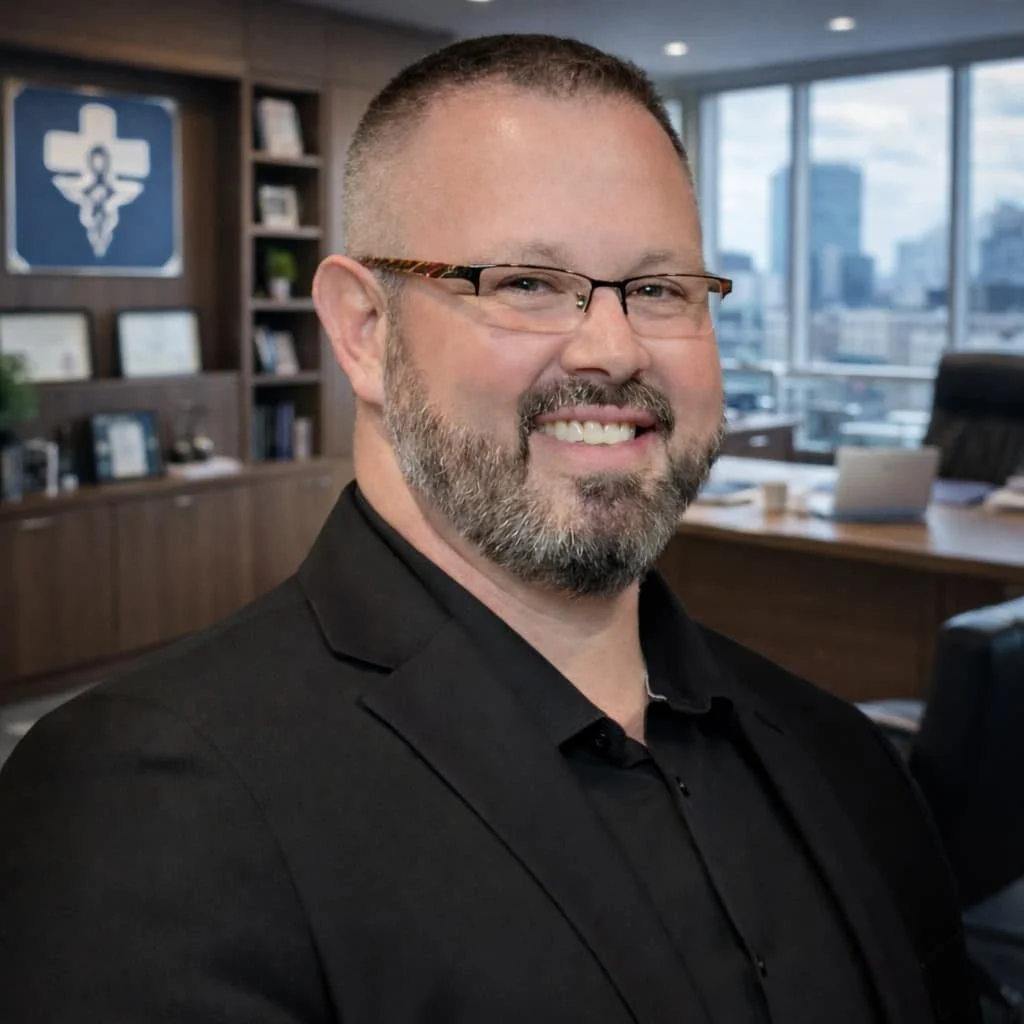
Eric Lowe - CEO & Co-Founder of Aptiva Health
In this episode, Eric shares how his team uncovered a breakthrough business by integrating mental health directly into orthopedic recovery.
Have a Listen
Summary
In this episode, I’m joined by Eric Lowe. He’s the CEO and Co-founder of Aptiva Health, an outpatient group that offers specialized care in orthopedics, physical therapy, pain management, and mental wellness.
Eric shares how solving one problem at a time helped him scale to 14 locations and why he believes great businesses are built by developing people first.
We dig into launching an ambitious healthcare marketplace that had all the ingredients of a great product, only to run headfirst into the brutal realities of marketplace dynamics, timing and customer education.
Eric also details how his team uncovered a breakthrough business by integrating mental health directly into orthopedic recovery. He shares how they experiment with new healthcare models before overinvesting, and why listening closely to patients and providers often reveals opportunities you never could have imagined.
If you’re building in healthcare and trying to figure out how to test bold ideas, this episode is for you.
Takeaways
Great businesses come from solving the next problem. Long-term growth often compounds from consistently identifying and solving the most pressing issue in front of you.
Not every customer problem is yours to solve. Sustainable businesses focus on problems they are uniquely positioned to solve while aligning value across all stakeholders.
Marketplaces are brutally hard to build. Even strong solutions can struggle when adoption requires changing deeply ingrained customer behavior.
Sometimes the customer isn’t who you think it is. Success often comes from recognizing when the original target market needs to shift entirely.
Unexpected opportunities can outperform your biggest bets. Some of the strongest growth opportunities come from adjacent problems you discover while serving customers.
Adoption depends on reducing friction. New solutions succeed when they fit naturally into how people already behave rather than forcing entirely new habits.
Culture is built through actions, not slogans. Teams buy into organizations when leadership consistently demonstrates the values they claim to stand for.
Big investments require proving the economics first. When capital commitments are high, getting the financial assumptions wrong can become incredibly expensive.
Guest Links
Eric’s LinkedIn: https://www.linkedin.com/in/ericloweaptiva
Aptiva Health: https://www.aptivahealth.com/
Broker Driven: https://brokerdriven.com/
Transcript
David J Bland (00:01.358)
Welcome to the podcast, Eric.
Eric Lowe (00:03.456)
Yeah, thanks for having me.
David J Bland (00:05.194)
I'm so excited to have you on. I remember reaching out to you and I was like, man, this guy's so busy. There's no way I'm going to get his time. And you made time to hang out and I really appreciate that. And I love the story of Tiva Health and everything, but I just want to take a step back and have people kind of understand who you are a little bit. So if you could explain a little bit about your background and what you're about before we jump into the testing stories.
Eric Lowe (00:26.137)
Yeah, sure. So I grew up in a kind of semi-small town outside of Louisville, Kentucky, Kentucky native, and went to undergrad at the University of the Cumberlands, played football there. Went to law school at University of Louisville, Brandeis School of Law, and then life took an unexpected turn. Instead of going into law, I ended up in healthcare.
I helped my best friend in college who played football with me. His uncle was a physician. Helped him move the heaviest couch known to man in my second year of law school. He introduced himself to me. He was changing specialties from general surgery back to physical medicine and rehab and starting an outpatient clinic. And we started, you know, kind of wrapping back and forth. And I had some ideas and obviously knowing contract law and negotiations and things like that was
very helpful. I noticed that in revenue cycle management a lot of people had an associate's degree but not really any training on how to interpret a contract with consideration and all those other things meant. So really seized that opportunity and found my niche in healthcare and stayed with them for about three and a half years while I built a revenue cycle management company. And that's for people that don't know that healthcare ends in an ounce. That's medical billing and coding, revenue cycle management.
how you bill, how you code, how you follow up the money to make sure the physicians get paid, negotiates contracts, all that good stuff. That's how I started out. And then started a medical legal consulting company where I would connect insurance companies and attorneys and different niche kind of markets with experts and healthcare providers. And that morphed into the request for medical treatment. And that's where I find myself today. 11 and a half years later.
We're a multi-specialty group opening our 14th location next week in Indianapolis, but we're in Louisville, Lexington, Northern Kentucky, Elizabetow, Mount Washington, and now Indianapolis.
David J Bland (02:21.08)
Wow, it's interesting to hear your story. I feel like guests recently have really been...
Sharing stories about how they were like, I was in Hollywood and then I started in construction, you know, and yours feels more as if you're really deeply understanding a space and then kind of seeing what's next. And do you feel as if you've been able to take what you've learned from one to the next as far as, I think I solved this problem, but now I see this other problem. Like, tell me how you go about that process or if there was a process at all.
Eric Lowe (02:34.394)
Yeah.
Eric Lowe (02:55.148)
100%. So it's funny that she said it, David. The thing that my partner, Dr. Geene, and I both say that we're best at is problem solving. That's really what we do every day is just solve the next problem. There's always going to be a problem, especially when you look at healthcare today, but it's just about solving problems. And if you can do that each day, it compounds greatly that
year, two years now, 11 and a half years later, we looked completely different than we did when we started because we just kept solving the next problem. So the legal training has been incredibly helpful. One of the things they teach you in law school, it's terrible. Most people hate it because the Socratic method, put you on the spot and it's all about issue spotting. Everything in law school is about spot the issue and be able to identify it and be able to name it and then recognize it again, the next pattern. That's great when you start.
having that skill that you strengthen as far as recognizing problems and then identifying the issues behind those problems and then solving the problem. So that has really helped me throughout the course in business and entrepreneurship and especially healthcare where there's just a seemingly never-ending amount of problems.
David J Bland (04:05.965)
Yeah, I could feel as if there's so many problems. Do you have almost like, maybe it comes from your legal background, a process or a framework or a way to filter, know, oh, yeah, there are all these problems, but this is the one I should focus on next. Is it more of a gut thing? How do you assess all these different problems and where to focus and what your skill set kind of overlaps with?
Eric Lowe (04:30.272)
Yeah, so I finished writing my first book here recently and I identified what we call the lasso framework. So it's leverage alignment, systemization, optimization. So leverage is not just what you know, but who you know. So a lot of times in solving the problem, it's who do I know and how have I encountered this problem that I can solve that is going to impact the most amount of people where I have influence.
So if it's marketing and you have a lot of knowledge in the SEO and now the AEO world, what is the common problem that most people are going to potentially face in your specific industry? Say you're in banking. So if you focus and niche down to just banking rather than solving the global problem, that is the best point where we find leverage and that's how I identify. Then the second thing within the broker framework that I call is really finding
a solution, a common solution called the broker's triad. It's a win-win-win. So for us in healthcare, it's we want the patient to win, we want the physician to win, and we want the system to win. So when we can make a decision and all three of those boxes are checked, we know we're moving in the right direction. If anybody loses in that equation, eventually it's going to grow resentment and distrust, and that is what really harms the system.
So those are kind of the lenses and the framework that we use every time we're identifying problems. the biggest advice I could have for somebody is look at your specific industry and what's a problem that you encounter that you know is annoying and that somebody should solve but nobody solved it. That's the place to start.
David J Bland (06:09.549)
I like that framework. What's title of your book?
Eric Lowe (06:13.164)
It's called Be the Broker. It's getting power and success from connecting people rather than owning everything.
David J Bland (06:14.593)
Be the broker.
David J Bland (06:22.111)
Interesting. I like that framework. think some of the pitfalls I've seen with, and I'm a fan of jobs to be done, all these different frameworks over the years and kind of processes, I feel as if sometimes we get so focused on the problems of a customer that we don't take the time to step back and say, wait, is this something we're uniquely positioned to solve for? And can we?
It doesn't even mean if you're for profit or nonprofit, it has to be viable in the sense that you can keep your solution up and running. mean, if you're solving a meaningful problem and yet you're digging a hole, you're going to have to shut down your solution at some point anyway. So it becomes more of this, yes, by all means, find problems you can solve, but also think of the other factors that play in here to make it a longer sustainable solution.
and not just blindly follow customer problems. So it feels like there's hints of that in your framework a bit.
Eric Lowe (07:21.836)
Yeah, 100%. So it's that that's the alignment. The alignment has to be it can't just be a one sided. You can't just have your focus only on the customer and somehow it's costing the company or it's costing your employees and costing your people time, energy and causing frustration. There has to be an alignment that you can't just identify the problem. You have to make sure that there's a way for you to align your people to solve that problem in a way that not just benefits one party, but all parties involved.
So, and then obviously it's gotta be replicable. You have to be able to build a system around it and then you have to have the feedback loops where you optimize that system over time. No system can stay forever without changing.
David J Bland (08:04.429)
Yeah, I feel like it would be difficult to build a thriving healthcare business without understanding systems. Whether you want to or not. Have you studied systems things at all? Because the way you talk, I almost think like, you've dabbled in it a bit.
Eric Lowe (08:13.975)
Yeah, yeah.
Eric Lowe (08:22.33)
No, I haven't.
David J Bland (08:24.349)
I think you'd enjoy it because I mean, obviously you can go down a rabbit hole with systems, but the idea of just putting language, I think, to what you experience is really interesting. I had this thing, I think system thinking is going to come back and be the next big thing in sort of management, but it hasn't happened yet. But I still hold out hope. But when it comes to
Eric Lowe (08:42.624)
We'll see. mean, with AI, mean, you would think of, I mean, that's where we're in automation right now with a lot of AIs. We know there's a process and a system from everything in healthcare, especially when you're dealing with insurance companies, pre-authorization processes, provider manuals from, you know, all these payer guidelines. Everything has a system. So if you build the right systems and build the right prompts and then deploy the AI agents to follow those systems and prompts, and your people, the experts are the ones that are checking it.
verifying it and using their abilities at the highest potential, it really helps the scale.
David J Bland (09:18.327)
I can see that, yeah. feel as if, all my conversations recently have been people about how are you using AI agents inside your company? And there's been this thread of, well, if we can make our people more successful, therefore in turn, it makes our customers happier and it translates, know. Instead of being, we asked that to ship stuff to our customer and use AI directly with them. I'm seeing a lot more of a bending towards.
Let's look at our own processes and can we use AI thoughtfully and make our people more successful and therefore make our customers happier.
Eric Lowe (09:53.997)
100%. I mean, it makes people actually want to do their jobs. I mean, nobody likes the repetitive monotonous task that sucked your time away. And that's really how we're deploying it to start. And you've got to get adoption first.
I think a lot of companies are making a mistake at where they're just deploying multiple models all at the same time and they don't have any real user adoption. And it's almost like a forced you must do this command versus buy-in from their employees. And where I'm showing people with, let's work on solving one problem today.
and then next week let's work two and then let's build a project around that. And you get them interested in it, like, wow, I'm so much more efficient, this is making my life easier. Then you get buy-in and adoption and now you can advance the deployment.
David J Bland (10:40.673)
I like that, I like that. Being really thoughtful about it versus a mandation. Like you must mandate. We all know how mandates go inside companies. It's like, yeah, you may mandate it, but people can be very creative. With, so I wanted to back up a little bit. you obviously coming from your legal background and pulling, you pulled into healthcare. I imagine you've seen some stuff along the way.
Eric Lowe (10:46.828)
Mm-hmm. All right.
Eric Lowe (10:53.612)
100%.
David J Bland (11:05.533)
Probably many stories of where you thought okay, there's a problem here, and I think this is a solution to that problem But when you try it it doesn't quite work But you still probably learn something that you could pull forward anything you could share of just early stage stories where you look back and you go wow, I thought that was gonna be a huge win and again a win a bit at sideways
Eric Lowe (11:25.612)
Yeah, 100%. The biggest we have, we have a sister company, a project that we developed called MedVoucher and it still is alive. still online. We still have an app. It was the first online healthcare marketplace and we launched it back in 2018, refined it in 19 and then boom, COVID happened. So it was kind of the chicken and the egg.
really, really synonymous to how Airbnb, you have to build the marketplace and get the demand simultaneously. So we were building the marketplace and that means recruiting physicians. And the idea and the premise of MedVoucher is the online healthcare marketplace allows physicians and independent practices or hospital systems, wherever you are, to add their services at a direct pay rate online and that patients could shop, compare and purchase right then. And it would generate
an alphanumeric code so when you call them or you click the schedule, you would just say I bought it on MedBoucher and you would get the service and they would get paid exactly what they wanted for that service. And the idea is fair market free market. Everybody's publishing their prices, you know what services they're providing, you know where they're at, you can look at their CVs, their experience, their expertise and make the decision for yourself, the consumer.
It sounds great in practice. The hard part is getting the marketplace built. We still have people that are incredibly loyal. love it. We have purchases that still go on. I we have MRIs at different facilities for $299 to $450 versus $3,000 at the hospital. We had colonoscopies at one point. There were $900 and it included the facility fee, the surgeon, pathology if they had to remove any polyps, anesthesia, everything. So if you had a high deductible,
plan or your cash pay, it was absolutely the best possible scenario for you. it had all the, you
Eric Lowe (13:22.41)
foundation of a fantastic product that could really help in healthcare. The issue is with COVID, we essentially hit a wall. You couldn't go market to anybody. You couldn't go visit with anybody. How do you get people to join the marketplace if they can't even meet with you? And then secondary to that, it's really a lack of education in the market. We call it healthcare literacy. It's just people don't know what they don't know. A lot of people are walking around with United Healthcare or an Anthem card in their wall.
it and they think why I have insurance this is you know they have that they have all the negotiating power they have all leverage it's got to be the best deal right not typically and we were able to prove that time and time again so we just really missed on both the the time it ramp how long it would take to get the marketplace fully built out with enough offerings in enough areas where it would have user adoption and then secondarily really underestimated the lack of healthcare literacy or
or are people understanding that they have the freedom to choose and you can use your insurance or you can not use your insurance and it depends on what you need and when you need it. So it was just, it's still something that I very, very deeply believe in that we need it and that it can work. We've kind of changed instead of going direct to consumer more to the self-insured employers and brokers and we can talk about that, but they understand the finances behind it. Whereas educating,
the entire patient population is a massive undertaking. we kind of zigged and we should have zagged, but it's still working, up. It's just a lot slower than we would have liked.
David J Bland (15:05.868)
No, I think that's marketplaces are extremely hard. I think anyone that has tried one realizes that, this I grossly underestimated how much work and time this is. I remember one of my first startups, we.
Eric Lowe (15:18.942)
Yeah.
David J Bland (15:23.562)
We tried to educate a consumer on making a purchase and we tried to build that literacy. It was in financial services, a little different. However, it didn't matter how much. built on nights and weekends, they always went through their financial advisor to make a decision. And at some point we wised up and we thought,
Eric Lowe (15:38.486)
Yeah.
David J Bland (15:41.517)
Maybe there are customers. It's like, maybe we should sell financial advisors. And that's when we took off. there were some long nights of like, hmm, this seemed like a great idea, but we're not seeing the traction we thought we would and what's going on. And it's not always clear, you know? And just by observing behavior, we realized, wait, they always go to financial advisors. So maybe that's the play. But I think it's frustrating when you see something that's so clear and yet...
Eric Lowe (15:43.862)
Right?
Eric Lowe (15:54.753)
Yeah.
David J Bland (16:11.434)
You know, you're not seeing the results and it's like, how do you respond to that? think that that matters most.
Eric Lowe (16:16.234)
Yeah, yeah, well, like you just said, I mean, a lot of it is just being able to pivot. One, you have to be able to know when to walk away and say, look, I can't keep spending all my time, effort and energy on this when, you know, there is a clear path.
in another direction that could be more successful. And that's the hardest thing is walking around or somebody coming to the realization that somebody telling you, your baby's ugly. That's not the one to focus on. Focus on something else. that's literally where we've found ourselves now. mean, it took five or six years, but going towards the direction of the self-insured employers and the brokers that are helping those self-insured employers by us doing those direct contracts, having bundled surgeries, doing all those things that are transparent.
that have capitated rates where it costs nothing to the patient, that's the rule win. And they're doing it at scale because we're solving a problem for someone that has hundreds of thousands of employees versus we have to solve the same problem for each patient. So it's just a lot easier at scale, just like your example with financial advisors.
David J Bland (17:19.82)
Yeah, and the timing of COVID and lockdown, know, the people that I know that have built really successful marketplaces, some of them have had to literally fly around the country to personally onboard people that they knew were key to making it work. And not being able to do that makes it really difficult. it might've been also a combination of just timing, you know, with that.
But I'm wondering with yours, so that is something that went a bit sideways. Have you had anything in the past where it was almost like this big success that you didn't expect, where you did something minor and you thought, wow, this really is working well and this is working far beyond our expectations.
Eric Lowe (18:04.684)
Yeah, so that's our, called our mental wellness department. So we're the only multi-specialty group that integrates musculoskeletal care, orthopedics imaging and mental health. So we knew that, and again, you know, coming out of the clouds of COVID, we had some physicians prior to COVID that would say, Hey, you know, we've got some patients that are complaining about, especially athletes return to play. Like they're anxious. They don't know, you know, if they're going to be the same player after this ACL reconstruction.
wasn't a clear path forward as far as how do get somebody into that, you know, what we call now mental hardening or sports performance psychology. It's incredibly expensive. They're hard to find. It's just very, very limited. Well, then we started recruiting. We see a lot of musculoskeletal injuries and that is concussions. You you fall, you know, just hurt your shoulder. You hit your head a lot of times. So we started recruiting our director of concussion care now, Dr. Mandarin out at UPMC, the first concussion clinic in the world. Most published.
the impact of neuropsychological testing for the NFL, for the Olympics, for NHL, just really fantastic university and program. She had published a paper not long before we started recruiting her about how mental, even undiagnosed mental health or psychological conditions can lead to prolonged or protracted recovery from a concussion. And when we started recruiting her, we started having that discussion. She's like, well, do you have
any outlets for mental health or somebody has anxiety or depression, even ADHD, that all those diagnoses really can create issues when you get a concussion. So not really, mean, around Louisville at the time and Lexington it was taking six months or so to get somebody in. So then we knew we've got to solve this problem because it's just terrible for patient care. can't treat somebody for their physical conditions and not their psychological conditions and those psychological conditions are the ones that are preventing them from getting back to life.
So just happenstance, I got rear-ended on the interstate and the car hit me hard enough that it pushed me into a Jeep in front of me that I barely tapped. And when he got out, he was my wife's uncle that I hadn't met in person that's a psychologist. Within a week of all this. And we just start talking.
Eric Lowe (20:25.324)
And he has a ton of interest in it. He had built a group at one point where psychology and neurology together. And he jumped at it and it went from, that was 2022. So we started the program at 23, now we're 26. We went from just one psychologist to now three full-time psychologists, three full-time neuropsychologists, three full-time psychiatrists in just that short period of time. Because we drastically underestimated how
people could benefit and it wasn't just concussion. What we found, especially coming out of COVID.
We had our orthopedic surgeons, our spine surgeons that would say, hey, I'm seeing this surge in people telling me depression and anxiety and all this stuff, and I'm treating for their back or their shoulder or their knee. So now having that outlet and then we've developed a proprietary program called mental hardening. So if the surgeons see a patient and they believe that that patient's gonna have difficulty recovering simply because of their perception, they will send them to our psychotherapy for the first two weeks.
weeks and then post-op for a couple weeks. And it's all about reframing the perception of, because if somebody goes into surgery and says, I'll never be the same, they're right. If somebody goes into surgery and says, I'm going to get back to life and this is going to make me better and I'm going to have my quality of life back, they're right. So getting them in that right frame of mind, going into surgery has been crucial. And we're starting to track that data and the outcomes have been phenomenal. There are people that one, were scared of injections or scared of surgery that ended up having it.
They're the ones that come in, they're hugging people, they're, you thank you for giving my life back. And then those that, you know, had the negative perception to see that shift in their mentality where they now know I'm going to be able to pick up my granddaughter or grandson or be able to play outside or do the things that I enjoy doing that really bring my quality of life. That's why we do what we do. And it's been just a tremendous opportunity for us and one that, you know, we've really pioneered.
David J Bland (22:28.33)
That's amazing. I mean, that's incredible. I think one of the questions I had in my head while you were talking was, well, how do you measure success in something like that? But it feels as if you do have some measures, maybe qualitative and quantitative, that you're trying to pull together to see, yeah, this makes us feel better, but we're actually having a lasting impact.
Eric Lowe (22:48.756)
Yeah, so we're utilizing it. We're now launching some AI technology through a program called Kineticence that does range of motion measuring and all that stuff with digital goniometers. The goniometer is like the little plastic looking thing. It almost looks like a protractor that a doctor would use to measure all your range of motion. We can take that measurement at the time when they come to us at first and then post-op and then when they're finished with treatment. And part of it is we're
seeing the link of post-op PT being less with people that have a more positive framework. So when they go through the mental hardening, they're actually recovering faster. And part of it is motivation. It's, I not only believe I'm going to get better, I'm going to do the work to get better. So they're, the ones that are not just coming to physical therapy at the office. They're doing the work at home. And so we're seeing them recover faster. So now we're tracking that data through their physical measurements with this AI technology.
and we're cross-referencing whether they went through the mental hardening program and we're gonna be able to capture all that data over a long enough period of time that we can show there's efficacy.
David J Bland (23:59.201)
Wow, no, that's really powerful. And it's the first I've heard of this as well, but it makes so much sense to hear you explain it. But at the time, I imagine you had some reservations or some things that kept you up at night when you were rolling out something like that or testing it. What were some of the, I don't know, big assumptions that you felt like, this would have to be true for this thing to work and for us to invest more in it?
Eric Lowe (24:22.74)
Yeah, when you come from the typical orthopedic clinic or physical therapy or imaging, everything has to be done in person. And what we quickly realized, especially with mental health services, that providing flexibility for patients is key to getting them to adopt or to buy in to the program. So allowing telehealth.
There are people that do not want to feel the stigma of sitting in a waiting room that says mental health. And it just is what it is. And it's way better today in 2026 than it was in 2006 or 1996. But there are still people that unless you give them the telehealth option where they're in the comfort of their own home and they feel safe and secure where they can share and talk about the things that are really impacting them, they won't do it. So that's where the flexibility and we build that in. We offer that to every single patient.
or you can be seen at home. So that was really something that we identified early to get higher adoption. And then from a business planning standpoint, the way we lay out the structure, the way we design IT, the way we have tech enablement in those clinics is different than what we would have in a typical orthopedic clinic. So those are all learning curves and anybody that tells you they can execute perfectly the first stop, I don't believe them. We learned a lot.
and you know fell plenty of times but we've listened that's the big thing listen get feedback optimize we listen to the patients we listen to the providers we listen to our billing staff our admin staff who's scheduling you got to get everybody's input and that's really how you build the best comprehensive programs
David J Bland (26:05.267)
No, that makes sense. feel as if just from personal experience coaching and telehealth and teledentistry even, we just learned so much. Like first one, I think we all want jump to build right away and kind of coming back to your statement about, you know, executing perfectly. It's like, if I build the perfect platform for this telehealth or teledentistry, then it's going to solve all these problems and we're going to have all these features and everything. And I always have to pull people back and say, well, can we just test this?
you know, connect a patient with a dentist and have them FaceTime and test it that way without building all this big platform. And sure enough, you know, you learn things like, you know what? It's really hard to see in the back of your mouth. This thing you're trying to show me. I can't actually see it or wow, they're they're booking all these appointments with, you know, dentists that aren't their dentist. But.
Eric Lowe (26:47.179)
Yeah.
David J Bland (26:58.037)
they're looking for a second opinion and we never predicted that. We can never have predicted that. So it's interesting when you kind of have that testing mindset and you go into something, especially in the healthcare field and people do things that maybe you could not predict. And if you had spent tens of millions of dollars on a platform, it may have been completely in the wrong direction because the way that they actually would use it would be very different.
Eric Lowe (27:05.611)
Yeah.
Eric Lowe (27:22.221)
Yeah, a hundred percent. I mean, we, we found a good program that we liked that was, you affordable and easy to deploy. Uh, and fortunately we were very familiar with it from COVID cause that's, you know, everybody had to be seen telehealth for a short period of time. Uh, the one thing that we'll see if it continues to prove, I'm, very optimistic about it is telehealth for orthopedics because the difficulty right now is that you can't touch and feel and, know, identify really well on physical exam. with, you know, we can use an iPad pro right now.
based on the tracking through an app to do the range of motion like I talked about a minute ago. It's a matter of time before we have the capability on the cameras on the phone that can do the same and you can just use somebody who's going to be developing that software. mean, Hinge Health is already doing a lot of stuff with the home PT and it's doing all the measurements and tracking you. It's going to get there and that's going to really help people out as far as in rural communities, especially getting to specialists and not
having to always go to the hospital because that's where we talk about just the cost of health care and we know there's Medicare and Medicaid Cups coming in 2027 and they're going to continue to identify that because there's just a massive shortfall so you these people everybody just still needs health care you need access to health care so how do you get it affordably that could be a solution.
David J Bland (28:43.615)
Yeah, I agree. think and I agree with the feasibility end of things because the way I try to frame things is like this from design thinking, but this idea of desirable, viable, feasible. kind of like desirability being customer value prop, that kind of stuff, viability being more of a cost revenue and feasibility being is it technically feasible regulatory? know, do you have the right people? You know, the first episode and it's a case study on our book to was
topology where they can scan your face and measure your face as if you were an optometrist through iOS through the iPhone and So that and that technology is several years old at this point I mean the book came out in 2019 so their startup was even before then and so I do agree that From a feasibility point of view. It's gonna be really interesting to see. Oh, okay. So this is technically feasible now what does that mean for us? like how can we provide better care and
Building on that, you said something that I thought was really telling, which was how you listen to people and different people in your practice and in the office. And you had this quote, and I wrote it down before we joined today, which was like, you don't build a business, you build people, and then people build the business. And I wonder if you could explain a little bit more on what that means to you and how you apply that.
Eric Lowe (29:54.285)
Mm-hmm.
Eric Lowe (29:59.982)
Yeah, it's a zig-zag. So it's all about, you know, a lot of people want to talk about culture and culture is not something.
easily identifiable in most companies. A lot of people, you know, come to work to pay their bills and that's why they live their life, not for their work. It's having something that's mission driven and having, you know, buy in for people. So one of the things that, you know, I talk about in my book during COVID, you know, we had to lay off our marketing team for a short period of time. We actually hired them back within four weeks and then hired eight more people. But I stopped our grass cutting service and took my zero turn mower
We need her and cut all the grass and all the offices and it was for nothing other than to let people see I'm gonna suffer with you if we're if we're all going through this I'm gonna show you that I'm not above anything I'm gonna do anything I can to help you to make your life easier and when I go to the office I do the same thing. I will always vacuum the rug I will always take out the trash if it needs it There is nothing in the company that I'm above not one job and I want everybody in the company to see that
and to model that. So I have countless stories where we have people that are going across the street, we have a park from one of our offices and if it gets cluttered in trash, we'll have employees go over there and start picking up the trash. We have employees that will help get gas for patients if they run out of gas in the parking lot. We've had numerous stories about that. And we go back to, there's a book that I love called Unreasonable Hospitality, and it talks about building a culture where go above and beyond consistently where that becomes the expectation.
that when you model a system where I want to put myself in an imposition to be able to help somebody else and you show that time and time again, you don't have to talk about it. It literally gets absorbed by how they see you act. And to me, you can't fake that. It's about really connecting with people. And that's what we do with our team. And that's what we do with our patients. If you look at any of our reviews from any of our offices, that's the big thing is they, staff,
Eric Lowe (32:08.687)
Know people not just you know on a first name basis. They know their story They know who they are they stay friends that they really connect and that's what we're about It's it we want to create a different health care experience not just one that's better We need it to be different you have to care for people Meet them where they're at and show that you actually want to help them not just profit off their you know Pain and injury because that's what it feels like in health care. It's there's gonna be some
ridiculous bill and you know all I am is another number to them and I'm getting herded through like cattle and that's just how health care is. It doesn't have to be. So that's really what we focus on and so every monthly meeting we have we recognize people that have the unreasonable hospitality instances and stories and we recognize our employees that get named specifically in Google reviews and on Facebook and you know we really encourage you know that type of hospitality and that's one of our core values.
as hospitality and you don't see that in healthcare.
David J Bland (33:11.415)
No, but we should. So I'm glad you're bringing it up. And I like how you tie it back to specific stories. It's not just something that's on the wall, it's printed on the wall. It's something that you practice. It reminds me a little bit early days.
Eric Lowe (33:21.729)
Right.
David J Bland (33:29.001)
I went through one of the Zappos workshops, like delivering happiness back in the day. And they were well known for their culture of helping whoever, whatever you called in the customer support line for, they would help you with. And I just remember the thing that I don't remember all the pieces of the workshop, but I remember the one part where they were talking about, what are the gaps between your principles and the things that.
Eric Lowe (33:37.036)
yeah.
David J Bland (33:51.915)
you say are important and your actions. And we did this thing where we started listing out some of the actions we do and looking at our principles. And it seemed really straightforward, but at the time, we're like, oh, we're doing this and this and this, but that doesn't really align back to those principles. Can we at least have a conversation about this? And I feel like a lot of people don't make the space to do that kind of work where you say,
Okay, we were saying we believe in this, but here's what we're doing. It's like a spouse theory, theory in use or theory in action kind of stuff. It's like, you know, that is some of the most important work you can do is I feel as a leader in the company to make sure that you're living up to, you know, these principles that you that you give lip service to.
Eric Lowe (34:34.839)
Yeah, and it's it's hard to connect with people when you're just sending out mass emails I mean, yeah, we do the anonymous response, you know, do you have anything specific questions? But it's really going to meet people where they are going and interacting with them while they're doing their job and in between patients, you know How's life what's going on at home? Like I don't want to talk about work a lot of times while people at work and we're in the office together I'd rather talk about who they are and why they do what they do and what drives them and Connecting that's what it's all about
is really building a rapport and relationship with your team because it's that foxhole mentality. I played football like I said. When you go through all that training, all the crap that you have to go through before you go to the game, you build, it's a brotherhood. And it's the same with your employees. If you really connect with them and show them that you care time and time again, they're willing to go to bat for you. They really buy in and believe in what you're doing.
David J Bland (35:34.11)
Yeah, I like that too. I'm wondering, maybe this is related to the mental hardening that you mentioned, or it could be something else. What gets you excited over the next, you know, like six to nine months, you know, of things, or even maybe further out that you want to test or some things you're thinking about that just get you really excited?
Eric Lowe (35:53.878)
Yeah, so next week we have Indianapolis opening. We have a building in southern Indiana that we're converting to an ambulatory surgery center. So the same affordable options that we do for everything we have in clinic, we want to do for surgery as well. I'm really excited about the opportunity not just to contract with self-insured employers and brokers, but to offer affordable cash pay rates for surgeries for people that have high deductible plans and have HSA plans that may lose
insurance, really, one of my goals is going to be the surgery on Sunday. There's a group in Lexington, Kentucky that does that where the physicians and the surgery center donate their time and they do surgery for people that don't qualify for Medicaid but are like right on the cusp that they couldn't afford otherwise.
I would be incredibly passionate about doing something like that. You obviously have to get the vines from the surgeons, which I know they're all going to be in for it. But that's something that can really, really have a massive impact on people. And I'm really excited about that potential to offer that.
David J Bland (36:58.386)
Is there anything that keeps you up at night with that one? As far as something that you're worried about, like if this isn't true, then maybe this doesn't work out the way I would hope.
Eric Lowe (37:08.365)
It's the same token on the surgery center side. It's such a massive investment at this point. Building costs have gotten insane. The cost to outfit surgery centers has gotten insane, and reimbursement has not. That's the difficulty with healthcare. The difficulty with healthcare is, you know, if you can prove in every other kind of industry, if you have the best product, you can typically charge a premium. Healthcare doesn't matter. It doesn't matter how good you are or how bad you are. The reimbursement is what
Medicare pays one rate, they don't care how good you are. You get punished if you don't have good outcomes, but if you have exemplary outcomes, there is no additional benefit. So finding out how to work backwards from reimbursement is one of the things that's difficult because you have to gauge volume and reimbursement before and then back out all your costs. Cost of the operation, cost of the bill, that cost of all that stuff. So that's where it is with the surgery centers. We're really, really diving down deep to make sure these numbers are accurate because it's significant capital.
outlay and if you miss you don't just miss by tens of thousands you miss by millions and that you know could be incredibly detrimental or incredibly beneficial so we just are really really spending a lot of time making sure that these numbers are right.
David J Bland (38:23.528)
Yeah, it feels like a lot of viability risk on that one. Not that you can't do it and not that maybe people don't want it. It's more of making the numbers work. So I appreciate you being open and honest about that of just, hey, this is the world it is. And of course I want this to be success, but here's what I'm worried about. And here's what we've yet to prove or what we're trying to prove out. So I appreciate you.
sharing that with us. I just want to thank you for just hanging out with me and sharing your backstory of going from law school to getting into healthcare and how you did that and looking for that next problem over the years and being maybe a bit like me addicted to problem solving. I feel as if there's some commonality between us there. I loved your framework for how you think about problems. I'm definitely going to check more of that out. I recommend our listeners check that out too.
If people want to reach out to you or they're really interested in something that you spoke about, especially like mental hardening or anything like that, what's the best way for them to get in touch?
Eric Lowe (39:20.845)
Mm-hmm.
Yeah, so I'm on LinkedIn. And then also I have a separate website called brokerdriven.com. That's where all the information about the book that's going to be coming out is on there. There's already some kind of little cheat sheets on there and some different appendices that are available. But you can sign up to pre-order.
It costs nothing, but it's just gauging interest right now for the pre-order of the book. So I encourage people to do that, but definitely open to having conversation on LinkedIn. Happy to connect with people. And then for Aptiva Health, it's just aptivahealth.com. Go to our website. Feel free to reach out to us, see if there's something we can help you with.
David J Bland (39:58.922)
Thank you. So we'll put all those links in the description and in the detailed page. I want to thank you so much, Eric, for hanging out with us. And I appreciate you be open and honest and just transparent about our healthcare industry and your take on it and things that felt really obvious but weren't. And I just love that your energy and passion around this. So I appreciate you sharing this with our listeners today.
Eric Lowe (40:17.421)
Absolutely, appreciate you having me on the show.