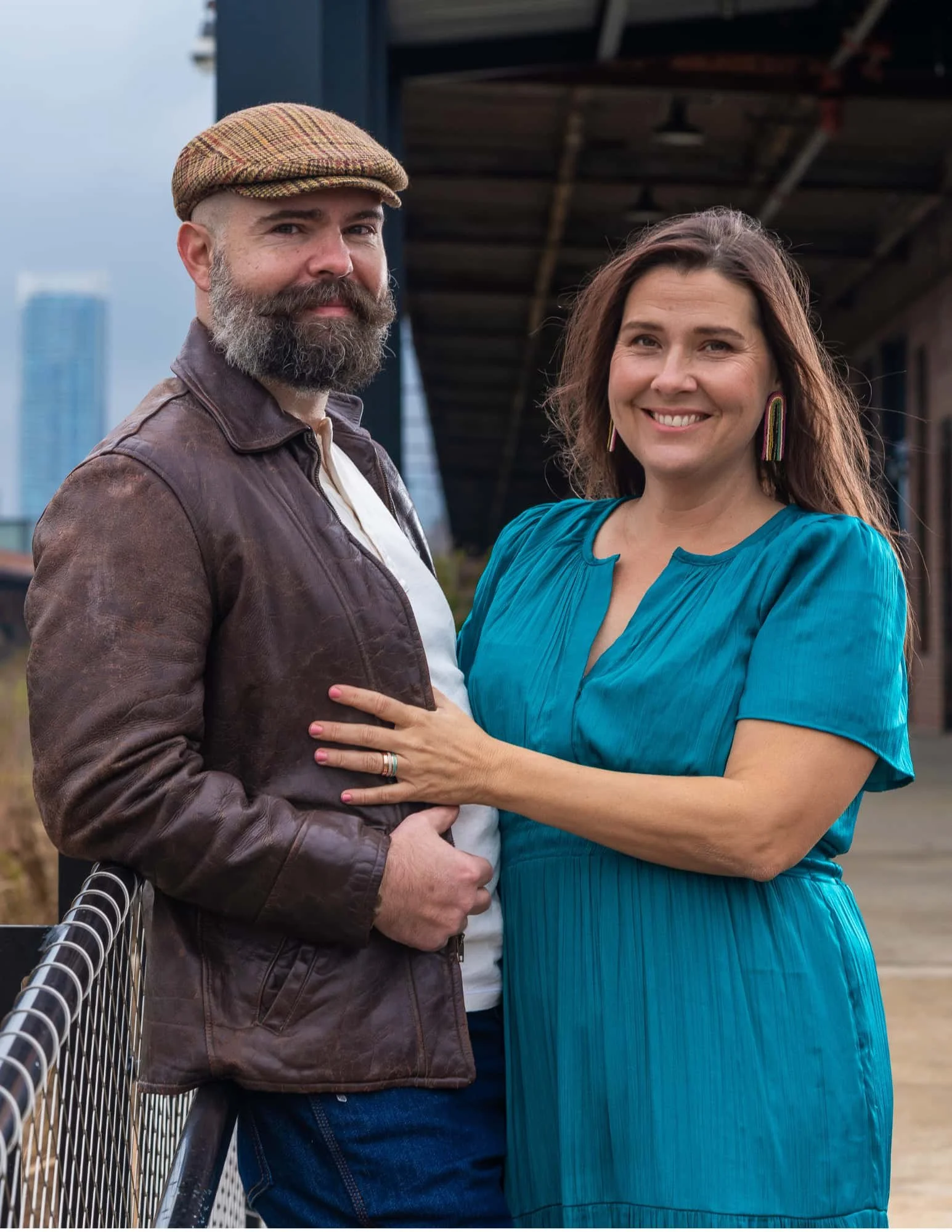
Mike Yarbrough - Founder of Rustic and Main
In this episode, Mike shares how his handmade wooden wedding band attracted his very first customers. We chat about the ups and downs of testing and storytelling in the world of jewelry.
Have a Listen
Summary
In this episode, I’m joined by Mike Yarbrough, he’s the founder of Rustic & Main, a custom jewelry company that’s known for crafting unique, story-driven wedding bands and engagement rings. They specialize in combining traditional heavy metals with unconventional, nostalgic inlays.
Mike shares how his handmade wooden wedding band accidentally started it all by generating unexpected customer demand, while still working his day job. We discuss how the business grew from a garage operation into a team producing handcrafted rings with deeply personal stories.
We also get into the product failure that led Mike and his team to create its durability-testing process (appropriately called “the ringer”) and how he uses prototypes and limited launches to test out new revenue opportunities.
This is a story about following market signals, learning from what breaks, and building a company without losing the craftsmanship and meaning that made customers care in the first place.
Takeaways
Customer pull can be one of the strongest early signals that an idea is worth pursuing.
Starting small gave Mike time to test demand, refine the product, and understand the business before leaving software development.
Product failures led Rustic & Main to create a more rigorous durability-testing process for every new design.
Customer requests helped the company expand from wooden rings into titanium, gold, custom inlays, and new product categories.
Testing a new business model, such as retail, requires patience because not every opportunity grows as quickly as the original business.
Guest Links
Rustic and Main: https://rusticandmain.com/
Transcript
David J Bland (00:01.518)
Welcome to the podcast, Mike.
Mike Yarbrough (00:03.33)
Hey David, thanks for having me on, man. This is great.
David J Bland (00:06.008)
I'm excited. I I was researching your business before we joined this today, and I was so fascinated by your background and your story and the meaning behind why you make what you make. And before we jump in, maybe give people a little bit about yourself to our listeners.
Mike Yarbrough (00:23.458)
Yeah, sure. let's see. How deep do I wanna go? my name is Mikey Arbro, I'm forty eight years old.
I'm married. we got two boys. they're grown now. and through college, at least once through college. but we live in the Charlotte area and Charlotte, North Carolina. And we started a a business called Rustic in Maine about ten years ago, just a little over ten years ago. Started in our garage. I'm sure we'll dive into all that kind of stuff. Before that I was a software developer and was doing pretty well. I'd you I had a good paycheck coming in, back in the good days of of software dev when you before AI and and all that, you know, when you got paid more money, I guess.
But the point is is that you know I had had had kind of a a a point in my life where I was like I want to do something different, more entrepreneurial. I'd had that bent already. And so we ended up launching a ring company in April of 2016. And so I'm sure we'll dive into all that kind of stuff. But there's a whole background of entrepreneurship and and tries and fits and starts and things like that that goes along with that too.
David J Bland (01:22.926)
I love I love when you share the stories of, you know, well, I I was a software developer. you know, like some people I I tried software development for a while. I think for a while I was convinced I was gonna be an API developer, and I s I I was not. Like I gave it a shot and my superpowers seem to be explaining things to people in a way that they get it and and that's that's what I just run with now. But you know, what I think what's tough of being software developer sometimes is if you're very entrepreneurial.
Mike Yarbrough (01:32.819)
yeah.
David J Bland (01:50.809)
Sometimes it's fine it it's really hard to find outlets for that if you're especially I I mean we don't have to go in the background of, you know, where you're working and everything, but if if you're in a pretty established org, it it you know, you're kind of like expected to do certain things and there's a time crunch and all that. And your entrepreneur neural tendencies, it's it's it's tough to find an outlet for from from what I've I've seen.
Mike Yarbrough (01:55.543)
Yeah.
Mike Yarbrough (02:16.694)
Yeah, it is. I mean, you end up doing more like software dev for small businesses or something like that, which just ends up being more of your day job, you know, like you're just doing the same thing during the day and then also at night to bring in some extra income. That got that gets old really quick. I don't care what business that you're in, that gets old pretty quick. So, you know, and I and I knew that I wanted to do something hands on, something with my hands, something that was tangible. One of the big disappointments that people don't think about that that's very common in the software world, is that you'll actually spend months and months and months creating
Something that never sees the light of day. Because by the time you've got it done and the and the management wants to roll it out, the company's been purchased, management's changed, directions, you know, all that stuff has has changed. And so you spend a lot of time creating something that's one virtual. I mean it's not real. You can't hold it your hands. And the the real satisfaction that you get is when people get the chance to use it, but a lot of times that doesn't happen. And so I really wanted something that I knew people could hold in their hands and and be proud of, and and so we started a ring company.
David J Bland (03:16.6)
Yeah, I can relate to that. I I think I experienced some of that with software and also coaching. You know, I work with a lot of manufacturing companies now, and it's just so refreshing to see a produced thing that you can hold. Yeah, it's almost like I I was telling I was telling my my family sometimes like when we used to live on the East Coast, we're in California now, when East Coast we we would have to, you like shovel snow, you know.
Mike Yarbrough (03:29.91)
Yeah, yeah. Something real.
David J Bland (03:42.171)
Because I didn't I have some family now, Shorelot, but I I kind of grew up north of that in West Virginia. And and it was like there's something so nice just seeing the progress, you know, like I'm shoveling and I see where I shoveled and I see where I haven't shoveled. And sometimes when you're in sort of this knowledge work area, you know, and you're working with abstract kind of stuff, it's really tough to see progress. Yeah, it's it's almost like I was really busy all day and I know I did stuff, but
Mike Yarbrough (04:05.891)
Yeah.
David J Bland (04:10.39)
It's it's not like you can see it or f or touch it.
Mike Yarbrough (04:14.562)
Yeah, yeah, totally agree. And the projects are so long term that it's just you kinda lose yourself in it. Ver versus something like if you're creating a piece of furniture or a ring, you know, you get a chance to see like, okay, now I'm at the leg stage and now I gotta sand this down and I gotta do this part. You know, you see it all coming together and it's very tangible, very real, but also you just see the progress in front of you. So ver versus yeah, the the stuff that and some people are just made for this. They they really love
More sitting behind a computer and, you know, that being the world, sitting in a cube, writing code and coming up with architecture. There's a lot of fun aspects of that. But at the same time I think humans are made for analog for the most part and we get a lot of satisfaction out of that.
David J Bland (04:55.204)
Yeah, so you mentioned you were doing some stuff in your spare time in the evenings as well and nights. Have you always been drawn to physical, you know, making things that are physical or is was that something that you were just yearning for as you were being a software developer?
Mike Yarbrough (05:13.784)
A little bit of both actually. So I grew up in the country, raised by my grandparents primarily, and a a lot of the toys and just various things that we made, it like we'd just make I'd make by hand. Like I just my grandfather was a construction worker and
We had plenty of tools around and so I'd make stuff, everything from like battle axes, like he man, swords, you know, whittle this, whittle that. there's a number of broomsticks I just destroyed, you know, just as a broom, nobody's using that thing. but I did that stuff for a long time and then before I got into making rings I was actually making bows, like bows and arrows. And I had some exotic woods in the house and some some tools for that kind of stuff. And so yeah, I I I wasn't trying to sell any of that stuff, but I was always a tinkerer and and I you know, work on cars and
I just like to have that sort of tangible side of things. And so I I it felt
when I was before I made the jump, I have my own podcast, Wolf and Iron, and I was interviewing guys and gals that had started their own businesses and the ones that I really liked the most were the leather workers, the knife makers, the woodworkers, because they had like real products that they could take a picture of and they're always a little bit different and they'd ship it off and a customer would get it and I just loved that whole thing. And it sounds so basic in some ways, but it's also so satisfying.
David J Bland (06:28.747)
Yeah, I didn't I didn't know you had a podcast. That's so so cool. The I I wanna I want to talk I wanna get into the ring business, but I also want to pause on this for a moment. So many, I think, of listeners and people I just chat with and people want coffee chats with me all the time, are I'm doing this thing and I want to make a switch, but I don't know when. And they ask me, because you know, because I've been doing my own thing for over ten years now. And
I'd love to say, there's this exact criteria you need to meet, and then you make this switch. And you know, I give horrible advice. I mean, I I started my thing over a holiday break with no clients lined up. It was like the worst time ever to start my own thing. And it worked out, but it's not advice I'd be comfortable giving to other people. So what what's your story? Like where do you feel like, you know what? There might be something in the spring business that that maybe I can make this full time.
Mike Yarbrough (07:22.54)
Yeah, actually kinda funny you say that. So speaking of entrepreneurship, I started another thing that didn't take off, but I was gonna do a lesson or class on this called Side Hustle Switch, 'cause that's one of the hardest parts is basically going from your side hustle, your day job, to like now you gotta do your thing full time. And
I talked to different people in different industries and I worked on it for a little while little while. So I have some some knowledge around this. And you're right, it's different for every person. And the reason that it's different is that one, everybody's risk aversion is different. if you've got a spouse that's like, no, we need to have X amount of money saved first and then we can dive in. you guys need to be on the same page with that. my wife was she she was all gung ho. She was like, Whatever, whatever makes you happy, I'm sure we'll, you know, be able to find money. you know, if we need to go back into software dev, you can do that.
But so everybody's situation is different. But I think you everybody can evaluate their own situation the same way and say, Okay, I'm selling t-shirts, if that's your thing, how many t-shirts do I have to sell to pay my mortgage?
You know, like you can do the math yourself. how many t shirts do have to sell to you know to to, you know, make my car payments, pay my groceries, whatever the case is. How many of these widgets do I need to do and how close do I feel like I need to get to that until I can jump? And some people will be in the situation where they can't quite focus their full attention on their new thing, on their entrepreneurial pursuit, until they leave their job kinda like you did. And they feel that sense like, if I don't do this now, it's not going to happen. And I think sometimes you gotta go with that as well.
and just take and and take the leap. so like you said, I don't know if there's any great like perfect advice on that. But everybody can do simple math and say, you know, am I am I making enough money to pay my basic bills through my side hustle? Or if I committed 40 hours a week or 60 hours a week to my side hustle as a full-time job, would I then be able to, you know, make all the payments that I need for for for you know my bills.
David J Bland (09:17.623)
Yeah, it reminds of just like a kind of basic business modeling, you know. I've in in the past I was I was writing articles about streamers when they first started becoming popular and everyone's like, I want to be the next big, you know, streamer. And there were so many that came to me that said, I I can't even make rent, you know, like I bought all this equipment to stream and it was quite expensive because you need a good camera and lighting and mic and all that and a machine that can run these games and everything.
Mike Yarbrough (09:21.954)
Yeah.
Mike Yarbrough (09:31.32)
Mm-hmm.
Mike Yarbrough (09:41.565)
yeah.
David J Bland (09:46.774)
And and they couldn't they did all the math and it was too late. It's almost like and they're coming to me and I was like, Well, okay, let's model this out, you know. But I I'm a big fan of testing things, you know, like how do we test things small, which is kind of the the idea behind this podcast, just hanging out with people like you and and hearing stories about how you test things. So, but yeah, that that resonates for sure.
Mike Yarbrough (09:51.111)
Yeah.
David J Bland (10:07.991)
So so you you mentioned almost like you're you're making circles, you know, and I and I kinda wanna run with that a little bit. So maybe give us a little background about the switch for you and you know, were there tests you ran? Were there things like big assumptions you were worried about? Like what what was that like?
Mike Yarbrough (10:12.535)
Yeah.
Mike Yarbrough (10:23.758)
Yeah, it's a great question. Well, so about a year to a year and a half before we actually launched is kind of when we started testing. And obviously we test all the time for new products and things like that. But essentially I because I was a software dev and I was also a blogger, I'm typing a lot. I started to get carpal tunnel feelings in my hands and I stopped wearing my my regular gold band. Just felt kind of cold and heavy. And after about six months, my wife is like, You gotta put a ring on that finger. And I was like, I know, I just don't know what to do. Like I'm I'm not sure.
So I said, I've got some exotic wood in the garage. I'll I'll drill a hole in that, shape it out into a ring, and I'll just I'll wear that out. Right. And I did. And literally that day, or maybe it was the next day, I was getting a haircut. And this is back when I had hair. I was getting a haircut, and the ladies that was gonna cut my hair says, What what color is your band? And I didn't know what that word meant. I was like, Rock band, I don't know what you mean. But she was talking about my ring. Anyhow, long story short, she wanted me to make one for her, and I said, I'll make one for my wife first, which I did, and then you know, I started making making
few of them. Well the the blog that I had for Wolf and Iron, it's all about manliness and making stuff, right? and I I I just took a couple pictures of the process, put it on there and it became the number one article on my website, which is not really the website's not about like making stuff really. It's just, you know, various things that I think have to do with being a man. But it also became the in a very short period of time the number one search result for how to make a wooden ring.
And that w th those are all signals. I mean all those things, people just showing interest, people saying, What is that? Can I pay you for that? Could you make me one? and then the blog just getting so much traffic coming for people who are just interested in this. And and so I don't know the exact timing, but at some point there was a a moment where it clicked like it would be cool if guys had something that was made from wood
And especially if it was woods that like had a a meaning behind them, like a cool whiskey barrel that was like their favorite brand of whiskey, wood from grandpa's barn or something like that, right? If we can make that process work, I think people would jump all over that. And so that was you know a lot of trial and testing kind of behind the scenes. And then in April of 2016 we launched and we got a whole how the name came about and all that kind of stuff, but just that initial testing kind of looked like that. You're just looking for signals anywhere you can find them. and
Mike Yarbrough (12:39.85)
And for us it was it was pretty they were they're kinda overwhelming the amount of response that we got that that this this could work.
David J Bland (12:47.405)
Very interesting from I always say this like push versus pull. You know, sometimes we're trying to push our idea out into the market, and that's it's really hard. And and and other times it feels like a pull where people are asking for a thing. And you know, that's good evidence to have people ask about it and say, can I pay you for this? You know, and and then actually being paid for it, you know. So it's almost like there's a pull and then it becomes a
Mike Yarbrough (12:52.78)
Mm-hmm.
Mike Yarbrough (13:08.92)
Yeah.
David J Bland (13:14.871)
Almost like can I do this? From so so the way we try to frame it is desirable, viable, feasible, like desirable is like the desire from the customer, viable is it cost versus revenue. Are they gonna pay enough for these where I can make a profit on them? Because people can want your rings and you make them and you lose money on everyone. Like that happens too. And and so then it becomes a, you know, can I make these? You know, I feel as if
Mike Yarbrough (13:22.701)
Yeah.
Mm-hmm.
Mike Yarbrough (13:29.165)
Yeah.
Mike Yarbrough (13:35.948)
Yeah, sure.
David J Bland (13:43.429)
And maybe I'm I'm projecting a bit here, but it feels like some of your early stage risk might have been, Can I just literally make these? Like can I make enough of these to keep the lights on? You know, what what was what was it like for you?
Mike Yarbrough (13:58.734)
Yeah, that was exactly it. It was it was sort of proof of concept, a lot of prototyping. And we don't drill holes in wood now, that's not how we do the process. And we've actually phased out wood rings for the most part in favor of some other styles. But but it early on it was basically like, okay, can I just do this and how long does it take? And can I use woods cause a lot of people were doing something like this but with veneers, which are just generic pieces of wood. I said, Can I really do this with pieces of wood that people send me, you know, or that I find that I have a cool story behind them? And
and so a lot of it was just prototyping, can I do that? And I wasn't selling these, I'm just making them for friends and and and that kind of stuff, coming up with designs and ideas.
And and really that gave me time to think about how would the branding work? What do I want this company to be if it does become a thing? you know, we don't we don't call it Mike's ring shop, you know, 'cause I didn't want it to be just about me and me making rings all the time. and so there was a lot of that kind of th that time allowed me to think about what it was that I wanted to do with it and and just to see if it would kind of proof of concept if it would work out. The materials I already knew from the beginning, the materials were gonna be inexpensive.
But you know, it's just the the amount of time and the labor. And the one of the things that came about, I guess maybe like after it was really after we launched that this clicked for me. Like we're in the wedding industry and there's already a ticking clock for the guy who needs his ring. So there's a lot of built in incentives for like one, selling something that might be at a higher price point. also that you don't have to generate like scarcity, like this is a one of a kind. It's like no, they already know they need a ring. You just have to let them know yours is
cool and and if it matches great. so there was just a lot of benefits like that that came about, but those are realizations that really happened kind of as we got going. It's like, wait, we're in the wedding business. Because for me, I'm a guy, I'm thinking like it's a it's a wedding ring, but it's made out of wood and it's woodworking maybe. I don't know what the business I thought it was. I just I just was thinking more about the product than I was, you know, the industry itself.
David J Bland (15:58.763)
It's pretty common, you know, it's almost like you don't get to decide what market you're in. Like I I wrote sorry, I wrote this book called Testing Business Ideas, which is why I started this podcast because I like, I want to talk to cool people that I interviewed for the book and then also other people that weren't in the book. And you know, it's always trending near the top on market research in on Amazon.
And it's not necessarily the category I would have put it in. Like I would put it more in entrepreneurship or business strategy or something like that. But that's where the pull's from. It's it's people wanting to do market tests. Because I feel as if people can build almost anything, like even with your rings, you probably would have figured it out, you know, yeah, to how to how to do it really efficiently. That's doesn't seem to be.
Mike Yarbrough (16:24.472)
Hmm. Yeah.
David J Bland (16:45.752)
Where all a lot of the risk is when I talk to entrepreneurs and and even big companies anymore, it seems to be do we know if the people are actually gonna want this and are they gonna pay enough for it? It feels like it's changed. You can build almost anything now, and now it becomes a question of do they actually want this and will it will they get like this, you know, reward from buying it and there's something it does for them and then will they pay enough? It it's it feels like that's where a lot of the risk is now.
Mike Yarbrough (17:05.037)
Yeah.
Mike Yarbrough (17:12.0)
And finding the audience. I mean, like you might build a piece of furniture and you go, Okay, this is great, you put it out there on whatever the marketplace is, and you can't sell it for the price that you need to sell it for. But all of a sudden, people who have like horses or something, for whatever reason, that's their thing. They love that piece of furniture. It fits with their style. I'm just making something up here. But there's a niche audience that loves it. You can't really know that. And a lot of times it takes or you can't always know that ahead of time. A lot of times it takes being in business and just staying in it.
long enough for the data to come in to go, actually I thought this product was for this audience, but it's actually for this other audience, you know. And so I think that's and and of course staying in business is hard. You know, if you if you don't have if if your product doesn't take off pretty quickly, you're you know, you're spending a lot of money and most of the time that's your money and that's not easy to do. Sometimes, you know, business owners pivot to something else when maybe they would have found success in in something that if they just stayed in a little bit longer.
David J Bland (18:12.406)
I agree. I'm glad you you turn you brought up the term pivot because I feel as if the way we use that is almost like well, we were doing something that wasn't working and then we pivoted into something that worked. And in the moment, that is usually not that obvious. And then it's usually only obvious in hindsight. And also I don't think we talk about the other side of that where you're in a business that can work and then you pivot out of it because either you ran out of runway or you were impatient.
Mike Yarbrough (18:36.376)
Yeah.
David J Bland (18:41.84)
Or, you know, there's all kinds of reasons why you could do that. But I mean, I can point to a lot of products over the years that I thoroughly enjoyed early on and then they just shifted away from me. And I don't know if they did it intentionally or unintentionally, but I think we don't talk enough about that where you c you might be in the right spot and but then you leave that area. So I don't think I don't think pivot's always a good thing, I guess is what I'm trying to say.
Mike Yarbrough (18:50.168)
Mm-hmm.
Mike Yarbrough (19:05.058)
Yeah. Yeah.
No, no, no, it's not always. I mean I mean and that's that's the hard decision of an entrepreneur. You just gotta make it of, you know, do I stay and continue to invest in this? Is there something else that's more of a sure thing? Can I test both at the same time? You know. It's hard.
David J Bland (19:22.528)
So coming back to your story, you kind of made this for yourself. I mean, from the sounds of it. It was you're you're suffering from Carpal Tunnel, which I mean anybody that's worked on computers long enough could probably relate to. you make this this ring, it starts getting attention, people start asking about it. You know, it almost reminds me, I think back to like when Tom's shoes got started, they would wear like different
Mike Yarbrough (19:27.95)
Mm-hmm.
David J Bland (19:47.981)
Different mismatched shoes, so people would pay attention. I don't know if you were that intentional about it, you know, it just seemed like something you were wearing and you were proud of. and then you start making for friends and family. at what point did you realize, okay, hey, maybe there's something beyond wood here. There's a story to this, or maybe walk us through how I imagine it's kind of like a winding path. So like try to explain how that happened.
Mike Yarbrough (19:50.318)
People ask, yeah. Yeah, it just happened, yeah.
Mike Yarbrough (20:16.14)
Well, I mean it it wasn't I it it took off unusually fast for us. This is not common for a lot of businesses, so don't compare what you've got if you know if you're listening to this, don't don't assume that it's supposed to work like this every time. I've had other businesses that have failed that didn't take off like this. I I think this was just right timing. we're very fortunate. But essentially what happened was we launched in twenty sixteen. We sold one ring that month, I think on Etsy. We had maybe three rings or four ring designs at the time.
but by November of that year, twenty sixteen, I'm out at we're we're doing a a like a Thanksgiving thing at somebody's house and my phone's just going ching, cha-ching. And I'm getting these orders. This is the Shopify app. and I'm getting so many orders like I don't know if I can make all these rings because I gotta do this like in the morning and at night and you know, I I still have a day job and I don't even really have the process one hundred percent down yet. but
I go back home, you know, Christmas comes around, we hire somebody, to come and help, you know, f help out. So we're still in the garage, you know, and I would basically tell the guy, Hey, look,
you know, this is how I make a ring, give it a shot, and I'd come back and maybe he's made one, maybe it didn't work, you know, we're kinda figure things out together. But I'm sitting at work and that same thing starts to happen. I'm seeing orders come in and I'm going, I just made more money selling these things on the side than I did you know, at my job which is great when you're double dipping like that 'cause you got money coming in from both places, but I was looking to jump anyhow. So it it was it was unusually fast acceleration for a business to take off like that, especially with one
kind of a niche product. And and at by the end of so I quit my job in twenty seventeen, ju June of twenty seventeen. So just about a year and a couple of months after launch.
Mike Yarbrough (22:03.758)
And by the end of that year, I think we had like nine people working out of our house. So it was just like super fast. Everybody was jumping in. My wife had already jumped way in and we had a lot of friends working in the garage helping out and making stuff. And it was pretty cool. It was a fun time, but it was just crazy hectic. you know, we we s we sometimes would forget that people were actually like making rings in the garage and we had already settled down for the night. We're like watching TV. And then they'd come in and be hey, check out this cool ring I made. I'd be like, whoa, like, I I'm like in my PJs or something.
something, right? But the yeah we had that kind of fun startup story which was great, our garage days. But it was it was a fast acceleration, so unusual. And I think ke at that time keeping up with demand was the hardest part. And as well as you got no time to learn really h how to lead properly or or be a business owner. All that stuff is just coming at you so quick it was tough.
David J Bland (22:57.408)
I can imagine. I mean, I think a lot of our listeners would love to have that problem. but there is a there is a challenge with it as well. I'm wondering, you know, you you said you were getting all these like dings on your on your phone. Was it mostly word of mouth? Was it somebody really famous bought one of your rings and started showing it off? Like why do you think why why do you think it it took off like that?
Mike Yarbrough (23:14.435)
No.
Mike Yarbrough (23:18.434)
I think so there were a few people on Etsy. This is back when Etsy was more of like really that homegrown marketplace. And it's not really so much now. apologies if anybody's selling on Etsy, but it's it's a it's a harder place to sell on than it used to be. and social media was also different back then. Like, you know, you could share something personally and it would kind of go pretty broad, or it could if it was something unique. so we had a lot of those things to our advantage. We did switch over to a Shopify website pretty early on, and I don't know if we were doing any marketing at that point, like twenty six.
16. I can't remember if we did. but it was all just kind of like organic at that point. And so it wasn't, you know, I don't think it was really word of mouth, but it was just more like people would find us. And I think the thing that separated us from maybe some other brands out there that were doing like a wood ring of some kind was we did put that story into it. And we we did say, like, you know, this is wood, this is where this wood comes from. We had nice pictures and
We just kind of thought like this was we we kinda knew in our heart like this wasn't gonna be just a side hustle anymore. This was gonna be something that was if we were gonna do it, it was gonna look and and function really, really well as a business. And so my wife and I both had a really good understanding of what we wanted a business to be.
you know, not necessarily like we didn't know where it would go like where it is today, but we had an understanding of what kind of business we wanted it to be and I think that helped us as well. Kinda especially navigate some of those early days of just, you know, taking off like a shot.
David J Bland (24:48.546)
Yeah, I think I think what stands out to me about that story is well it's the story. It's the storytelling, you know. How how do you test stories or how do you even begin to pull the language together that resonates with people on that? A was there anything that worked for you or didn't work for you as far as the storytelling goes?
Mike Yarbrough (25:11.224)
Well, I'll tell you, David, it's changed a lot because of the length of videos and the length of attention span. So we started ten years ago, and at that time you could ru you could have a video out there that was like forty-five seconds, a minute. You could have a 10 minute video if you wanted to. And people would watch it. They'd they'd watch it on YouTube, wherever it was uploaded. And and and you could tell like a great story of a couple that had like this ring and it was so awesome and you put all these materials together for them and they're just beaming. You could do all of that back then. And now it's really hard because you got like fifteen seconds to tell someone.
somebody like you can't explain like a a a story. Like our stuff is made more for like a it would probably do better on on like a TV show where like, you they they flip a house, but they they incorporate some like meaningful elements back into it and they got the whole reveal and stuff. Like that's kind of like would be more of our style. That's really hard to do these days. So what we try to do is we name our rings appropriately. We do have a story behind each one and and we try to just kind of more like
invite customers into their own story as in like you tell us your story and we're going to help you find the ring that you need. And that seems to be working better than like us saying, here's a story, isn't it cool? Does that make sense?
David J Bland (26:24.627)
It does, it does. I like that. I like that a lot. So when you're making the shift from wood to other form factors and other materials, explain how that came about, you know, were there any things you tried that didn't work there? You know, how did how did that s that evolution happen?
Mike Yarbrough (26:35.085)
Mm-hmm.
Mike Yarbrough (26:43.488)
We did actually. We had a kind of a bungle. So the first thing that we wanted to do was use metal inlays in our or metal linings in our rings. So the part that touches your finger. The outside would be completely wood, the inside would be metal. They look super cool. If I could make them today and they would last and hold up, my gosh, they would be so cool. but what we found was we we we launched them, we did the great pictures and we we put them out there. We didn't properly test, and one day somebody accidentally dropped one.
on a on a a fake wood floor you know like not not not har like concrete or anything they didn't throw it it's just one of our own employees was polishing it off it fell and the and the edges cracked a little bit where the where the the resin was that holds it together and it was like my gosh you know we've sold probably I don't know at that time maybe fifty to seventy of these things and so it was like gosh you we we should have so now we have a process where every new design that we come up with goes through the ringer which is our fun name for it where we throw them on the ground we put
put it in the dishwasher, we let it sit in the sun, bake, you know, all that kind of stuff to to really test it. But it was sort of that was part of that evolution of like we want to do metal, but we want to do it in our own kind of way. But we just didn't test. And that was a learning thing for us. And so then eventually when we got to where like, okay, we're gonna have titanium rings that have inlays of wood and cloth and stone and cool stuff like that. We knew properly how to test those. A lot of that was our own, really my own, getting to the place where we had created something that was a style
profile and a style that I really resonated with personally. And it didn't look like machine made, cookie cutter, 'cause everything we do is handmade. So so that it's it's there's a lot of learning steps, you know, a lot of learning processes along the way and kind of just admitting like, we messed up with that one. You're gonna get a free replacement ring, that kind of stuff, you know.
David J Bland (28:32.449)
Yeah, that's that's that's good on you. I think yeah, so much of our learning come from little things like that happening. Where it's like, no, we should have thought of that. With with the materials though, I mean, what was drawing you to the other materials? Were there some that you thought would work and were too expensive? I how how did that how did that process work out?
Mike Yarbrough (28:40.13)
Yeah.
Mike Yarbrough (28:53.42)
Yeah, I mean well, I mean, so we started with wood rings and these are primarily going to guys and guys are rough on their hands and you know, even though these they're made for daily wear, you know, guys would go like rock climbing with them or go work in their their yard and lay bricks and you're like, dude, you can't you can't do that. So we we kind of realized we needed a more durable option. That was just obvious. But we wanted something that could still tell that story and and and also allow customers to send in their own materials and things like that. So the first option was we want to go with titanium because that's it's got a cool look.
To it kind of reminds us of those old if you remember like pictures of like the 1940s airplanes that are like silver, they're just all like aluminum, I guess, but they're just shiny and awesome. Like we love that kind of stuff, and so we're like, that's that's kind of the vibe we're going for. and so we wanted to do that, but the the expensive material was gold, and the whole gold's great, we we work with it all the time now. But at the time, going from something that was an inexpensive material, like titanium or or wood, and now something where you're gonna buy.
A gold, you know, a piece of gold for a customer that's a certain size, and if you mess it up, you're gonna have to eat that and several hundred dollars, maybe even a thousand dollars or more. it's just that that was the the scary part. thankfully we've got great customers, and you know, for the most part, they're serious about getting their their sizes right. We help them through all that. And so it was actually an easier transition than we than we expected. But we also had to learn to slow down and test things out and you know, only do it if a customer asks, you know, instead of just launching
With like a whole line of 20 new gold rings. It was like when a customer asks if we can do it, we say yes. And then, you know, we'll kind of take it like that. And and and I should have known all this, and I did a little bit from my software days, where what we would call an MVP, minimum viable product, right? You don't roll out the whole product, you know, take a year and a half to develop it. You develop a small piece and you say, give me some feedback. What do you think on this, right? So we do a lot more MVP approaches now than we used to.
David J Bland (30:50.773)
Yeah, I I definitely use that term a lot. Although I use it a little less now because people just argue over what it means. So I try to get more to the test part of it, you know. it's such a l interesting term. I was writing about the other day and people were arguing about Eric Rees' definition of it and then going back to Frank Robinson's original definition. And I was like, you know, the way I view things, it's like how do we reduce risk? You know, how do we prevent scaling things?
Mike Yarbrough (30:57.352)
Yeah, no. Yeah. Yeah, yeah.
Mike Yarbrough (31:11.406)
Mm-hmm.
David J Bland (31:18.411)
That don't work, and then finding out later that we wasted time and money on it. And I think as long as you keep that top of mind, it's less about exactly what we call things. It's more about it's kind of like your your statement about la launching all those types of rings. Like that would have been really easy to do. I'm sure in your head you had all these different designs that would have sounded great, you know. but then that's quite expensive and you don't know which ones are going to resonate and which ones aren't. And it feels like so much of your success has been just listening to customers and listening to
Mike Yarbrough (31:20.045)
Yep.
Mike Yarbrough (31:28.365)
Yep.
David J Bland (31:48.277)
what they want and also how they use it, you know, and in real life, testing it in real life. So I like the idea of the like MVPs for rings and also this idea of with manufacturing, you know, maybe maybe it's different for you because you're doing these by hand, but a lot of my manufacturing clients, I mean, they're like 3D printing stuff, you know, in a few hours that would have cost hundreds of thousands of dollars to do before then. So I feel like
Mike Yarbrough (31:52.739)
Yeah.
David J Bland (32:16.874)
You can take stuff you learn from software and apply to hardware, you know. It's not it's not a super straight line to that application. But you know, there's a I'm sure there's a lot of stuff you learned as a software developer that you felt as I like, yeah, I can do that.
Mike Yarbrough (32:20.011)
a hundred percent. Yeah.
Mike Yarbrough (32:29.666)
Yeah, I mean you mentioned Eric Rees, yeah.
lean, you know, right? We use a lot of lean processes for for things. So we have a lot of pool processes inside internally. we try not to do push anything really. So I don't want to push work on anybody. We only want to do pool work. So put it into a queue, let somebody else get it. It's their responsibility to determine you know the the priority to get their their job done. So that's the kind of stuff that we learn from software and then and all of it our our website and everything else, you we got a lot of internal tools that we use as well that still, you know, I I manage and wrote. So, you know, a lot of that crosses over. But even just
The culture too. Like one of the things that I think people are surprised by when they come and see us, we'll do tours and stuff like that, is that it's just a cool spot. And it's like, well, I came from the software world where everything was cool. Like I didn't come from a woodworking shop where it was gross and dirty and you know, or something like that. So I I I wanted to bring in, and my wife has been huge on this too, because she does all of our design and makes everything look so nice and aesthetic in the inside. but it's like we want a place where people like want to show up to.
work because it feels like a neat place to be, not just like it's a manufacturer place, you know. So we we take a lot of that stuff to heart and yeah, like both of our experiences have have played a big role into what the company is today.
David J Bland (33:45.141)
That's great. It it's it's kind of interesting to me if you go back through history and a lot of the lean stuff came out of like Toyota production systems and all that. And then we we we took a lot of these concepts into to software and now we have a situation where we're learning this in software and then applying it to hardware again. I just think that's super cool. So so you have so you're taking this testing kind of lean mindset with your with your business.
Mike Yarbrough (34:07.422)
I know yeah, it's funny. Yeah. Yeah.
David J Bland (34:15.374)
you've evolved it to where it is today. So I mean, 10 years. Ten years is not an accident. What are some things that you know you're testing now or some things that maybe recently you've tested that have worked out really well or haven't worked? Just give us what's what's a today or or near term look like for you?
Mike Yarbrough (34:36.93)
Yeah, right now we've actually got something really cool that we've had on our h on our mind for probably five years maybe. it's called I mean they're signet rings. So a lot of people don't know what a signet ring is. It's the you would see it a lot on like pinky blinders type of stuff. They're making a big comeback. But it's like a pinky ring that you would wear or you could wear it on really any finger. but
We want to be able to do them cool styles, but also be able to put our special inlays in there and people tell their story with it, right? And so we're we're testing that now. So internally we're going through, like you just mentioned, a lot of 3D printing. You know, okay, here's the the model. We've catted it out. Let's 3D print it. it needs to change a little bit, make it thicker here, change that, right? So we're going through a lot of those things. and then we're we're also we've got a a separate team in internally that's going through like the process of like, okay, how do we actually make these things? Like, okay, we've got a we've cast
This is in brass, let's just put some inlays in there and see what that process needs to look like, right? So I'm I think back in the day, I probably either would have tested everything myself and tried to explain it to somebody, or I would have just kind of thrown it over the wall and been like, hey, signet rings, we just launched them, you know. Figure it out. Thankfully, I've grown and I'm not I'm not like that anymore. So we're taking it slow and we're like, look, we're gonna launch 20, we're gonna launch like five designs, maybe eight, if we get carried away. but we're
We're gonna just put it out there and see how how it works. And we we know enough about it now to to know how to do it at sort of a low cost. You know, we're not we're not gonna spend 20 grand, you know, in this to see if they take off. So it's it's one of those things that there's a little bit of risk as in like we're spending a lot of time internally you know creating this. The risk is
Does anybody really want this? And do people even know what they are still? Like we we see them growing, but we're in the kind of that fashion world. is it gonna take off? How long is it gonna take? You know? So all those questions are still there, but it's it's kinda like back in the old days. You don't really know unless you put it out there and try. And and for us so many of us entrepreneurs, just seeing something come to life is so fun. So, like, you know, even if it doesn't end up making a bunch of money and if it it totally bombs, I don't think it will, but if it does, man, it's just so much fun to make stuff. And so, you know, you haven't
Mike Yarbrough (36:48.802)
idea, you see it come to life and you d you did your best. What what else can you do beyond that, you know?
David J Bland (36:54.1)
Yeah, it's well you're also kind of I feel like with you though, you are kind of building to learn, you know. So even if it's learning a technique that you could apply maybe in a different way or something, but you're not just not like mindlessly building things, you know. I feel like you're being very thoughtful about it.
Mike Yarbrough (37:10.582)
No, we're we're yeah. Yeah, we are. I mean we we recognize that this could easily translate to pendants or cufflinks or tie bars and and all kinds of things, you know, that we don't cur that we don't currently do, but would be really cool to have, you know, to be able to to give you there as an anniversary gift or a matching thing, you know. So we we definitely see the value in it long term.
David J Bland (37:33.399)
That's very cool. Yeah, we've had some other guests on in the past that you know, like we had we had David Sowers who's like the luxury
Porta-potty guy and he he was talking about how like they started with wood and that didn't work because of obvious reasons. And then they had to go to R V and boat material and then they realized, okay, there's a wedding play here, but maybe we could also put this at festivals and we could also do disaster relief. He was a super cool interview. But I I don't think it's unique, you know, if you're if you're open to possibilities, you know.
Mike Yarbrough (37:45.313)
yeah.
Mike Yarbrough (37:48.654)
Yeah.
Mike Yarbrough (38:01.282)
Yeah.
David J Bland (38:07.52)
I think sometimes as entrepreneurs you can also be so married to the idea of a solution that maybe you ignore, you know, some of the signals that say, maybe we need to change that or maybe go in a different direction. So I like I like that you've kind of iterated your way through this over the years. If you're thinking about like what's
What's next? You know, what are big assumptions you still want to test beyond even the signets? is there anything out there that you feel excited about that, you know, is like, hmm, maybe over the next year or two I could I could test this.
Mike Yarbrough (38:43.832)
Yeah, I mean we're I mean right now we're kind of testing a retail store. So we've had a retail store open for almost two years. And we're kind of on our second year of really, you know, having it in place and getting some customers coming in. So and once again that's a whole experience. Like it's not you don't feel like you're going to a jewelry store. It's actually for people who are familiar with country music or you're just up on popular culture, Luke Combs the Country Singer is his childhood home. and we flipped it, and my wife really flipped it, and it's just it's an incredible experience. So we thought
you know, one of the things that my wife actually grew up in the jewelry company or in the jewelry business, like more traditional stuff, right? Where you got you come in and it's just sparkly everything. and we was like, you know, we don't like that. We we want to come into a place that's just it just feels warm and welcome and inviting. And so we have ideas of like opening up retail stores all over the country, but they would have sort of a little bit of character from that place that's you know Nashville or Austin or wherever we happen to go, right?
But we're testing that now. What does it take to actually run a retail store? How long does it take to get the word out? When does it actually start making money? You know? what do customers actually want to see when they come in there for? You know, all those things is is a test and we're we're collecting data on all that. It's it's kind of interesting because on the one hand, our business took off super fast.
So now when things don't happen as quickly, we're kinda like, is this right? Are we doing things right? But I have to we have to keep reminding ourselves like no, like this is like we're now actually in the practical world of business ownership and certain things just take time. and it's fine. As long as we see it moving in the right direction, we're good with it.
David J Bland (40:22.772)
Yeah, I think coincidentally I actually keynoted at Luke Combs Bar in Nashville. I am not up to date on country music, but it was a pretty cool bar. I have to say, one of the better green rooms I've ever been in, as far as you know, hanging out and amenities and everything. so that was just a fun connection I just wanted to to bring up. But I think with I think from just listening to you speak, storytelling is such
Mike Yarbrough (40:28.837)
yeah? That's funny.
Mike Yarbrough (40:36.759)
A bit.
Mike Yarbrough (40:40.75)
Mm-hmm.
David J Bland (40:51.826)
At the core of what you do, that it should be top of mind in your retail experience. And and and I think retail is almost like an inflection point. And I was talking about this with a couple previous guests that we just did interviews with. You know, the the traditional jewelry buying experience, not super fun. You know, like you go in and everything's like behind this.
Mike Yarbrough (41:00.846)
Yeah.
Mike Yarbrough (41:13.549)
No.
David J Bland (41:17.898)
bulletproof glass. And then it's like, my should I even be in this store? And it's it's almost like if you go into other stores, you know, especially like the big box stores, if you're doing other kinds of shopping, and we've we've had other guests talk about this, it's not it's very transactional. It's very soulless. It's very dry. And I think retail is at this really interesting point where we as humans are drawn to stories.
Mike Yarbrough (41:19.298)
Yeah.
Mike Yarbrough (41:36.568)
Mm-hmm.
David J Bland (41:47.307)
You know, as much as we say we don't have like hunter-gatherer instincts like they're still there. And so I think you you have this interesting opportunity to bring your story to the retail experience and test that out in a way where it could be a place where people feel actually wanted and invited into. and and and it just really would mesh well with your product. And I'm sure you're thinking about all this, but I just wanted to give you that feedback because I feel as if
Mike Yarbrough (41:51.48)
Yeah, yeah.
David J Bland (42:16.338)
Storytelling's so important that that should be top of mind in in the retail experience as well.
Mike Yarbrough (42:22.22)
Yeah, a hundred percent. And that's one of the reasons why, you know, we're testing it out now.
And some of the things we'll definitely carry over to the next store, but the next store will also have its own personality because it'll be in a different location, different part of town probably first, but a different city, you know, with a different different story and culture. So, you know, we want to be able to to to do that, but also give people that like it's rustic in Maine, like they know it when they come there. And this is this is like anti all of the advice that you would get from anybody who says set up a retail store. Because if we got bought out, they would come in and say, What's your flagship look like? Okay, this is the best-selling store.
make every store look exactly the same so customers have the exact same experience no matter where they go. And I just I get it. We've all kind of grown up in that world. We've all had that retail experience and we're done with it. But what we really want is is something that feels unique and personal. And you know I'll I'll kind of give you a quick example. Like one of the places that we go eat I don't know whenever we're traveling we typically if we if they have one we'll stop. It's like bar taco.
It's a restaurant. It's a it's sort of an outdoor beachy themed street taco kind of place. The quality of service is always great. and the the the general theme of the place is kind of the same.
But because it's in a different place, different city, it's got a little bit of a different look to it, you know. now we'll we'll branch ours out far more than like our our stores will be a lot different than theirs, in terms of store to store. But at the same time you wanna know like when I go into someplace, it's the same kind of place, but it's also different. And the quality's gonna be top notch and you know, the the customer service is gonna be top notch. So that's what we're going for. But it takes time to get those things right.
David J Bland (44:01.297)
It does, it does. And, you know, retail is again, I think it's at this inflection point where y I think you have the unique opportunity to provide a different experience, but at the same time, you don't want to make the same mistakes that the other people did. So yeah, it's really
Mike Yarbrough (44:15.714)
Yeah. Yeah, we don't want to just go branch out like, you know, create an IPO and then just start setting up like fourteen retail stores and they all bomb, you know. Like that's not we're not about that.
David J Bland (44:26.483)
Yeah, I've certainly seen enough of that in Silicon Valley. But I think you're a just inter interesting spot. So yeah. I mean, I just wanna thank you for sharing so much with us. We we go way back to I I actually didn't know you were a software developer, so I learned that.
We speak a lot. I'm I'm sure we could create another podcast episode of just us talking about software testing and terminology and everything. It sounds like we speak the same language just from what you've mentioned to me today. but going into your ring business, how it became a side hustle, how it became a main thing, how you switched out from different materials and everything, and going into retail now, which is super exciting. I've I feel that a lot of people listening would have would have learned about this.
industry in a way that maybe they wouldn't get from other people. So I really appreciate you. If there's a way they can reach out and learn more about, you know, maybe they want one of your rings or maybe they just want to have you give them feedback on something, what's the best way for them to get in touch?
Mike Yarbrough (45:24.91)
Sure.
Yeah, head head over to rustic and main dot com. That's main like main street. so no E on the end, rustic and Main dot com. And we got plenty of ways to contact us out there. If you want to have me, like, you know, if you have questions about your own business or you just want to reach out and say, Mike, I appreciated you being on the podcast, hello, whatever. you know, that's that's great. My team will forward those over to me. otherwise if you just want to see all the cool stuff that we do and kind of where we started and how we how we've grown, you'll you'll catch some of that over there as well.
David J Bland (45:55.413)
All right, so we'll include Rustic and Main in the description as well. So you'll have the links if you all want to check them out. I want to thank you so much. It was such a great story. And I I feel like I learned so much about how a ring business could even begin to operate. I I learned quite a bit from you. I just want to appreciate you for hanging out with us today.
Mike Yarbrough (46:14.69)
Thanks, David. Great conversation, man.